
Jiroemon Kimura was the oldest man in the world until his death in 2013. When he died, he had lived for 116 years and 54 days. His secret to longevity, the Japanese supercentenarian said, was to always eat light meals.Kimura had eight children and a wife. He also had two official birth dates and was listed as having finished elementary school in three different years: 1907, 1909 and 1911. The story gets even stranger: some records indicate that, during his lifetime, Jiroemon Kimura admitted to lying about his age.This is one of the many seemingly bizarre cases that Australian researcher Saul Justin Newman, 41, compiles in his book, titled Morbid: Debunking Modern Longevity Science (2026). He analyzes many of the myths surrounding studies of human longevity and the so-called “blue zones,” where people are said to live much longer than anywhere else on the planet. Over the last decade, Newton’s research — which, back in 2024, earned him an Ig Nobel Prize in Demography — has led him to argue that the extraordinary cases of people living past 100 have less to do with genetics or diet than with statistical errors and the lack of reliable birth certificates. In an interview with EL PAÍS via video call, the Australian researcher argues that the limit on human lifespan is simply something that fascinates people. “It’s much more important to increase average lifespan and quality of life, which is what medicine does,” he says.Question. Are blue zones just a myth?Answer. Just look at how some of them were discovered. A National Geographic editor told a reporter: “I need you to find me a Blue Zone in the United States.” And he goes and finds one on the road between his home and Las Vegas: a religious community in Loma Linda. This isn’t just a simple anecdote; the level of scientific evidence regarding blue zones is very low, and the conflicts of interest among the people who investigate them are very high. So, we really have no idea if blue zones actually exist. And that’s not surprising when you consider that, even today, a quarter of the world’s children don’t have a birth certificate. How are you going to determine where people live past 100 if birth records aren’t reliable?Q. What’s the biggest scientific problem with the way that these blue zones have been presented to the public?A. There’s a fundamental mathematical problem. Generally, in any statistical process, even the most precise one, there are measurement errors. There’s noise in the data. But in studies of human populations, this takes on enormous importance. Let’s say we want to analyze the longevity of 100,000 50-year-olds, but a group of 100 40-year-olds decides to falsify their documents in order to appear 50. It’s clear that the survival probability of this group will be higher, because they’re all 10 years younger. As time passes, the percentage of the population represented by the liars will increase. By the time they reach 100, this group of people — who are actually 90 — will likely represent almost the entire remaining living population. These are rare and random errors, but they cannot be ignored. Q. Maybe these errors weren’t so rare a century ago.A. Of course, they were much more common in birth certificates from 100 years ago. Currently, in America, something like 5% to 10% of the population has an inaccurate age. And since paperwork is the only way we have to verify a person’s age, we’re facing a problem that can’t be solved. Q. How, then, did we end up identifying these places as blue zones?A. The way to verify the age of a centenarian is to review their documents and trust that both the person reviewing them and the centenarian are telling the truth. However, in science, you should never accept something simply on faith. It’s a foundational principle: things must be proven. This sets up a situation in which it’s extremely easy for the process of declaring blue zones to become corrupted. In the book, I detail several cases of conflicts of interest, of people who validate data from centenarians and, at the same time, profit from it.Q. Do you have to pay to be certified as a blue zone? A. Some blue zones were identified by scientists. Some were declared by businessmen. But now, there’s an organization — Blue Zones — that sells certifications. A New York Times investigation revealed that prices range from $3 million to $40 million for the blue zone designation, but it’s difficult to verify the exact figures. It’s incredible, because the person handing out these certificates is the same one who — without any scientific training — found a blue zone while driving to Las Vegas.Q. What made you suspect that there were inconsistencies with the data and the scientific process behind the blue zones?A. Initially, what interested me most was the problem of the data quality, of the existence of these false centenarians. As I went through this process, I discovered worse and worse levels of data quality. The closer you look at it, the worse it is: you end up with entire populations of 100-year-olds effectively disappearing. The other day, Japan announced that it had just surpassed 100,000 people over the age of 100 for the first time. But back in 2010, a similar announcement was made, and shortly afterward, Japan acknowledged that thousands of those centenarians were only alive on paper. In reality, they’d been dead for a long time. Q. Your book includes other similar cases.A. In Greece, for example, where I did some investigative work in 2018, I found out that thousands of people listed as centenarians had died, but their families were still regularly collecting their pension checks. This isn’t anecdotal: the level of misinformation is just creeping everywhere. A few weeks ago, data from Sardinia’s blue zone was presented to the European Parliament in a debate on alcohol consumption and health. The objective was to defend the benefits of drinking wine. The person on the panel was Dr. Gianni Pes, the gentleman who’s been paid by Blue Zones for roughly 20 years now.Q. I’m going to have to review my family data, because my grandmother had an aunt who lived to be 107 years old. But maybe the birth certificate is just incorrect...A. There are many reasons why these errors occur. Failures in record-keeping, illiteracy, fraud attempts... In Italy, for example, there are many cases of people who falsified their documents to dodge the draft, especially before and during World War II.Q. In the book, you write that those who hold longevity records are often people who drink and smoke excessively, hailing from the poorest neighborhoods of their cities. Why have we believed these records?A. Because they’re charming people: how can we say “no” to an old person telling us their stories? We also like to believe in a mythical, distant place, where everything is wonderful and people live a long time, even if they smoke or drink excessively. Death is scary. But there’s this alternative narrative that someone puts in front of you, and it’s all too easy to believeQ. We’ve long assumed that certain behaviors, such as having strong social ties or engaging in physical activity, help us live longer. Are these behaviors really supported by robust science?A. Some are. It’s clear that exercise is better for your health. But others, like drinking alcohol every day, are crazy things to recommend. The fact is that the inhabitants of the blue zones, in many cases, don’t actually follow these behaviors. Okinawa, Japan, is the clearest example. They had the lowest rate of eating salad in the country, but were second-highest in alcohol consumption and the highest in KFC consumption. For many years, the population over the age of 75 had the worst body mass index (BMI) in the country. And yet, this remote island supposedly is home to the largest number of centenarians in Japan. Q. Why is longevity so appealing to us? And, above all, why is it so marketable?A. Because it sells itself. Nobody wants to die. Also, if the treatment or prescription you’re selling to live longer doesn’t work, nobody is going to leave a bad review. Nobody can go online and say, “It didn’t work, I died.” There are records of longevity-related frauds dating back more than 2,000 years.Q. Earlier this year, Elon Musk said that aging is a problem we can solve. Do you think longevity research is experiencing a new boom thanks to tech moguls?A. More money is being invested than ever before, and the results are worse than ever. If you’re Elon Musk, the richest man in the world, and you’ve bought everything, the only thing left to sell is a way to escape death. Some of the vendors have made an incredible amount of money without producing a single reliable result. I think it’s very interesting to see who’s investing in this business. Billionaires are, but you won’t find a single pharmaceutical company involved, even though having a drug capable of delaying death could become the best-selling medicine on the planet. Pfizer, Merck and other firms aren’t investing a thing.Sign up for our weekly newsletter to get more English-language news coverage from EL PAÍS USA Edition
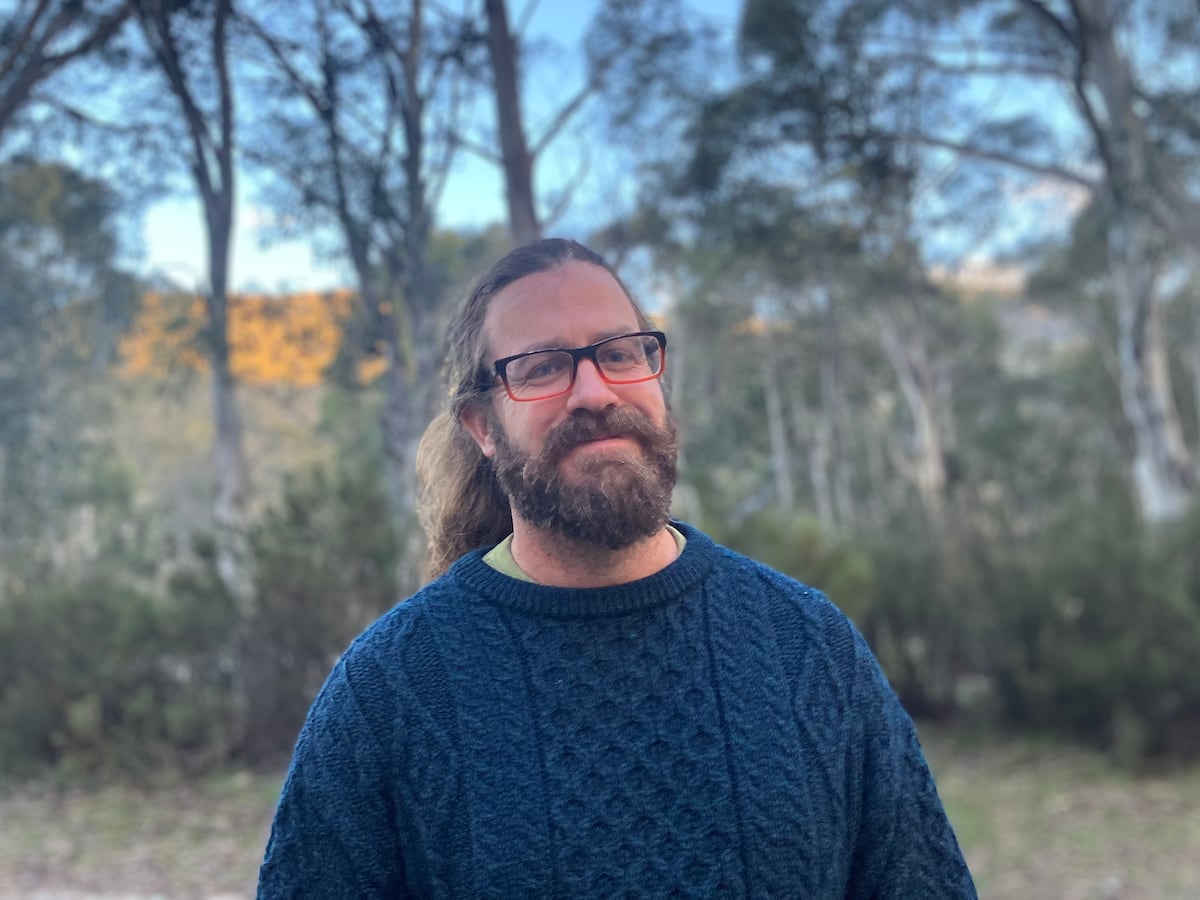
Saul Newman: ‘If you’re Elon Musk and you’ve bought everything, the only thing left to sell is a way to escape death’
Full Article
Original Source
Read the full article at English →KhanList aggregates and links to publicly available news content. We do not host full articles from third-party sources. Always verify important information with original sources.