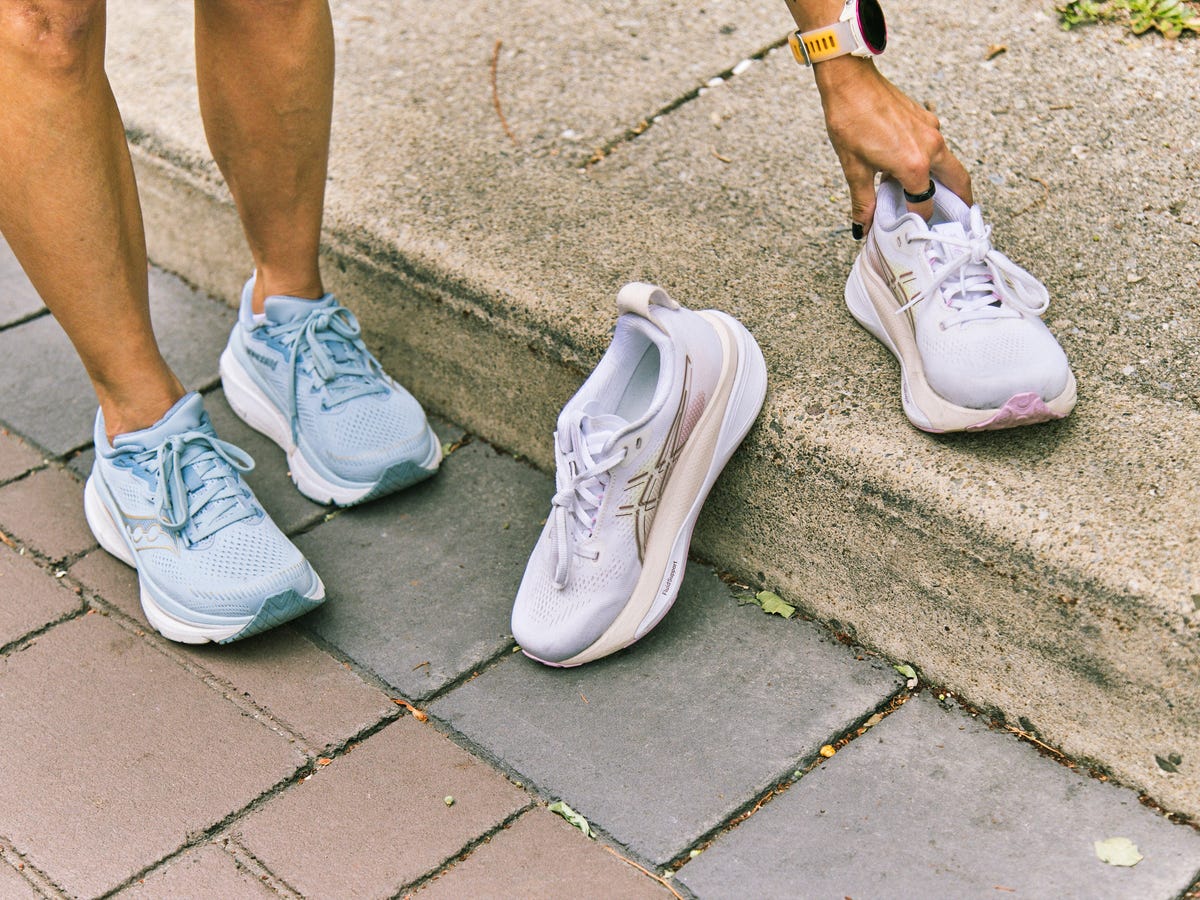
The rundown: When choosing between the Saucony Guide 19 vs. Asics Gel-Kayano 33, consider your cushioning preference and fit. The Guide 19 offers a softer ride with more toe room. The Gel-Kayano 33 provides firm cushioning with more bounce and an accommodating heel and instep fit.Bold statement now that we’re past the 2026 halfway point: Saucony and Asics are leading the pack in running shoe foam tech. Sure, Adidas is pulling in the superfast finishes with its Adizero Adios Pro Evo, but Asics is not too far behind (literally) when it comes to shoes on the podium. The London Marathon third-place women’s finisher Joyciline Jepkosgei wore an Asics Metaspeed Edge prototype.Apart from the speed is the fact that these brands aren’t ignoring us average runners who need a little stability in our lives. Saucony and Asics have consistently released improved versions of their stability franchises: the Saucony Guide and Asics Gel-Kayano. The foams and supportive features in these shoes prove these brands are true innovators for 2:15:55 marathoners to average-Joe overpronators.During my testing of the Guide 19 and Gel-Kayano 33, I’ve taken note of just how different these stability shoes are and how they cater to runners with specific preferences. Is the Gel-Kayano 33 worth the extra $20? Does the Guide 19 have a more accommodating fit for runners with bunions? Here’s a breakdown of both shoes so you can decide which is your new favorite daily trainer.SpecsSaucony Guide 19Asics Gel-Kayano 33Best ForEveryday training, long runs, recovery runs, walking, mild-to-moderate stabilityEveryday training, long runs, recovery runs, walkers, moderate-to-high stabilityTechCenterPath FluidSupport CushioningMax cushioningMax cushioningType of FoamsPwrrun foam (EVA)FF Blast Max (POE), FF Blast Plus (EVA)Weight 8.9 oz (M), 7.7 oz (W)10.5 oz (M), 9.1 oz (W)Drop6 mm8 mmStack Height35 mm heel / 29 mm forefoot40 mm heel / 32 mm forefootPrice$150 $170ShopMen’s | Women’sMen’s | Women’sIt’s All About FitAs a gear editor, I really shouldn’t play favorites and I must be discerning when it comes to shoes I absolutely love and hate. Like a dating app, I firmly believe there’s a runner out there for every shoe. But I have some biases when testing models due to my wide foot.Stability shoes tend to have an ideal fit for my feet because of their broad platform, which helps with support. The Guide 19 is one such shoe that allows my feet to just be instead of feeling constantly squeezed due to high sidewalls or a tapered midfoot.That broad platform is a part of Saucony’s CenterPath stability tech, which also involves asymmetric geometry, higher—but not overcrowding—sidewalls, and max-cushioning underfoot.Winston ZhouThe Saucony Guide 19 uses CenterPath technology to help with overpronation.The Gel-Kayano 33 also has a broad platform. In fact, when looking at the bottoms of both shoes side by side, the shape is almost identical. The Gel-Kayano’s toe area, however, isn’t rounded like the Guide 19’s, but that doesn’t mean my toes felt cramped. The shoe also has a slightly looser fit in the heel area. This was a small knock for one tester, Jeremy Garges, who felt the heel lockdown could be improved.“This was most noticeable during faster workouts and higher-cadence running,” said Garges. “While the shoe remained stable and comfortable, I wasn’t completely confident that I was getting the most efficient turnover because of the slight movement I felt in the heel.”winston zhouLike the Guide 19, the Asics Gel-Kayano 33 has a broad platform.I experienced some movement in the heel area in both shoes, but the Gel-Kayano 33 feels more secure in the midfoot due to the looped eyelet lacing system. Runners with high insteps will appreciate this feature; it was secure but not constrictive, I didn’t experience lace bite or feel uncomfortable compression over my foot. A feature I also liked about the shoe was its looped pull tab, which made put-ons easier.In terms of fit:Go with the Saucony Guide 19 if you want a more secure heel lockdown and rounder toe area to prevent pinky toe friction.Go with the Asics Gel-Kayano 33 if you want a more accommodating fit for a high instep and more space in the heel area.It’s All About RideHere’s where I stress not skipping out on a test run when choosing a running shoe. The Guide 19 and Gel-Kayano 33 fall in the same category as stability trainers, but their ride and feel aren’t one and the same.The Guide 19 has Saucony’s Pwrrun foam, which provides beefy cushioning. The feel is firm but plush; there’s some give when you run in the shoe. The EVA-based Pwrrun foam molds to your foot.The max-cushioning provided support on my training runs leading up to this year’s Boston Marathon, but the ride was not as responsive as other daily trainers. The shoe’s neutral counterpart, the Ride 19, has more rebound because of its TPU-based Pwrrun+ foam.winston zhouI tested the Guide 19 during my lead-up to the Boston Marathon.Because the Gel-Kayano 33’s Fluidsupport stability tech involves a dual-density midsole, you get a completely different experience. The foams are EVA-based FF Blast Plus and POE-based (polyolefin elastomer) FF Blast Max. The result had me mistakenly thinking I was running on denser, more durable TPU foam. The Gel-Kayano 33’s cushioning also has give, but the foam is slightly firmer and bouncier.Garges liked the support and shock absorption the Gel-Kayano 33 provided on his runs, which included a 10-miler.“I typically prefer a shoe with moderate cushioning that provides stability and protection without feeling overly soft or disconnected from the ground,” he said. “The Kayano 33 struck that balance extremely well. It offered a plush heel landing that absorbed impact effectively, especially on concrete sidewalks and asphalt, but the cushioning never felt mushy or slow or fatigued my quads.”winston zhouThe Gel-Kayano 33 is slightly bouncier with a dual-layer midsole.Though the shoe is heavier than the Guide 19, testers expressed surprise how light the shoe felt.“I remember feeling a bit heavy and weighed down in my Gel Kayano-31, but the slight changes with this model have made all the difference for me,” said tester Lily Dineen. “I actually feel quick in them and this is a shoe I would pick up for a long run or a track workout.”In terms of ride:Go with the Saucony Guide 19 if you want a cushier trainer during long runs. The stability isn’t intrusive or forceful; the CenterPath tech provided assistance on turns and didn’t cause over-correction.Go with the Asics Gel-Kayano 33 if you want a cushioned trainer with a firmer feel that’s also good for hour-plus treks on the road. Testers felt “planted” and confident cornering in the shoe, showing the Fluidsupport assisted with stability. One tester even discovered she was a neutral runner based on how effective the Gel-Kayano 33 was at providing support.So Which Shoe Is for You?If you’re a runner with a smaller stature like myself who needs more give when it comes to max-cushioning in their shoes, go with the Saucony Guide 19. The toebox is also great for runners with bunions or for those who tend to lose a layer of keratin on their pinky toes.If you have harder footfalls or need more density underfoot for support, go with the Asics Gel-Kayano 33. The ride isn’t as responsive as, say, Asics’s Novablast 6, but it has good spring and reliably absorbs impact thanks to that dual layer of foam and Asics’s PureGel in the heel area. The stack height is also slightly taller; if you’re like 5-foot me, you know every millimeter counts.Shop Men’s Saucony Guide 19 | Shop Women’s Saucony Guide 19Shop Men’s Asics Gel-Kayano 33 | Shop Women’s Asics Gel-Kayano 33Amanda Furrer, Editor, Running Reviews, studied journalism at NYU and writing at Emerson College. She has reviewed gear and covered other topics in the running space for almost 10 years. Since 2013, she has consecutively run the Boston Marathon. She also has a master’s degree in gastronomy from Boston University and was formerly a professional baker for two years before hanging up her apron.
Saucony Guide 19 vs. Asics Gel-Kayano 33: Which Stability Shoe Is Right for Your Runs?
Full Article
Original Source
Read the full article at Runnersworld →KhanList aggregates and links to publicly available news content. We do not host full articles from third-party sources. Always verify important information with original sources.