
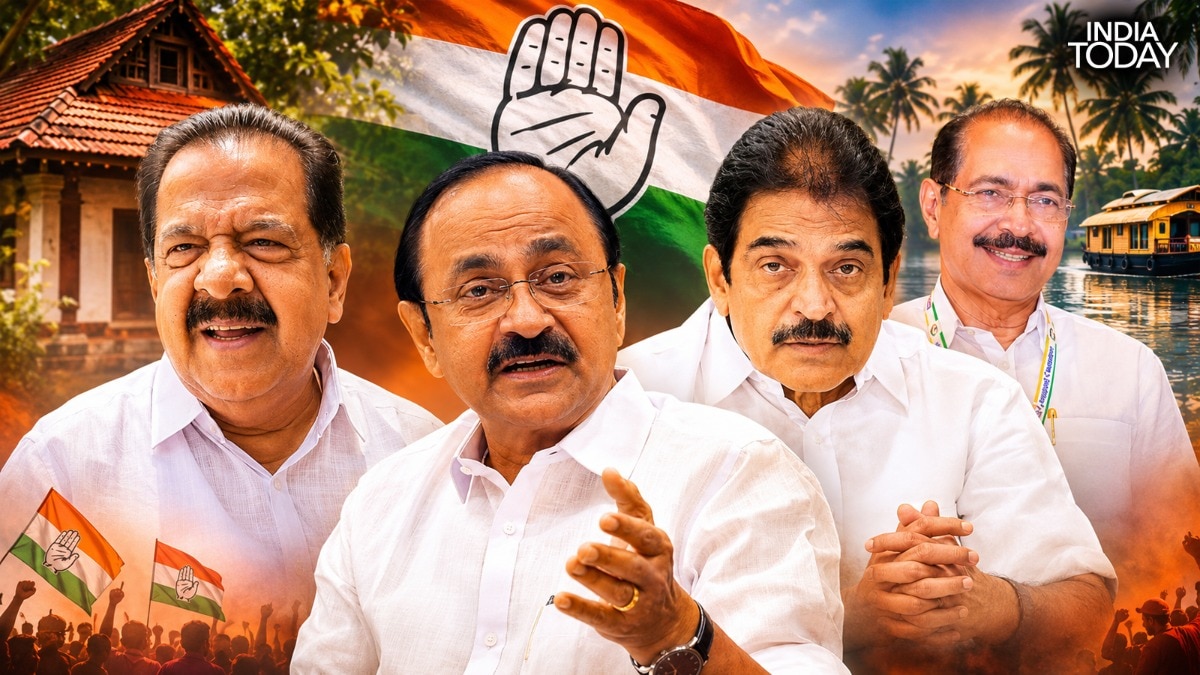
When VD Satheesan took oath as Chief Minister of Keralam in May, following a sweeping Congress victory that ended the party's 10-year power drought, his elevation was widely seen as the final burial of the Congress's notorious A and I faction politics. For five years as Leader of the Opposition, Satheesan had cultivated a carefully calibrated political image as an articulate, policy-driven lawyer who stood above legacy factions. He took on both the Left Democratic Front (LDF) and Congress power centres and promised a modernised "Team UDF" built on merit, collective leadership, and organisational renewal.That image helped the United Democratic Front (UDF) to secure a spectacular 102-seat victory in the 140-member Keralam Assembly, with the Congress alone winning 63 seats. Yet barely six months into his tenure, that post-factional promise appears to be in tatters. By late November, the ruling coalition's principal party had plunged into one of the most acrimonious, public, and personally bitter internal battles in its recent history, with political observers drawing parallels to the factional wars of the K Karunakaran-AK Antony era.Cabinet meetings have reportedly witnessed confrontations over allegations of unilateral decisions by the Chief Minister. Senior ministers and parliamentarians have traded thinly veiled accusations of sabotage and media leaks. Rival factions have launched coordinated cyberattacks against their own colleagues, while coalition partners have publicly complained about a four-month freeze in alliance meetings. In the latest escalation, Satheesan's loyalists have reportedly decided to bypass AICC general secretary in-charge Deepa Dasmunsi in internal discussions, accusing her of partisan conduct.At the centre of the turmoil is an emerging political realignment. According to local media, loyalists of the late stalwart Oommen Chandy from the dormant 'A' group and the organisational camp aligned with Delhi-based AICC general secretary KC Venugopal appear to have converged into a common front against Satheesan. Both camps, however, have strongly rejected suggestions that they are conspiring to destabilise the government, insisting that their objections are rooted in procedural and organisational concerns rather than any attempt to undermine the Chief Minister. But the intensity and public nature of the accusations have become so pronounced that the AICC has reportedly intervened, urging leaders to refrain from airing their grievances publicly.LEADERSHIP DECISION THAT LEFT TWO POWER CENTRESThe roots of the crisis apparently lie in the 10 days between the Assembly election results and the High Command's decision to name Satheesan Chief Minister. The contest primarily involved Satheesan and Venugopal, the powerful AICC general secretary and Alappuzha MP who's a close aide of Rahul Gandhi, with veteran leader Ramesh Chennithala also in the background. Venugopal's organisational influence and support among several leaders made him a formidable contender. The High Command eventually chose Satheesan, whose public image and leadership of the Opposition campaign made him the politically safer option. The primarily Delhi-based Venugopal's elevation would also have required him to resign from Parliament and contest a by-election, adding uncertainty to a newly elected government.Both leaders initially projected unity. Satheesan promised to take senior leaders into confidence, while Venugopal accepted the High Command's decision and pledged to implement it.The Cabinet composition reflected this balancing act. Ramesh Chennithala, from the traditional I-group, received the Home and Vigilance portfolios, while Venugopal-aligned AP Anilkumar was accommodated in Revenue. K Muraleedharan, whose political lineage is associated with the I-group but who had aligned with Satheesan, received Health and Devaswom.But the arrangement left two powerful centres of authority intact. Satheesan controlled the government, while Venugopal retained considerable influence over the Congress organisation and its national leadership.Meanwhile, KPCC president Sunny Joseph, who was also inducted into the Cabinet as the Electricity Minister, retains the party presidency, creating another overlapping power centre.The arrangement was meant to accommodate competing interests. But it left Satheesan governing without complete control over the party machinery, a vulnerability that would soon surface.APPOINTMENTS BECOME THE FIRST FLASHPOINTThe government's electoral momentum initially helped mask internal discontent. The first major rupture came in early October, when UDF convenor Adoor Prakash launched a pointed attack on Satheesan for making decisions without apparently consulting alliance partners.The immediate trigger was the appointment of the Kerala Administrative Reforms Commission chairperson and the naming of All India Forward Bloc general secretary G Devarajan as Kerala's Special Representative in Delhi, both with Cabinet rank. Prakash also complained about a lack of regular UDF meetings and delays in appointments to boards and corporations.The criticism touched a sensitive nerve in Congress's politics. Appointments to statutory bodies, corporations and boards have traditionally been instruments of political accommodation, rewarding party workers and maintaining the balance among factions and coalition partners.The absence of consultation left several leaders feeling excluded. Prakash threatened to take the matter to the High Command, while reports emerged of moves within Satheesan's camp to remove him as UDF convenor.Traditional A-group leaders also complained that they had been bypassed in appointments, including to Devaswom bodies.The controversy exposed a central contradiction in Satheesan's approach. He sought to move away from factional quotas but, according to observers, had not established a transparent, consultative system to replace them.In a party where appointments are part of the mechanism through which competing interests negotiate power, bypassing that system without creating an alternative risks turning administrative decisions into political flashpoints.CMRL CASE PUTS POLITICAL STRATEGY UNDER SCRUTINYAnother flashpoint emerged in October, when Congress MLA Mathew Kuzhalnadan criticised the government's perceived lack of aggression in pursuing the CMRL pay-off case, which involves allegations against CPI(M) leaders, including Pinarayi Vijayan.Kuzhalnadan received backing from former KPCC chief K Sudhakaran and Puthuppally MLA Chandy Oommen, who invoked the Congress's aggressive opposition to the previous LDF government and the political persecution of former Chief Minister Oommen Chandy.The criticism went beyond the case. It signalled growing discomfort within sections of the Congress over the government's political approach towards the LDF.Satheesan’s rise was built on his combative opposition to Vijayan. But his relatively restrained approach to the CMRL case gave disgruntled leaders another opening to question his leadership. They expected him to demonstrate that his government would pursue allegations against political opponents with the same vigour with which he had attacked the previous regime.CABINET EXPLODES SIX MONTHS INTO GOVERNMENTTensions exploded on November 18, when the government completed six months in office. Ministers reportedly confronted Satheesan over a list of Keralam Public Service Commission nominations brought before the Cabinet without prior consultation. A separate disagreement over electricity procurement triggered a sharp exchange with Electricity Minister Sunny Joseph, who is also KPCC president.Revenue Minister AP Anilkumar, a Venugopal loyalist, was among those who questioned the Chief Minister's approach.Satheesan later acknowledged differences of opinion but insisted decisions had been taken after discussion. Defending the confrontation, he said his government was not a "cabinet of subordinates" and described disagreements as part of democratic functioning.The controversy escalated when details of the turbulent Cabinet meeting quickly leaked to television channels, turning an internal discussion into a public spectacle.Satheesan's camp accused a Venugopal-aligned minister of orchestrating the confrontation and leaking details to embarrass the government. Rival leaders rejected the allegation and suggested those close to the Chief Minister had themselves publicised the disagreement.The removal of senior leader TN Prathapan from an AICC organisational position around the same time added to the tensions. Satheesan loyalists viewed it as another setback for leaders close to the Chief Minister, reinforcing suspicions that the organisational machinery was being used to constrain him.Cabinet differences are hardly unusual in a coalition government. But when discussions are leaked, interpreted as factional manoeuvres, and followed by counter-allegations, they cease to be routine administrative disputes.ARE A-GROUP AND VENUGOPAL CAMP JOINING HANDS?The revival of the A-group has emerged as the most consequential development in the crisis.By mid-November, Oommen Chandy loyalists reportedly met to revive the faction, projecting Vadakara MP Shafi Parambil and Tourism Minister PC Vishnunadh as its younger faces. Senior leader Benny Behanan was also floated as a possible candidate for KPCC president.Days later, Benny Behanan, KC Joseph and Shafi Parambil met AICC president Mallikarjun Kharge in Delhi, raising concerns about organisational representation and the need for a full-time KPCC president.The timing fuelled speculation that the revived A-group and Venugopal's organisational camp were coordinating their moves to pressure Satheesan.Several leaders who once belonged to the A-group had gravitated towards Venugopal before the Assembly elections. Their shared grievances over appointments, organisational control and the Chief Minister's decision-making style have now created an apparent convergence.Satheesan's camp sees this as a coordinated effort to weaken him and potentially create conditions for a leadership change.The rival interpretation is that the groups are pursuing separate organisational concerns, with their overlapping interests being exaggerated into a conspiracy. A-group leaders have denied that their meeting with Kharge was aimed at destabilising the government, while Venugopal's camp insists it is seeking procedural adherence, not challenging Satheesan's authority.Whether or not a formal understanding exists, the convergence is politically significant. In Congress politics, perceived alignment can be as consequential as an agreement. Observers argue that even without a formal anti-Chief Minister alliance, the collective weight of these grievances can constrain Satheesan's authority.CYBER WARFARE ADDS A PERSONAL DIMENSIONThe conflict has increasingly spilled onto social media, with rival camps accused of targeting leaders through coordinated online attacks.The most dramatic escalation came when Kasaragod MP Rajmohan Unnithan launched a personal attack on fellow MP Shafi Parambil, accusing him of orchestrating cyberattacks against him and his son. Unnithan favours CM Satheesan in the internal dynamics.Unnithan's remarks, including cryptic references to alleged personal controversies, triggered fresh recriminations. His son Amal Unnithan also alleged that senior Congress leaders were engineering a campaign to weaken Satheesan and create conditions for a leadership change.The confrontation was widely seen as a proxy battle between the Chief Minister's supporters and the emerging A-group-Venugopal alignment, with Shafi Parambil increasingly projected as a potential organisational leader.Satheesan loyalists have also begun holding meetings to defend the Chief Minister, despite his reported reluctance to formalise a faction of his own. Their argument is that remaining silent amid attacks would leave them politically vulnerable.THE CONFLICT THREATENS THE WIDER UDFThe Congress's internal battle is now spilling into the wider UDF.The Revolutionary Socialist Party (RSP) has criticised the government's approach to Cabinet-rank appointments and the failure to convene regular alliance meetings. Its leaders have argued that coalition ministers cannot substitute for consultations between constituent parties.The Kerala Congress (Joseph) faction has also expressed concern over delays in appointments to boards and corporations, while the Indian Union Muslim League has reportedly raised grievances over its representation in national-level INDIA bloc activities.The IUML lodged a direct complaint with Rahul Gandhi accusing the Venugopal camp of sidelining it in national INDIA bloc protests and resolved to boycott Venugopal-faction ministers, prompting Gandhi to personally telephone League leaders with assurances of representation.Satheesan's government cannot afford to alienate its allies. In Keralam's coalition politics, the confidence of major partners, particularly the IUML, remains crucial to the survival of a Congress-led government.The absence of regular alliance meetings is more than a procedural complaint. It reflects concern among coalition partners that collective decision-making is being overshadowed by the Congress and, more specifically, the Chief Minister's office.WHY FACTIONS RE-EMERGE UNDER SATHEESAN GOVTThe crisis, according to observers, exposes four structural weaknesses in Satheesan's strategy.First, moving away from factional politics requires more than a promise of merit and collective leadership. Satheesan sought to dismantle the old factional system without building strong consultative institutions to replace it. The A and I groups may have been power centres, but they also provided an informal mechanism for negotiating appointments and political interests. Without a credible alternative, sidelined leaders have sought to rebuild factions.Second, Satheesan controls the government but not the entire party machinery. His rivals retain influence within the KPCC and AICC, making unilateral decision-making difficult to sustain. The Chief Minister commands the authority of the government, but the organisation remains a separate power centre with its own leadership, loyalties and networks. Satheesan's ability to govern therefore depends on maintaining working relationships with those who control the party machinery.Third, his reluctance to build a formal faction has not prevented one from emerging around him. As rival groups mobilise, his supporters are increasingly compelled to organise defensively, creating the very factional structure he sought to avoid. The emerging Satheesan camp may be less an ideological or organisational project than a defensive mobilisation against perceived attempts to weaken the Chief Minister.Finally, the unresolved KPCC presidency has become a major source of conflict. Sunny Joseph's dual role as party president and minister has blurred the boundaries between government and organisation. The contest to succeed him has drawn competing leaders and their backers into a struggle intertwined with Satheesan's authority.The KPCC presidency carries influence over appointments, party workers, political programmes and the machinery through which the Congress operates across Keralam. The succession question is therefore inseparable from the larger debate over who controls the party -- the Chief Minister, the organisational leadership or a negotiated arrangement between competing power centres.A NARROW WINDOW FOR RECONCILIATIONDespite the escalation, neither camp has reportedly submitted a formal complaint to the Congress High Command. KPCC president Sunny Joseph has invited Satheesan to inaugurate a Constitution Protection Day programme at Indira Bhavan on November 26, while an extended KPCC meeting planned for December could provide an opportunity to ease tensions.Ramesh Chennithala has also attempted to mediate, while K Muraleedharan has emerged as one of Satheesan's strongest defenders, insisting that the government will complete its five-year term. Even some of Satheesan's critics have maintained that their objections are not aimed at destabilising the government.The High Command, meanwhile, faces a delicate balancing act. Satheesan commands the authority of the Chief Minister's office and the mandate of the electorate, while Venugopal retains considerable organisational influence. Any intervention that tilts in favour of either camp risks aggravating the conflict rather than resolving it.The immediate challenge is to prevent the infighting from escalating into an open contest for the Chief Minister's post. But a temporary ceasefire will not address the deeper fault lines within the party.Satheesan's challenge is no longer merely to govern Keralam but to reconcile the Congress's entrenched organisational power structures with the leadership model that brought him to power.His promise to transcend factionalism offered the party a way out of its history of competing power centres. Yet factional politics is sustained not merely by individual ambitions but by the distribution of power, access to positions, organisational influence and the expectations of party workers.Satheesan still enjoys the advantage of a sweeping electoral mandate and the authority of the Chief Minister's office. But the resistance within his own party underscores a crucial reality that electoral triumph does not automatically translate into organisational control.- Ends
Satheesan promised new Congress in Keralam. It now faces its ugliest faction war
Full Article
Original Source
Read the full article at Indiatoday →KhanList aggregates and links to publicly available news content. We do not host full articles from third-party sources. Always verify important information with original sources.