
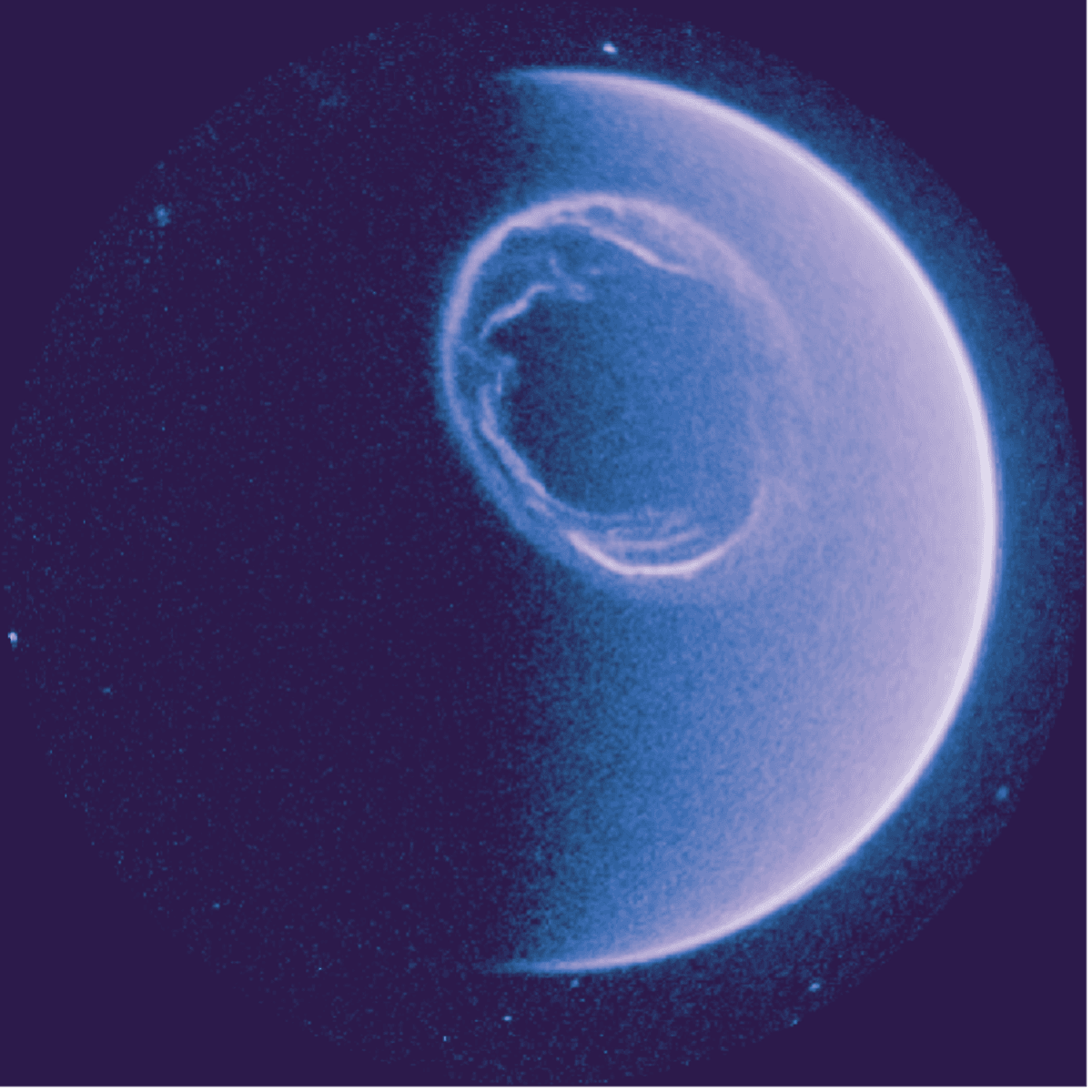
September 30, 20261 min read Add Us On GoogleAdd SciAmThe satellite, Smile, is a joint European and Chinese mission to study space weather and geomagnetic storms above EarthThis is the first image to be released from the ultraviolet imager (UVI) on the European-Chinese Smile mission. ESA & CAS/Smile/UVIJoin Our Community of Science Lovers!Auroras swirling above the North Pole are a gorgeous sight from Earth’s surface—and from space.A satellite named Smile has captured an auroral substorm raging above the North Pole. These are the mission’s first images: the satellite was launched into a highly elliptical orbit above Earth in May and is a collaboration between the European Space Agency (ESA) and the Chinese Academy of Sciences to study solar and geomagnetic storms and space weather.The images show the somewhat hurricanelike swirl of ultraviolet (UV) light during the auroral substorm over the North Pole. This kind of storm is caused by solar wind interacting with Earth’s magnetic field. Such events aren’t dangerous, but they can cause pretty light shows in the sky.On supporting science journalismIf you're enjoying this article, consider supporting our award-winning journalism by subscribing. By purchasing a subscription you are helping to ensure the future of impactful stories about the discoveries and ideas shaping our world today.Taken on July 24, during a particularly large influx of solar particles into the atmosphere, the observations reveal the full extent of the Northern Lights in UV light.Storms like this are best viewed in the ultraviolet range because there’s no interference from daytime sunlight. Smile will be recording auroras for 45 hours at a time, according to the ESA.This is one of two first images to be released from the X-ray camera (SXI) on the European-Chinese Smile mission. With SXI, Smile is becoming the first spacecraft to make detailed, long-running X-ray observations of Earth’s magnetic field.ESASmile’s x-ray camera also captured the bright remnants of a distant exploding star—but from now on, it, too, will be pointed at Earth in order to better understand our planet’s place in space.Subscribe to Support Independent JournalismGreat science journalism requires human expertise, time, effort and creativity. And it costs money. That’s why I and the journalists here at Scientific American hope you’ll join our community.When you subscribe, you are supporting staff and freelance journalists who are passionate about telling science stories that are true, important and compelling. Our editors and reporters are often experts in their fields, which means they understand the nuances of big discoveries and can untangle the breakthroughs from the hype. With a subscription, you are also supporting rigorous fact-checking to ensure the words we publish are precise and accurate. And you’re supporting original illustrations, graphics and photos that bring you closer to an advanced laboratory, an ice sheet in Antarctica or a space mission in orbit. You’re helping us craft other types of high-quality journalism as well: Our newsletters are carefully written, edited and curated by staffers you have or will come to know and love. Our Science Quickly podcast is based on original reporting, collaboration with editors and scientists and exacting production.Subscriptions keep this engine running so we can continue to deliver thoughtful, rigorous and independent science journalism to you. In an era of viral misinformation, this work is crucial. If you value what we do, I hope you’ll consider joining us as a subscriber
Satellite images reveal ethereal auroral storm raging above the North Pole
Full Article
Original Source
Read the full article at Scientificamerican →KhanList aggregates and links to publicly available news content. We do not host full articles from third-party sources. Always verify important information with original sources.