
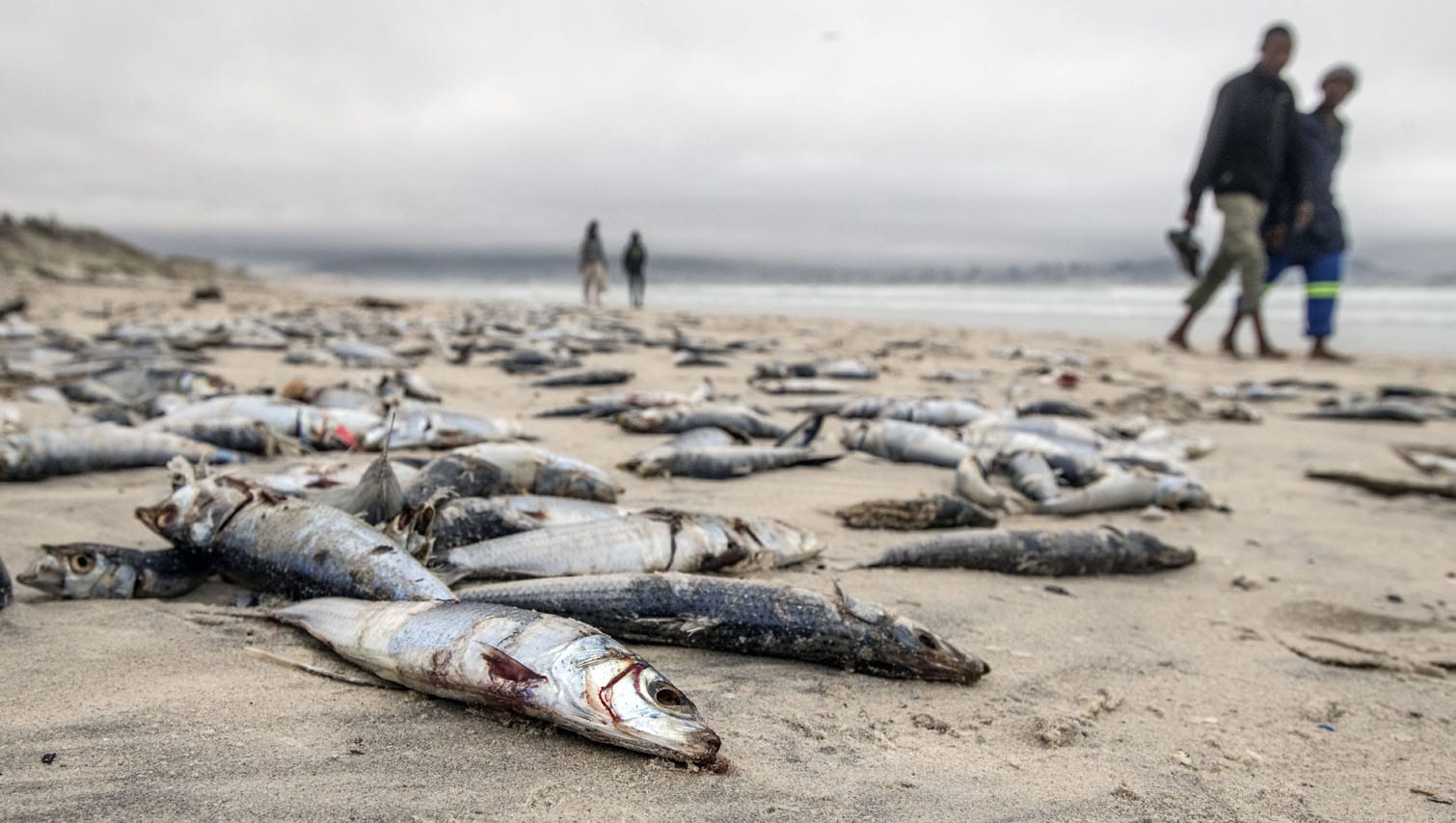
Testing confirmed PHV in sardines sampled from both the Western Cape and the Eastern Cape, supporting a connection between the two outbreaks. The Department of Forestry, Fisheries and the Environment (DFFE) confirmed on Sunday that it was temporarily limiting sardine catches. This decision comes after a mass mortality event that has affected fishing grounds along South Africa’s coast since late July. Fisheries escape full closure despite uncertainty The department’s Small Pelagic Scientific Working Group (SWG-PEL) met on 4 September to weigh diagnostic results, mortality estimates and fishing data before making its recommendation. “Although the magnitude of the mortality remains uncertain, the available evidence did not indicate that it had caused a sufficiently large reduction in the sardine population to warrant a complete closure of the fishery [industry],” said the DFFE. The working group nevertheless proposed a cautious middle path. “The SWG-PEL nevertheless recommended a temporary precautionary limitation on catches while further information is obtained.” The DFFE said it had accepted this approach in full. Sardine death numbers shaky Officials acknowledged that the numbers behind the decision remained shaky. Estimates of how many fish had died were described as “scenario-based and highly uncertain,” since they relied on assumptions about fish density in visible patches and how far isolated observations could be stretched across the coastline. The department also flagged a gap in the data that could not easily be filled: “there is also no reliable estimate of the number of fish that may have sunk to the seabed.” The group also weighed comparisons with earlier pilchard herpesvirus (PHV) outbreaks in Australia, but said those figures could not be applied directly to South Africa given differences in survey methods, coastline and stock conditions. The department also flagged that footage of unrelated fish die-offs elsewhere in the world had been circulating online, which it said “may create a misleading impression of the scale of the local mortality.” Die-off spread from Western Cape to Wild Coast The mortalities began in the Western Cape in late July 2026, according to the department. Reports then reached Gqeberha by 27 August, before extending to East London and the northern Wild Coast, including the stretch between Port St Johns and Mbotyi Beach, roughly 60km from the KwaZulu-Natal border, by 2 September. Similar strandings were recorded at Walvis Bay’s Langstrand, Swakopmund and Henties Bay in Namibia, though the department cautioned that it had not confirmed a link to the South African event. “The Namibian reports cannot be conclusively linked to the South African event until laboratory comparisons have been completed,” it said. No new dead or dying sardines had been reported since 3 September, and none had washed up along the KwaZulu-Natal coast. The department suggested warmer inshore waters there may have slowed the shoals’ northward movement during the annual sardine run, but stressed this was “a plausible oceanographic interpretation rather than a confirmed barrier to the mortality event.” Laboratory tests point to virus Testing confirmed PHV in sardines sampled from both the Western Cape and Gqeberha, in the Eastern Cape, supporting a connection between the two outbreaks. The department said the combination of high virus levels, its confirmation in both provinces, and the pattern of deaths meant PHV was “the most likely primary cause,” while harmful algae and screened marine biotoxins had not been supported as primary drivers. A small batch of KwaZulu-Natal sardines collected in June and July, before any deaths were reported, tested negative for PHV. “However, because the sample was small and limited in space and time, this does not establish that PHV was absent from the wider sardine population at that time, but it provides a useful pre-event comparison.” It added there was no evidence yet of when or how the virus reached South African waters, and no basis for blaming any particular country, company or product. Monitoring to continue An October-to-November hydroacoustic survey would provide the first post-event estimate of sardine biomass, the department said. It continued working with Namibia, South African Institute for Aquatic Biodiversity (SAIAB), Rhodes University, the fishing industry and local authorities on further sampling. While PHV is not known to infect people, the department urged the public not to collect, eat or use as bait any dead or dying sardines found on beaches. “As confirmed in the joint DFFE and National Regulator for Compulsory Specifications public statement, the mortality event does not provide a basis for discontinuing commercially produced canned sardines processed under regulatory oversight.”
Sardine catch limits imposed as fishery reels from mass die-off
Full Article
Original Source
Read the full article at Citizen →KhanList aggregates and links to publicly available news content. We do not host full articles from third-party sources. Always verify important information with original sources.