
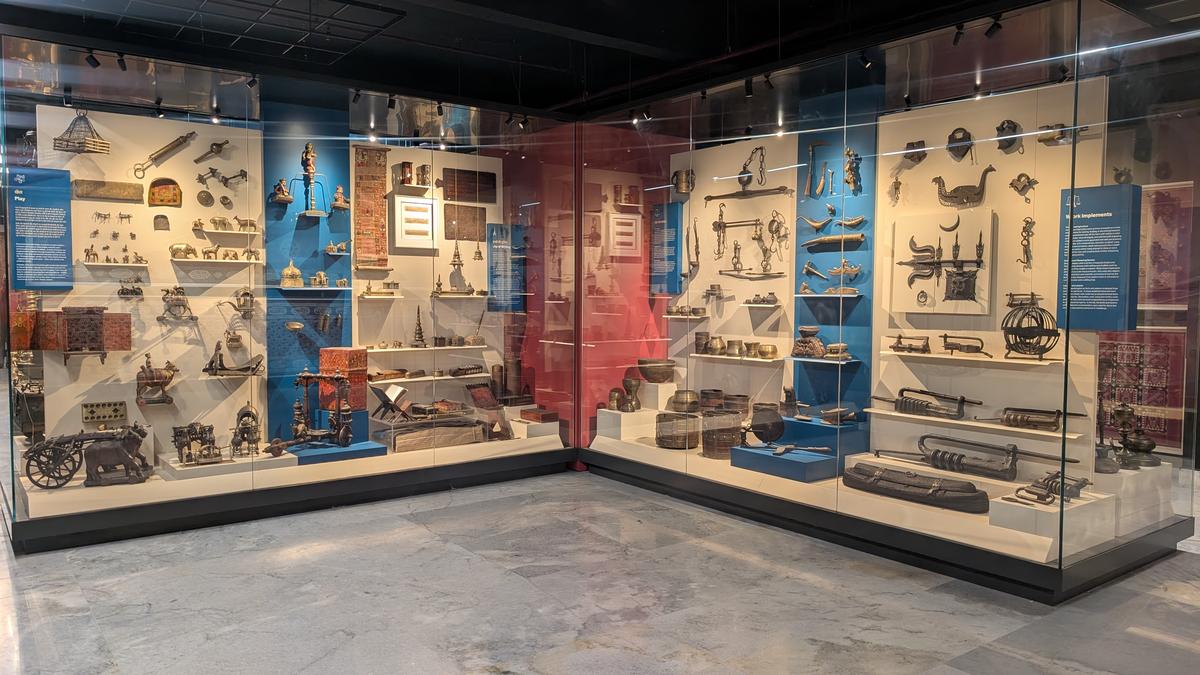
Sanskriti Museum | Photo Credit: Special Arrangement A striking 19th-Century tiger mask and a brass breastplate from Karnataka greet visitors at the entrance of the newly opened Sanskriti Museum of Everyday Art & Indian Textiles. Located within the Humayun’s Tomb World Heritage Site Museum in Delhi, these pieces offer a fascinating preview of the living traditions, regional master craftsmanship, and rich cultural tapestries preserved within.The new gallery showcases a legendary collection of over 1,000 artifacts and textiles assembled over five decades by OP Jain, founder of the Sanskriti Museums. The exhibits range from betel nut crackers, children’s toys, and writing instruments to lamps, combs, and kitchen utensils. Complementing these objects is a vast collection of Indian textiles, including bandhani from Rajasthan, kani shawls from Kashmir, and phulkaris from Punjab, among others from across the country. The collection was gifted by the Sanskriti Board of Trustees to the Indira Gandhi National Centre for the Arts (IGNCA), with display design and execution handled by the Aga Khan Trust for Culture (AKTC), which co-manages the exhibition space. According to Jain, “The care, imagination, inventiveness and aesthetics of craftsmen can be a relief from our sense of despair at the impersonality of mass production. These painstakingly hand-crafted products made for a discerning public instill a sense of wonder at the sensibilities of another age.”The curation inside follows a life-cycle approach, with the first display dedicated to childhood and artefacts for play. Beautifully adorned cradles and painted wooden walkers are displayed inside vitrines. With education as the next category, the display shows writing instruments such as ornate pens, brass ink pots, Kashmiri papier-mâché pen cases and wooden slates. Tools for work follow, and on the shelf, bronze rice measures from eastern India sit beside ornamental locks and latches. The kitchen section is extensive, with utensils made of wood, brass, iron, marble and sandstone among others. Who knew a simple kitchen item, such as a chakla-belan, could hold its own when it came to craftsmanship! But here it sits, next to intricately crafted butter churners and mortar-pestles. The women’s beauty section has foot scrubbers with peacock handles, hairpins and combs with motifs of women figurines and slender containers for kajal and vermilion. The artefacts in this display capture the elegance and functionality of everyday beauty objects. A display of boxes shows the sheer variety used in Indian homes, including wooden boxes inlaid with ivory, simpler ones with lids, and artefacts of use in religious ritual and home shrines that remind one of the past.An entire glass display is dedicated to lotas or sculptural pots, and for good reason. Archana Saad Akhtar, programme director, Design, AKTC shares that when renowned American designers Charles and Ray Eames were invited by Prime Minister Jawaharlal Nehru to visit India in the late 1950s to set up a design school in India, the designers were fascinated by the lota and how design, form and function come together beautifully in them – an observation they documented in their India Report which ultimately led to the formation of the National Institute of Design. The lawns of the famed Humayun's Tomb is watered to maintain the greenery and bring down temperatures in one of the finest examples of Mughal Architecture in Delhi. THE IMD has announced the early arrival of summer in 2025, and according to IMD, it has been the warmest February in 125 years.. Photo R V Moorthy / The Hindu | Photo Credit: MOORTHY RV Apart from the artefacts, the museum space is also peppered with samples of Indian textiles from across the country. Alongside the display, one can read about the craft as well as information about the specific samples showcased behind glass cases. The border of a Baluchari saree from West Bengal is adorned with ‘Vande Mataram’ embroidered in Bengali; elsewhere, the unique tapestry weaving technique of a kani shawl from Kashmir is on display. “If we don’t safeguard these traditional textile techniques now, the knowledge of how to create them will disappear forever,” says Archana.As one exits the museum, one can’t help but gaze in admiration at the monumental clay horses and elephants from the Ayyanar terracotta traditions of from Tamil Nadu, displayed in the courtyard — also a gift of the Sanskriti Foundation.The Sanskriti Museum gallery is open from 10am to 6pm on all days except Mondays. Entry is priced at₹50. Published - September 07, 2026 05:48 pm IST
Sanskriti Museum at Humayun’s Tomb celebrates India’s everyday art and craft traditions
Full Article
Original Source
Read the full article at Thehindu →KhanList aggregates and links to publicly available news content. We do not host full articles from third-party sources. Always verify important information with original sources.