
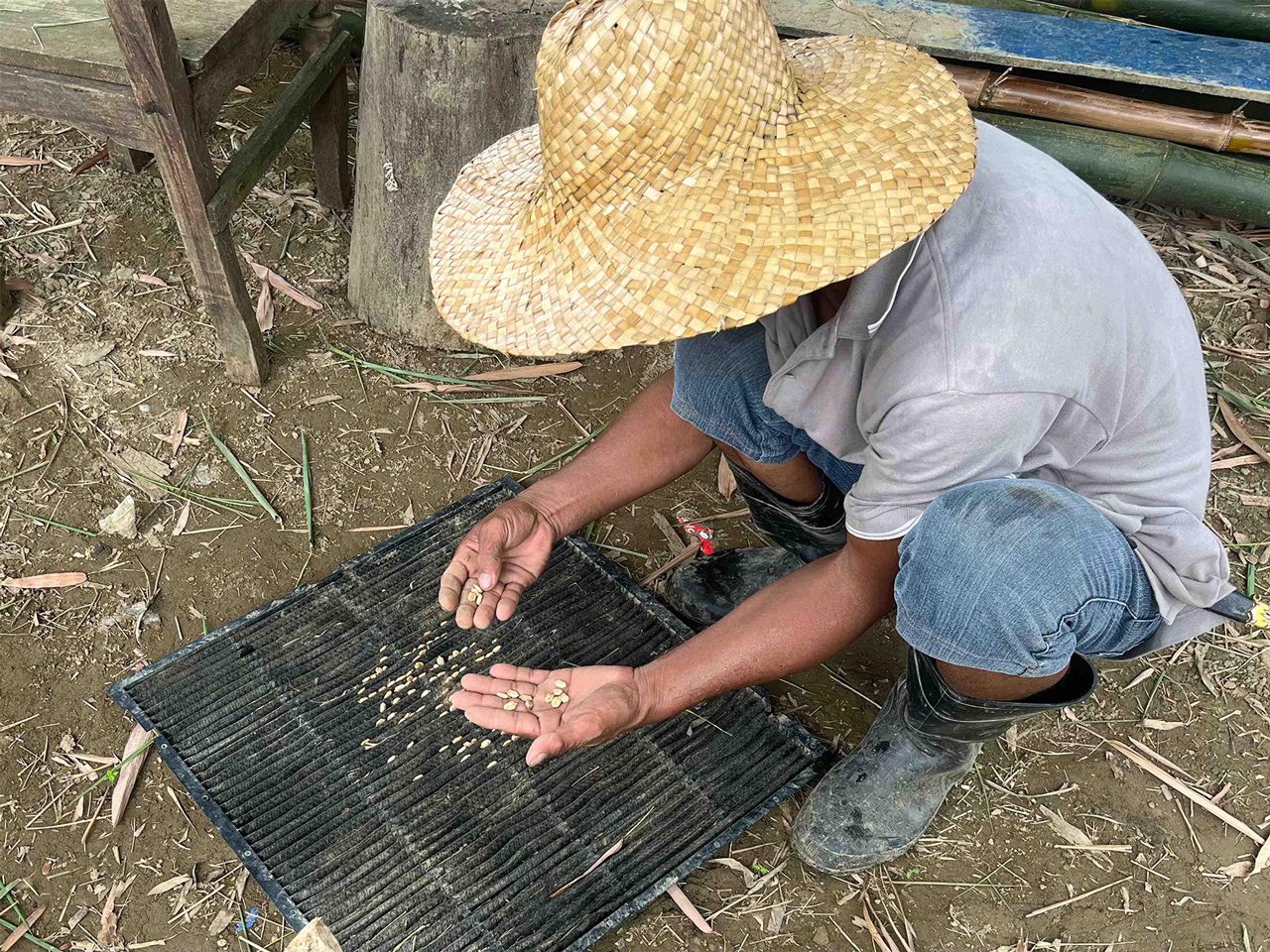
RIZAL, Philippines – The mud-stained tarp above Felicitas Tamayo’s cottage was supposed to make farmwork easier. She paid P3,000 for the sheet to shield herself from the afternoon sun. After the floods of September 2026, it was left covered in mud — the water rose so high that only the roof of her two-story hut remained visible. Her vegetables were gone, too. “Walang natira (Nothing was left),” the 61-year-old farmer said. Tamayo has farmed in Barangay Santa Ana in San Mateo, Rizal, for 31 years. She rents nearly a hectare of land for P12,000 a year — more than double the P5,000 she paid when she began. The floods submerged her crops, including sweet potato tops (talbos ng kamote), eggplants (talong), squash (kalabasa), bottle gourd (upo), bitter melon (ampalaya), and sponge gourd (patola). Without produce from her own plot, Tamayo has had to buy vegetables in Marikina for the stall she runs in San Mateo. “Ngayon, wala pa kaming produkto. Sa Marikina kami namimili,” she said. (Right now, we don’t have any products yet. We source our goods from Marikina.) Selling other people’s produce, however, does not replace what her farm could have earned. Before she can harvest again, she must spend on land preparation, seeds, and equipment. CLEAN-UP. Felicitas Tamayo watches volunteers clear dry grass and other plant waste from her plot on October 17, 2026. Photo by Dominique Astucia/Rappler By October, Tamayo had planted bok choy or Chinese cabbage (pechay), mustard greens, patola, and okra. She was also preparing to plant radish (labanos), which can be harvested in about 40 days. She said she had already spent P8,000 on tractor work to prepare her land. The cleanup was another task. After the floodwater receded, rubbish and thick sediment remained across the farm. Tamayo and other farmers had to remove the debris before planting again. Tools and seedlings previously distributed by Damayang Migrante, the relief arm of Migrante Philippines, had been washed away in subsequent floods, Tamayo said. Her household received three cans of sardines, three packets of instant noodles, and two kilograms of rice from the barangay, but she said she had not received assistance specifically for the crops lost. A short distance away, Ricardo del Rosario was clearing debris from his own plot. The roof of his hut lay on the ground. The flood had also damaged his fence and a makeshift enclosure for his ducks, made of netting and bamboo. ALSO ON RAPPLER ‘Puro pagtitiis sa Patiis,’ say residents affected by knee-deep road flooding San Mateo landfill inside protected area – CENRO The hut — which he said stood on the exact spot where he was born — served as a resting place and storage area for speakers, a microphone, solar lights, and seeds. Del Rosario said it was the third flood that finally destroyed the structure. Del Rosario, 55, spent years driving 10-wheel trucks before returning to farming. Now, he wants to get his crops in the ground before the heat makes working outdoors harder. He uses a makeshift cover of tarp and bamboo so he can continue working when the sun becomes intense. “Ako lang merong ganyan (I’m the only one who has something like that),” he said, explaining that other farmers often head home when the heat becomes difficult to bear. “Ako, ang target ko [ay] makapagtanim, makatanim kaagad.” (My goal is to be able to plant, to get planting right away.) DEBRIS. Ricardo del Rosario poses with flood debris on October 18, 2026. As he cleaned up, he searched for items he could reuse and pointed to car parts that he said had washed onto his plot. Photo by Dominique Astucia/Rappler Like Tamayo, he must spend money before he can earn again. Del Rosario plans to borrow P5,000 from a sibling: P3,000 for tractor rental from the Department of Agriculture (DA) and P2,000 for seeds. He said even a small quantity of bitter melon seeds costs P45, and he hopes for government support to make farm inputs more affordable and help farmers access capital without relying on costly informal loans, such as 5–6. Both farmers are trying to restart production while facing expenses that arrive before their next harvest. They are also racing to plant another crop before the dry spell sets in. The Philippine Atmospheric, Geophysical and Astronomical Services Administration’s October 21 outlook said a strong to very strong El Niño was expected to persist until the first quarter of 2027, with impacts possibly continuing through the first half of the year. The weather pattern increases the likelihood of below-normal rainfall, dry spells, and drought in some parts of the country, although heavy rainfall may still occur during tropical cyclones and other rain-bearing systems. Tamayo is preparing to replace the irrigation hoses that floods repeatedly wash away. Her household uses a motorized pump to draw water from the river, but pumping also costs money. She said they sometimes borrow to cover those expenses. “Parang namamatay din ‘yung taniman namin ‘pag walang tubig,” she said. “Our crops seem to die when there is no water.) The national government has also announced plans for El Niño assistance: P6.2 billion had been released from the DA’s P45-billion funding request for fertilizer and fuel assistance, while additional support, including solar irrigation, was planned. For Tamayo and Del Rosario, the preparations are more immediate: clear the land, buy seeds, secure equipment, and find money to keep planting. After losing one harvest to too much water, the farmers must now prepare for the possibility of too little. – Rappler.com Dominique Astucia is a Rappler intern studying BA Journalism at the University of Santo Tomas.
San Mateo farmers brace for El Niño after floods wiped out their crops
Full Article
Original Source
Read the full article at Rappler →KhanList aggregates and links to publicly available news content. We do not host full articles from third-party sources. Always verify important information with original sources.