
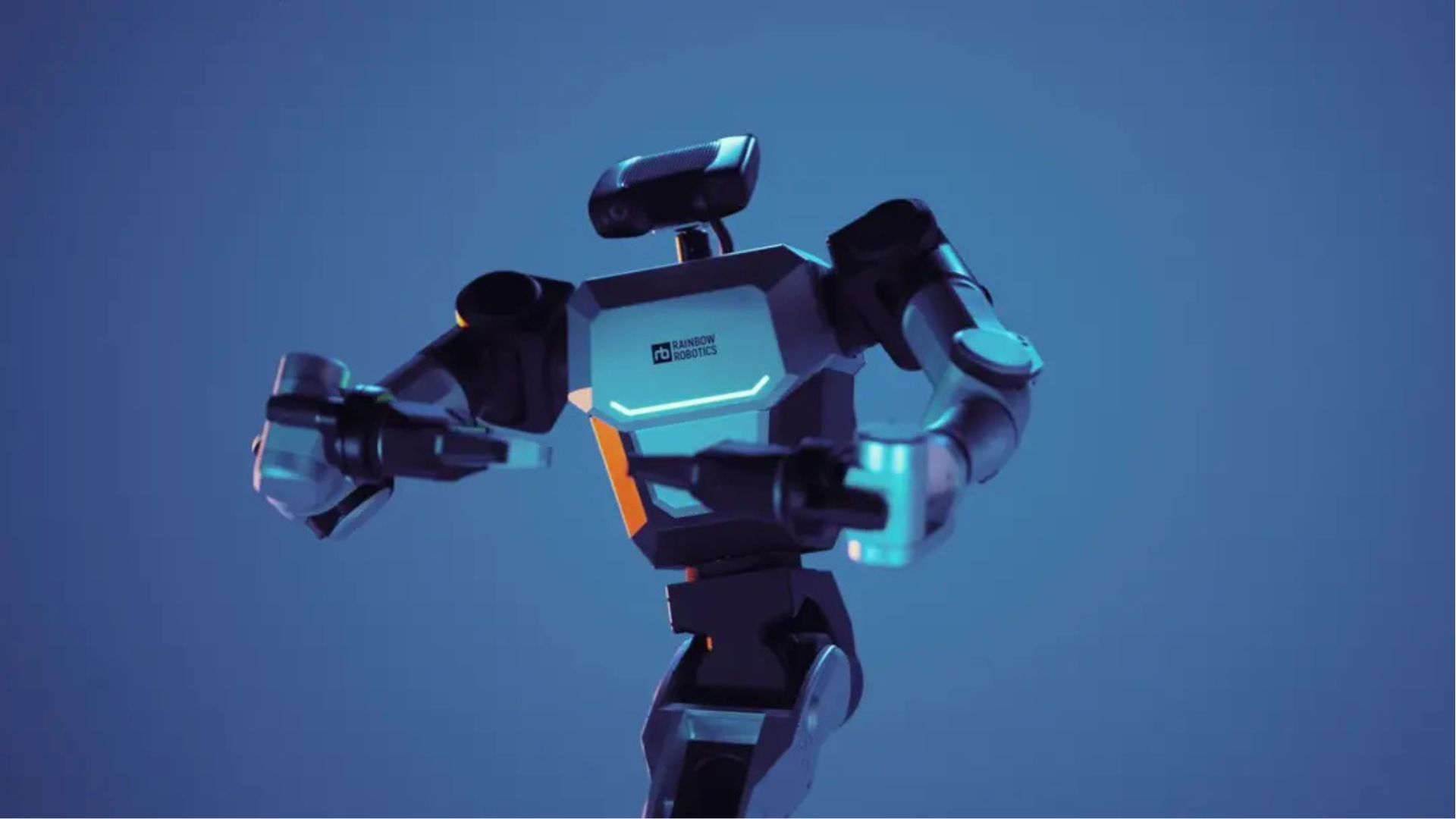
Samsung Electronics has reportedly been developing a humanoid robot internally for years, separate from its publicly announced Robotics eXperience (RX) division and Rainbow Robotics subsidiary. Korean media reports say the confidential project has reached an advanced stage and could outperform several domestic competitors. The company is also said to be adapting motor technology from its home-appliance business to develop the robot’s actuators, which can account for up to 60 percent of humanoid production costs. The approach could give Samsung a significant cost advantage over rival humanoid makers. Samsung’s robot push Humanoid robots are expected to become a major industry as advances in artificial intelligence and robotics enable machines to handle increasingly complex tasks. Samsung has already strengthened its position in the sector through a major investment in South Korean robotics company Rainbow Robotics, becoming its largest shareholder. The report also suggests that Samsung is developing humanoid robots independently within the company. The reported project operates separately from Rainbow Robotics and could benefit from Samsung’s extensive manufacturing capabilities. According to the reports, Samsung’s in-house humanoid has already demonstrated performance that surpasses several domestic competitors, highlighting the potential advantage of its industrial expertise. The reported system draws on Samsung’s existing manufacturing capabilities, including motor technology developed for home appliances. Samsung produces brushless DC (BLDC) motors at large scale for products such as washing machines, air conditioners and refrigerators. These motors use technologies also relevant to robotic actuators, including windings, permanent magnets, rotor balancing and electronic control systems. According to experts, Samsung’s existing production infrastructure could therefore help reduce the cost and time required to manufacture robotic actuators compared with companies building dedicated production capabilities from scratch. Samsung develops VLA Samsung’s reported humanoid robotics strategy extends beyond hardware, with the company developing AI systems designed to control and improve robot performance. Its Gauss large language model provides a foundation for robotics AI. At the same time, Samsung Research has developed Shallow-π, a Vision-Language-Action (VLA) model that combines visual perception, language understanding, and physical movement. Shallow-π reportedly reduces computational requirements to one-third of conventional VLA systems and enables robots to make 17 decisions per second. In factory testing, it achieved a 95 percent success rate on precision water-hose insertion tasks, coordinating 22 degrees of freedom across both arms and hands. Samsung is also reportedly developing a World Model that can predict the physical consequences of actions before robots execute them, potentially helping machines learn new tasks and adapt to unfamiliar environments. The company plans to establish a Robot Data Factory at its Gumi campus, using data generated by robots working on semiconductor, smartphone and appliance production lines. Such real-world data could help train AI systems and reduce the sim-to-real gap. Rainbow Robotics remains an important part of Samsung’s robotics strategy following Samsung’s 35 percent controlling stake. Its RB-Y1 wheeled dual-arm robot is reportedly being tested in logistics operations, while the separate in-house humanoid project is described as more advanced. Samsung’s RX division, launched in July 2026, oversees the broader robotics strategy, including core technology development, business execution and international research hubs.Get the latest in engineering, tech, space & science - delivered daily to your inbox.Jijo is an automotive and business journalist based in India. Armed with a BA in History (Honors) from St. Stephen's College, Delhi University, and a PG diploma in Journalism from the Indian Institute of Mass Communication, Delhi, he has worked for news agencies, national newspapers, and automotive magazines. In his spare time, he likes to go off-roading, engage in political discourse, travel, and teach languages.
Samsung’s humanoid robot is quietly developing with lower actuator costs: Reports
Full Article
Original Source
Read the full article at Interestingengineering →KhanList aggregates and links to publicly available news content. We do not host full articles from third-party sources. Always verify important information with original sources.