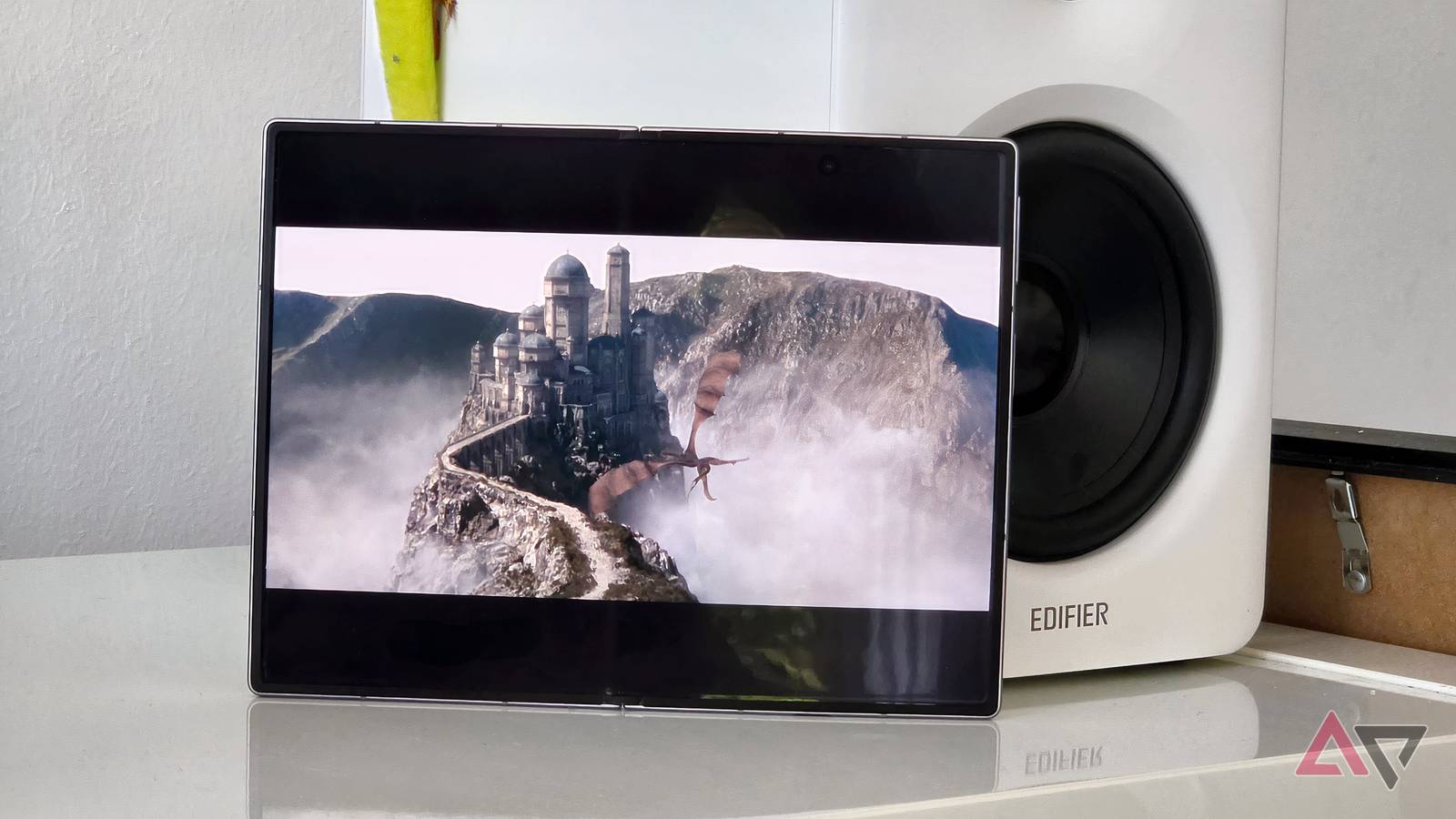
Published Aug 16, 2026, 11:00 AM EDT Tom has been covering technology since 2019, having worked as part of the phones team at TechRadar and then as an editor at What to Watch. Since 2025 he’s been a freelance contributor for many more brands including Digital Trends. BGR, TechRadar Gaming, TechAdvisor and GamesRadar. He's written about myriad topics over his career including phones and tablets, headphones and earbuds, fitness and AV, and enjoys adding more beats to his repertoire. Outside of technology he’s also written reviews and features on games, movies and sports, having worked for many years as an editor at movie & TV website WhattoWatch. He's attended tech launches, product shows, movie premieres and game launches to do so. Tom is based in London, UK, and when not covering technology he does work in the film sector, enjoys to run, cycle, climb and play tennis, and plays several instruments. The Samsung Galaxy Z Fold 8 is a foldable phone designed for enjoying videos. That's the thinking behind the wide-screen main display, which matches shows and movies better than the one on the Z Fold 8 Ultra. But there's one tiny design issue. In the month I've used it, I've loved the Galaxy Z Fold 8 even if it misses a feature that lessens its usefulness as a foldable. Video watching has taken up a large portion of that month: I've used the phone for lots of YouTube and catching up on TV shows. However, I don't think Samsung thought through the speaker grille placement on the device, and it affects how well the Z Fold 8 fares when you're using the built-in stereo speakers. Where are the Samsung Galaxy Z Fold 8's speakers, anyway? Let's get ourselves orientated When the Samsung Galaxy Z Fold 8 is folded and held in portrait mode, it has a speaker at the top and another at the bottom. These are both on the front of the two sections of the phone. In this regard, the Z Fold 8 matches almost every "standard" Android phone on the market. They generally have a speaker grille next to the USB-C port on the bottom edge of the device, and one at the top edge or on the front corner of the phone. However, when you open the Samsung Galaxy Z Fold 8, these speakers are still on the top and at the bottom edge. That's different from how tablets work, which I'd say is the best comparison to this form factor; it's a big screen designed for viewing. Most tablets have their speakers on the left and right edges of the display, when held vertically, which is the standard way to use them. The real problem is where the Galaxy Z Fold 8's speakers are on the top and bottom edges when the phone is unfolded. They're both on the left side of your screen, so all your audio comes from this side. The speaker placement is almost definitely just a side effect of how these phones are designed. It's not a mistake on Samsung's part. The company owns countless audio companies, and knows about sound. There's just nowhere else for these speakers to go. But the placement still has an annoying side effect which, after you've heard it, you can't un-hear. Why correct speaker placement matters Clowns to the left of me, nothing to the right... For audiophiles, home theater makers, and professional audio technicians, speaker placement is vital to make a good sound system ring true. The internet is awash with tutorials on speaker size, angle, height, and combination to create a good experience. And it's because, when speakers are placed well, the effect elevates your audio. A good speaker setup can improve a movie, TV show, song, or game. It adds immersion, so you feel like you're surrounded by the action, the musicians, or the world of the story. Characters on the left of the screen sound like they're on your left, explosions on the right feel like they're on your right, and the spacing added means you can hear all the noises in between. Now, I'm no audio engineer, but I'd wager that "put all your speakers on the left" is not good sound design advice — only AI would think it's sage wisdom. In reality, unbalanced audio reveals the artificial facade of whatever we're listening to. It's like when you listen to stereo panned music out of a single earbud. You know you're missing a lot of the track, and you're reminded that you're listening to a track, making the song sounds much worse. The more I've used the Samsung Galaxy Z Fold 8 for movies and TV shows, the more this feels true of the foldable phone. When I'm watching a video, it feels apparent that the sound is coming from only one side of the device. At best, it's an annoying distraction that I can't un-hear. Worse, it makes it feel like this phone — which is designed for watching content — isn't doing justice to my TV show or movie. Smartphones designed for headphone listening At the end of the day, do many people use their smartphone speakers? I only do for the purposes of testing a new device, like the Galaxy Z Fold 8. I imagine most people use their phones as I do the rest of the time: using wireless headphones, rendering correct speaker placement moot. Headphones are designed for balanced audio, don't disrupt other people, so you can watch out and about, and have active noise cancellation, which is the most important headphone feature of all. Samsung Galaxy Z Fold 8 9/10 SoC Qualcomm Snapdragon 8 Elite Gen 5 for Galaxy Display type Dynamic AMOLED 2x 120Hz Display dimensions 7.6-inch open / 5.5-inch closed Display resolution 2448 x 1848 open / 1972 x 1248 closed
Samsung's Galaxy Z Fold 8 rocks for video — except for one problem you can't un-hear
Full Article
Original Source
Read the full article at Androidpolice →KhanList aggregates and links to publicly available news content. We do not host full articles from third-party sources. Always verify important information with original sources.