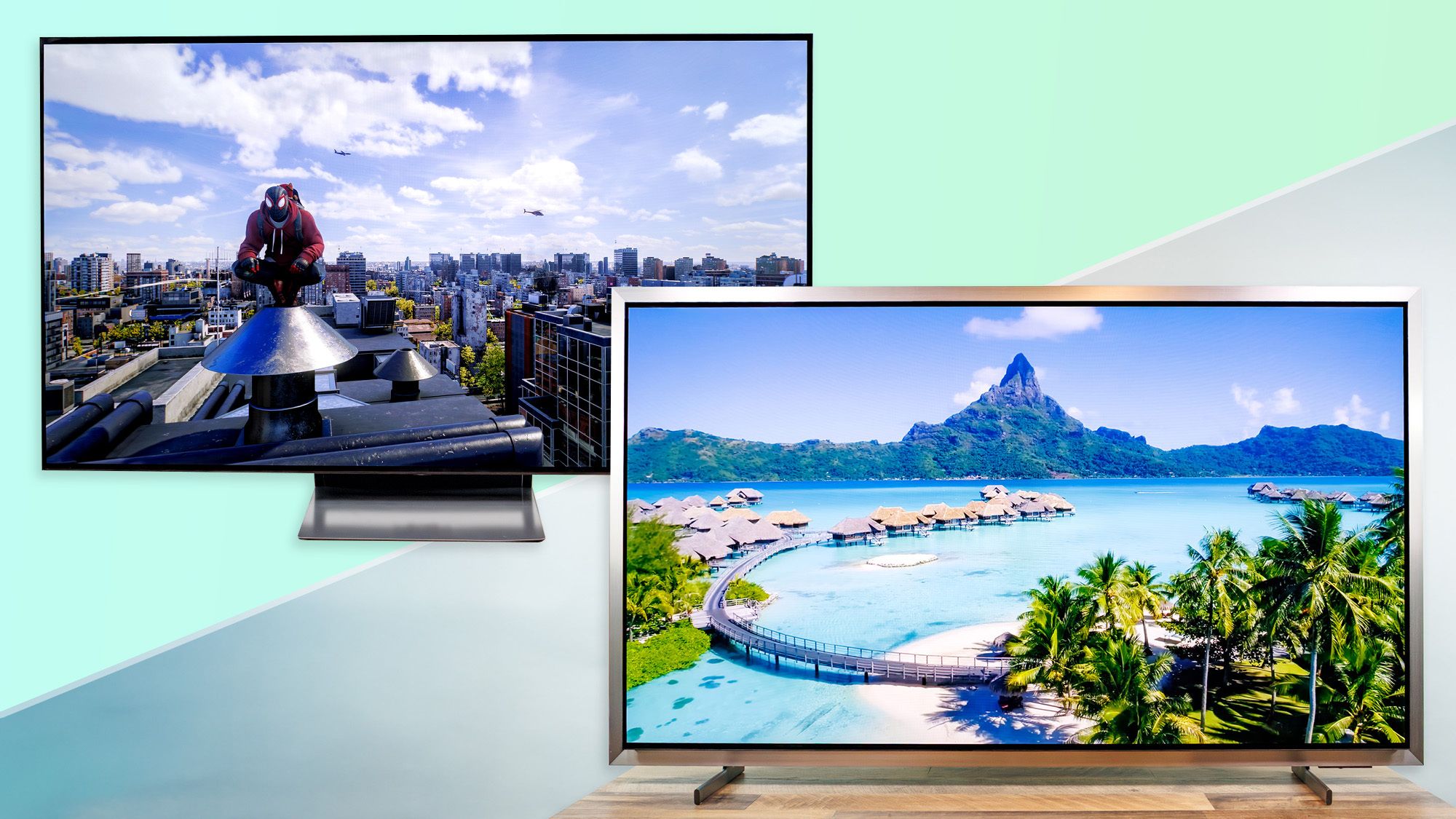
(Image credit: Tom's Guide) Not only is the Samsung S95H one of the best OLED TVs of the year, it's one of the best TVs I've ever seen, period. It recently earned our rare five-star rating on account of its incredible picture quality and its laundry list of features, but its price is steep and its metal-frame design won't be everyone's cup of tea.Sitting beneath the S95H in the TV-maker's OLED TV lineup is the Samsung S90H. This mid-range OLED isn't as bright or as colorful as the S95H, but it offers many of the same features for a significantly lower price.If you're in the market for an OLED TV this year — especially a Samsung-branded OLED — both of these TVs will surely make your short list of candidates. That's where I come in. I've got over a decade of TV-testing experience and I'm quite familiar with both models. Here's how the Samsung S95H and S90H OLED TVs compare — from performance to features and price. The Samsung S95H is one of the best OLED TVs ever made, as it delivers incredible, quantum dot-enhanced picture quality and nearly every streaming- and gaming-related feature one could ask for. It's much pricier than the S90H, however, and comes with a design that won't be everyone's cup of tea. As the brand's mid-range OLED for 2026, the Samsung S90H's picture isn't nearly as bright or as colorful as the flagship-level S95H. That said, it's much more affordable and shares many of the same features. It's a terrific option if you want the S95H's matte-style screen but not its metal-frame design. Samsung S95H vs S90H: Specs compared Swipe to scroll horizontally Header Cell - Column 0 Samsung S95H Samsung S90H Sizes 55", 65", 77", 83" 42", 48", 55", 65", 77", 83" Ports 4x HDMI 2.1 4x HDMI 2.1 Resolution 3,840 x 2,160p 3,840 x 2,160p Refresh rate 165Hz 165Hz HDR HDR10, HDR10+, HDR10+ Advanced, HLG HDR10, HDR10+, HDR10+ Advanced, HLG Smart TV software Tizen OS Tizen OS ATSC 3.0 support? No No Processor NQ4 AI Gen3 NQ4 AI Gen3 Despite their difference in price, the S95H and S90H are quite similar on paper. Like all Samsung TVs, neither set supports Dolby Vision, one of the most popular, enhanced HDR formats.These OLEDs are among the first Samsung TVs to support HDR10+ Advanced, an all-new, royalty-free Dolby Vision alternative. HDR10+ Advanced is meant to compete with Dolby Vision 2, the newest version of Dolby Vision HDR, but content for both is still scarce.One major difference has to do with size availability. The S90H comes in two smaller screen sizes: 42 and 48 inches. And, while it won't make a difference to the average viewer, it's worth noting that the S95H supports an optional, external One Connect Box that unlocks four additional HDMI ports.Winner: Samsung S95HGet instant access to breaking news, the hottest reviews, great deals and helpful tips.Samsung S95H vs S90H: Design (Image credit: Tom's Guide)The Samsung S95H's most eye-catching feature is its metal frame.The Samsung S95H's design is quite divisive, as it's unlike anything else on the market. As you can see in the photo above, the S95H features an eye-catching, metallic frame, and it can't be detached from the screen itself. The brushed-metal material plays the part of a premium design flourish, but based on conversations I've had with readers, you'll either love it or hate it.I don't mind the look of the S95H's frame when the TV is mounted on a wall, as the entire point is to emphasize the picture, similar to a portrait's frame. That said, the frame draws more attention to itself when the S95H is set up on a media console. (Image credit: Tom's Guide)The S90H, on the other hand does not come with a big metal frame. Its OLED screen sits atop a pedestal-style stand. It's sturdy enough to minimize wobble, but some people might prefer the approach of the S95H's setup, which trades a pedestal-style stand for a pair of L-shaped feet.Last year, Samsung's flagship OLED was the only OLED TV in the brand's lineup to feature Samsung's Glare Free display. This year, the Glare Free display has made its way to the mid-range S90H.This matte-style finish is the best in the business at eliminating direct glare, but there's a catch: During daytime viewing (or in well-lit rooms), the Glare Free display scatters light in such a way that black levels on the S95H and S90H appear purplish-gray instead of deep, inky black. This would not be the case with a glossy-style screen.Both TVs ship with Samsung's Solar Cell remote control, which automatically charges its lithium-ion battery via indoor/outdoor light. This convenient feature saves on the waste that comes with disposable batteries, but the Solar Cell remote's lack of an input button is a bit inconvenient.There's no denying that the S95H features a more luxurious look and feel. But the S90H's design is far less divisive.Winner: DrawSamsung S95H vs S90H: Performance (Image credit: Tom's Guide)Before we dive into which of these TVs is the better performer, let's compare their test results. (Both TVs were set to Samsung's Filmmaker picture mode when these tests were taken.) Swipe to scroll horizontally Header Cell - Column 0 Samsung S95H Samsung S90H SDR Brightness (10%, in nits) 253 226 Delta-E (lower is better) 2.2 1.6 HDR Brightness (10%, in nits) 2,721 1,497 UHDA-P3 Gamut Coverage 99.92% 99.34% Rec. 2020 Gamut Coverage 89.6% 77.83% Input latency (milliseconds) 9.7 9.3 Both TVs deliver the performance-related benefits that we've come to expect from OLED TVs: perfect black levels, pixel-level dimming and ultra-accommodating viewing angles. Because of these benefits, pretty much everything look superb on both the S95H and S90H.However, compared to the S90H, the S95H offers a superior picture. The differences come down to two key areas of performance: brightness and color.Almost every size in the S95H leverages Samsung Display's quantum dot-enhanced OLED technology (also known as QD-OLED). Samsung's mid-range S90 series featured a QD-OLED display last year, but this year, every size in the S90H series makes use of a standard WOLED display.There are many differences between QD-OLED and WOLED, but for our purposes, here's what you need to know: The S95H offers better HDR brightness and color volume than what you'll see on WOLED-equipped OLED TVs like the S90H.As you can see from our test results, the S95H is capable of pumping nearly twice the level of brightness to HDR highlights than the S90H. During HDR movies, shows and games, highlights — like the sharp reflection of sunlight off the hood of a car — are appear much brighter on the S95H.This added highlight brightness adds tremendously to the S95H's ability to create visual depth. It also allows for better detail around said highlights. (Image credit: Tom's Guide)The added range of colors makes for a more color-rich viewing experience on the S95H.But the primary benefit of the S95H's quantum dots can be seen in its color volume. Thanks to Samsung Display's enhanced OLED display, it covers 89% - 90% of the BT.2020 color space (compared to about 78% on the S90H).The added range of colors makes for a more color-rich viewing experience on the S95H, particularly during cinematic, HDR content. Bold, bright primary colors are punchier, but the S95H is particularly good at rendering accurate skin tones and low-luminance colors like dark blue.Despite its shortcomings when compared to the S95H, the Samsung S90H is nevertheless a sensational TV. Its roughly 1,500 nits of HDR highlight brightness is more than enough for an eye-popping, cinematic picture. It's an OLED TV, after all, so it's not saddled with light bloom and haloing around bright objects.I'm willing to bet that nearly everyone who spends time with the S90H will walk away impressed with its accurate, OLED-driven performance. The S95H is just brighter, more colorful and guided by more-advanced processing. In a side-by-side comparison, the S95H's advantages really shine.Winner: Samsung S95HSamsung S95H vs S90H: Smart platform and features (Image credit: Tom's Guide)Both the S95H and the S90H are built around a newly refreshed version of Samsung's Tizen-based smart platform, Smart Hub. This version is similar to what we saw across the brand's 2025 lineup, but there are some subtle changes to the user interface that improve the overall experience. For instance, new this year is a menu bar at the top of the screen that provides quick access to important settings.I suspect that most people that choose to rely on Smart Hub as their daily streaming platform will find it decent enough. Navigation and load times are similar across both TVs.When it comes to additional features and enhancements, these TVs are nearly identical. Both sets support 4K/120Hz gaming (the highest 4K spec on current-gen consoles), and with a gaming PC linked up, both OLEDs can support 4K titles at up to 165Hz.Winner: DrawSamsung S95H vs S90H: Verdict (Image credit: Tom's Guide) Swipe to scroll horizontally Header Cell - Column 0 Samsung S95H Samsung S90H Specs (25) 24 23 Design (25) 23 23 Performance (25) 25 23 Features (25) 24 24 Total Score (100) 96 93 The Samsung S95H is an astonishing TV. Its quantum-dot color is nearly unmatched among OLED TVs, and it's also one of the brightest OLEDs you can buy right now. This makes it a safer bet than the S90H for brighter-than-average rooms, all while creating a truly impressive sense of visual depth.But all of this performance upside comes at a steep cost. Right now, the 65-inch Samsung S95H is $2,999 at Best Buy, which is prohibitively pricey for the average consumer — even those willing to spend over a thousand bucks on an impressive, new TV.This is the primary reason why I recommend the Samsung S90H over its flagship-level sibling. The 65-inch S90H is currently $1,799 at Best Buy, and while it's not as bright and colorful as the S95H, you're still getting a near-identical set of features for gaming and streaming. In addition, the S90H's frame-free design is a safer bet for the average shopper.I won't tell you that the S95H's sensational performance isn't worthy of the S95H's added cost. For home theater enthusiasts who've been saving up for a life-changing TV, the S95H is probably worth its price.The S90H has far greater appeal for most people shopping for a higher-end TV. I suspect it'll be the more popular model in 2026. Follow Tom's Guide on Google News and add us as a preferred source to get our up-to-date news, analysis, and reviews in your feeds. More from Tom's GuideSamsung S95H OLED TV reviewSamsung S90H OLED TV reviewMicro RGB vs OLED TVs: What’s the difference? Michael Desjardin is a Senior Editor for TVs at Tom's Guide. He's been testing and tinkering with TVs professionally for over a decade, previously for Reviewed and USA Today. Michael graduated from Emerson College where he studied media production and screenwriting. He loves cooking, zoning out to ambient music, and getting way too invested in the Red Sox. He considers himself living proof that TV doesn't necessarily rot your brain.
Samsung S95H vs S90H: After testing both, here's the OLED TV you should buy
Full Article
Original Source
Read the full article at Tomsguide →KhanList aggregates and links to publicly available news content. We do not host full articles from third-party sources. Always verify important information with original sources.