
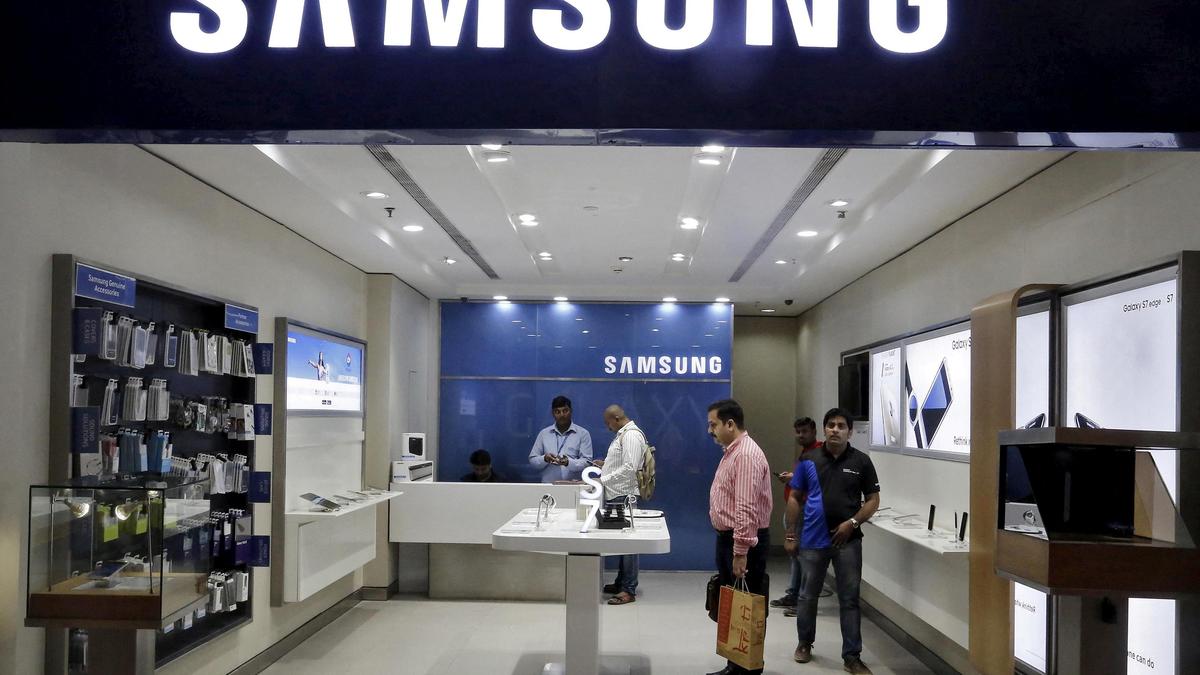
Samsung led India’s smartphone market during Q3 2026, overall shipments collapsed 23% | Photo Credit: Reuters India’s smartphone market dropped by 23.3% year-over-year (YoY) during Q3 2026 to reach 36.8 million units shipments. It was the steepest quarterly contraction since Q4 2022 and also the weakest festive quarter in a decade, said IDC.The research firm credited rising memory chip costs, pushed up by AI-driven demands, tightened component availability for the decline that led a very little room for vendors to hold prices.Smartphone’s average selling price (ASP) was at a record high ($371), a 26% YoY growth, festive offers were a few, and due to that price-sensitive buyers held back purchases this season, and pressure is likely to carry into Q4 2026.Samsung emerged as the top smartphone brand with a 17.7% share during Q3, followed by Vivo with a 16.8% share and Oppo having a 13.3% share. Vivo had a nearly 30% drop in shipments compared to Q3 2025, while Oppo’s fell by around 27%.Apple stood at number four position with a 10.1% share, as the sharp decline across Chinese brands lifted its position in a shrinking market, even as Apple’s own shipments fell 25% YoY after a flat Q2.Supply shortages on the iPhone 15, 16 and 17, along with price increases around the September launches, weighed on volumes, and less offers on older-generation iPhones cooled demand from aspirational buyers.iPhone 18 Pro and Pro Max series contributed over 30% of Apple’s shipments, despite higher prices and no base iPhone 18.Motorola came fifth with a 8.8% share while Xiaomi dropped to number six (8.3%), and Realme at seven (7.7%).Chinese brands were hit hardest, as their reliance on entry-level and budget volumes limited their room to absorb higher costs. Most have, however, formed joint ventures with Indian manufacturers to scale up local production and benefit from government incentives, signalling their long-term commitment to India.Shipments below $100 plunged 90.9% YoY to just 0.7 million units, and the tier’s share fell from 16.2% to 1.9%, a segment that has effectively left the market.4G shipments declined 15.5% YoY against 24.1% for 5G, nudging 4G’s share up to 10.4% from 9.5%. The gain comes from 5G falling faster as vendors retained 4G options at entry-level price points, with no sign of renewed 4G demand.The $200–400 band held flat (+0.1% YoY) in a shrinking market, while $400–600 surged 79.8%. Together they now account for 42.9% of shipments, up from 29.9%, helped by financing options that narrowed the price gap between bands. The $100–200 mass-budget segment fell 21.3% YoY, yet its 40.6% share keeps it the single largest band.The $800+ shipments slipped only 0.4% YoY, lifting the band’s share to 11.0% from 8.5%. The $600–800 band fell 52.4%, as supply constraints and scarcer offers on previous-generation devices weighed on this tier. Combined, the $600+ bands held steady at about 14.6% of the market.Offline shipments fell 26.7% YoY, against 18.9% for online, trimming offline’s share to 53.9% from 56.4%. Offline absorbed most of the 1H26 stocking and faced a high Q3 2025 base (+21.8% YoY), and with festive offers far scarcer than last year and channel partners alert to higher ASPs, restocking slowed. Published - November 17, 2026 12:29 pm IST
Samsung led India’s smartphone market during Q3 2026, overall shipments collapsed 23%
Full Article
Original Source
Read the full article at Thehindu →KhanList aggregates and links to publicly available news content. We do not host full articles from third-party sources. Always verify important information with original sources.