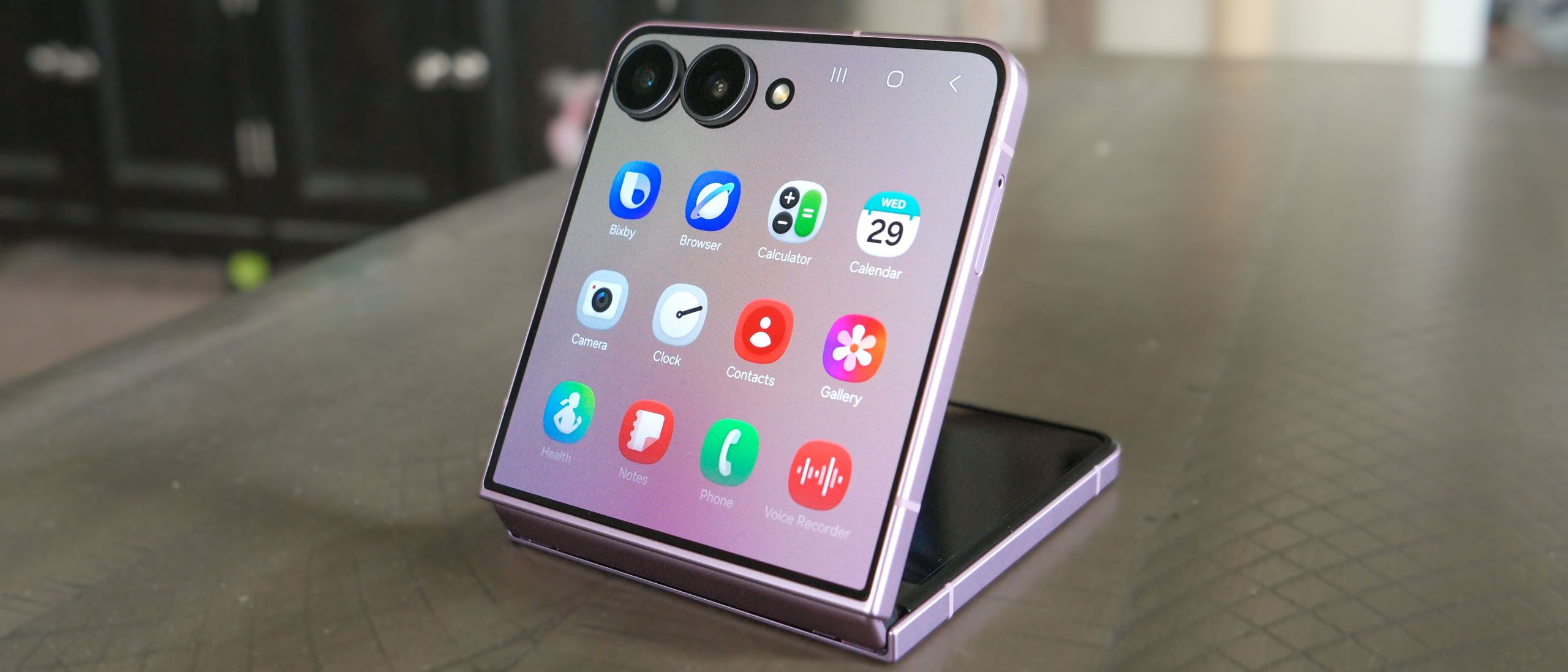
Tom's Guide Verdict With a $100 price increase, the Samsung Galaxy Z Flip 8 makes for a tough sell considering how it feels merely iterative. While it makes substantial gains with its processing performance and a brighter screen, it doesn't carry enough improvements and AI features to warrant an upgrade — or a higher price. Pros +Way more powerful processing performance +Easy to view display while outdoors +Horizon Lock makes videos steady +Pocketable form factor Cons -$100 price increase -Minor battery life improvement -Design is starting to look boring -Mostly unchanged camera performance Why you can trust Tom's Guide Our writers and editors spend hours analyzing and reviewing products, services, and apps to help find what's best for you. Find out more about how we test, analyze, and rate. I’ve made no secret of the fact that I much prefer flip phones over notebook-style foldables. Part of the reason is that they’re way more compact than the average slab, while offering better utility as a backup vlogging camera over notebook foldables like the Z Fold 8 Ultra.But after spending extended time testing generation after generation of flips, I can’t shake the feeling that the Z Flip line has plateaued. With the Galaxy Z Flip 8, Samsung seems content at adding minor polish — all while asking for more of your hard-earned money. Don’t get me wrong: last year’s Galaxy Z Flip 7 emerged as one of the best foldable phones around, but this year, Samsung hasn’t given the Flip quite the same level of treatment as its Z Fold line.What used to feel like the most exciting form factor in tech is starting to suffer from incremental fatigue, which I’ll explain thoroughly in my Galaxy Z Flip 8 review. It’s still a sleek piece of engineering, but when modest tweaks are paired with a price hike, it’s a lot harder to justify the upgrade.Latest Videos FromTom's GuideSamsung Galaxy Z Flip 8 review: Specifications Swipe to scroll horizontally Price $1,199 / £1,149 / AU$1,949 Release date August 7 Main display 6.9-inch AMOLED (1080 x 2520, 1-120Hz) Cover display 4.1-inch AMOLED (948 x 1048, 60Hz / 120Hz) Chipset Snapdragon 8 Elite Gen 5 for Galaxy RAM 12GB / 16GB Storage 256GB / 512GB / 1TB Rear Cameras 50MP main (f/1.8), 12MP ultrawide (f/2.2) Selfie Camera 10MP (f/2.2) Charging 25W wired / 15W wireless Battery 4,300 mAh Dimensions 6.57 x 2.97 x 0.24 inches unfolded (166.9 x 75.4 x 6.1 mm), 3.37 x 2.97 x 0.52 inches folded (85.7 x 75.4 x 13.1mm) Weight 6.35 ounces (180 grams) IP Rating IP48 Colors Pink, Graphite, Cream, Mint (online) Samsung Galaxy Z Flip 8 review: Cheat sheet (Image credit: Tom's Guide / John Velasco)What is it? Samsung’s 8th generation flip-style phone, serving as the successor to the previous Galaxy Z Flip 7.Who’s it for? The Galaxy Z Flip 8 is best suited for tech enthusiasts and casual content creators who value a sleek, pocketable clamshell design that gives them creative and more intuitive ways of capturing content.What does it cost? The Samsung Galaxy Z Flip 8 starts at $1,199 for the base model with 256GB of storage — marking a $100 price increase over last year's model. Upgrading to the 512GB option will set you back $1,399.What do we like? The Galaxy Z Flip 8 delivers substantial performance gains thanks to the Snapdragon 8 Elite Gen 5 processor, alongside a noticeably brighter screen that hits a peak of 2,150 nits. It also remains a superb, highly versatile vlogging camera, made even better by the addition of horizon-level stabilization.What don't we like? A $100 price hike makes the Z Flip 8 harder to justify, especially since the overall design, camera hardware, and battery life remain almost the same as before.Samsung Galaxy Z Flip 8 review: Release date and price (Image credit: Tom's Guide / John Velasco)The Samsung Galaxy Z Flip 8 officially hits shelves on August 7, 2026, with pre-orders live now. However, that tech comes at a higher cost: the Z Flip 8 starts at $1,199 for 256GB of storage.That’s a $100 price hike over last year's model, which also saw a $100 increase over the Galaxy Z Flip 6 before it. And if you want the extra storage, Samsung’s asking a whopping $1,399 for the 512GB model. While it’s still cheaper than the Motorola Razr Ultra 2026’s premium price tag of $1,499 (which comes with 512GB), the bigger problem is how this new price point intrudes on traditional flagship territory.You have four color options: Pink, Graphite, Cream, and Mint, which is an online exclusive. The pink shade of my review unit is charming, but the Mint option is definitely the standout of the bunch.Samsung Galaxy Z Flip 8 review: The UpsSubstantial performance gains Swipe to scroll horizontally Row 0 - Cell 0 Geekbench 6 (single / multi-core) 3DMark Wild Life Unlimited (score / fps) Galaxy Z Flip 8 3,627 / 11,215 29,723 / 177.9 fps Razr Ultra 2026 2,886 / 8,982 24,437 / 146.33 fps Galaxy Z Flip 7 2,286 / 8,079 19,144 / 114.64 fps One of the biggest upgrades I’m happy to see is the decision to go back to Qualcomm. Samsung made a surprising switch last year with the Z Flip 7 by using its own Exynos chip, but the return to Qualcomm’s flagship silicon gives the Z Flip 8 its most important hardware upgrade.Tom's Guide: Direct to Your InboxGet instant access to breaking news, the hottest reviews, great deals and helpful tips.The Snapdragon 8 Elite Gen 5 certainly proves it’s a powerhouse for this flip-style phone, delivering huge performance leaps over the Z Flip 7 — and even its main rival, the Motorola Razr Ultra 2026. In Geekbench 6, the Galaxy Z Flip 8 delivers a single-core score of 3,627 and a multicore score of 11,215. That’s a massive step up over last year's model and noticeably outpaces the Razr Ultra 2026.Graphics performance tells a similar story. On 3DMark Wild Life Unlimited, the Z Flip 8 notches an overall score of 29,723 with an average frame rate of 177.9 fps. By comparison, the Z Flip 7 ran at a much slower frame rate (114.6 fps) — while the $1,499 Razr Ultra 2026 reached 24,437 (146.3 fps).Brighter screen (Image credit: Tom's Guide / John Velasco)Despite there being no physical changes to either display, I’m happy to report that the main 6.9-inch AMOLED screen is noticeably brighter, reaching a peak brightness of 2,150 nits. It’s a solid step up over the Z Flip 7’s peak of 1,989 nits, though it still trails the Razr Ultra 2026’s more astounding 2,322-nit reach. Swipe to scroll horizontally Row 0 - Cell 0 Peak Brightness(Nits) Color(DCI-P3) Accuracy(Delta-E) Galaxy Z Flip 8 2,150 nits 83.4% / 97% (Natural / Vivid) 0.24 / 0.29 (Natural / Vivid) Razr Ultra 2026 2,322 nits 88.3% / 156.5% (Natural / Vivid) 0.21 / 0.34 (Natural / Vivid) Galaxy Z Flip 7 1,989 nits 89.8% / 107.4% (Natural / Vivid) 0.23 / 0.23 (Natural / Vivid) This increase makes it much easier to watch Instagram and TikTok reels outdoors on sunny days. I just wish Samsung had added the same anti-reflective coating found on the Z Fold 8 and Z Fold 8 Ultra, as glare from reflections can still be problematic at certain angles.Action-cam stability with Horizontal Lock Galaxy Z Flip 8: Horizon Lock - YouTube Watch On One software addition I’m happy to see Samsung borrow from the Galaxy S26 is the new Horizontal Lock option built into Super Steady video mode. No matter how I’m holding the phone — even when jitters are introduced while recording — the video footage stays completely level.Because the Z Flip 8’s folding clamshell design naturally lends itself to handheld vlogging, Horizontal Lock is a fantastic pairing for this form factor. While it does result in a slight crop to achieve that gimbal-like stability, the level footage it produces makes handheld clips look surprisingly professional without needing an external stabilizer — and you can see how well it works compared to the Z Flip 7 above.Still a superb vlogging camera (Image credit: Tom's Guide / John Velasco)Even if the camera hardware remains largely unchanged, the Galaxy Z Flip 8 continues to be one of the best pocketable vlogging setups you can buy. A big reason for that is its flip-phone form factor, which allows me to prop it up on any flat surface like a built-in tripod or bend it to a 90-degree angle to hold like a classic camcorder.What continues to make it such a great tool is the outer FlexWindow paired with the rear cameras. This lets me easily preview the frame while vlogging, while also delivering much better selfie captures than a standard front camera. Plus, compared to larger notebook foldables, it’s still far more intuitive to hold with one hand while keeping an eye on your shot.Samsung Galaxy Z Flip 8 review: The downsIt’s more expensive (Image credit: Tom's Guide / John Velasco)While the original Galaxy Z Flip from 2020 remains the most expensive model in the series, the Z Flip 8 marks the second consecutive year of a price hike. It’s $100 more at $1,199 for the 256GB base model, while stepping up to 512GB sets you back a steeper $1,399.Although it still manages to undercut the even more expensive Motorola Razr Ultra (2026), I don't think the upgrades offer enough value to justify the extra cost. In fact, this higher price point pushes the Z Flip 8 directly into competitive flagship territory. When you're paying this much, minor refinements and a chip upgrade feel a lot harder to rationalize — especially when the overall hardware design, camera specs, and battery performance have largely remained stagnant.Design is starting to look and feel stale Image 1 of 3 (Image credit: Tom's Guide / John Velasco) On paper, Samsung manages to make the Z Flip 8 ever so slightly thinner and lighter than its predecessor, but these minor improvements are practically impossible to notice when it’s side-by-side with the Z Flip 7 in real life.The fundamental aesthetic remains completely unchanged, as well. From the outer FlexWindow shape, to the flat aluminum sides and hinge mechanism, Samsung is sticking to the exact same visual playbook for another year. While it’s still a sleek, solidly constructed device, the design is undeniably starting to look and feel stale. It deserves the same redesign that allowed the Z Fold 7 to gain attention with its mind-boggling thinness.Camera performance is barely improved Image 1 of 3 Z Flip 8 (Image credit: Tom's Guide) Taking photos with the Galaxy Z Flip 8 feels almost identical to using its predecessor. Across most everyday shooting conditions, I don’t see significant gains in image performance from either its 50MP main camera or its 12MP ultrawide. Image 1 of 3 Z Flip 8 (Image credit: Tom's Guide) Take a look at the daytime shot I captured above of the side of the building in shadow. From the dynamic range performance to the fine details of the stone facade, there’s barely any difference between them. Image 1 of 3 Z Flip 8 (Image credit: Tom's Guide) Another perfect example is the 10x zoom shot of the tree in the gallery above. The fine details in the trunk and branches are no different between the Z Flip 8 and the Z Flip 7. Image 1 of 3 Z Flip 8 (Image credit: Tom's Guide) Against the Razr Ultra 2026, the Z Flip 8’s 12MP ultrawide doesn’t come close to matching the detail and definition captured by the Razr Ultra. When I zoom into the tree, the Razr's shot exhibits noticeably more definition in the bark and branches. Image 1 of 3 Z Flip 8 (Image credit: Tom's Guide) The sole area where I see significant improvement is low light. I’m referring to near pitch-dark conditions, as opposed to dim scenes with ambient light around. Notice how the Z Flip 8 makes the top level of the house look much brighter compared to the Z Flip 7, all while drawing out more stars in the night sky.Marginal battery improvement Swipe to scroll horizontally Row 0 - Cell 0 Battery size (mAh) Battery life (hrs:mins) Charging % in 15 minutes Charging % in 30 minutes Galaxy Z Flip 8 4,300 mAh 12:50 35% 59% Razr Ultra (2026) 5,000 mAh 16:20 42% 74% Galaxy Z Flip 7 4,300 mAh 12:24 29% 55% Battery life on the Galaxy Z Flip 8 moves in the right direction, but only by a hair. In our battery drain test, the Z Flip 8 logged an average time of 12 hours and 5 minutes, edging out the Z Flip 7 by under half an hour. What’s strange is that despite having the same 4,300 mAh capacity as before, the Snapdragon 8 Elite Gen 5 doesn't bring as dramatic an endurance boost as what I found with the Z Fold 8 Ultra. At the same time, the Motorola Razr Ultra (2026) blows past both Samsung clamshells with a massive 16:20 battery runtime.Unlike the new Folds, the Z Flip 8 doesn’t get faster 45W wired charging. Instead, it remains capped at 25W, and its charging times are barely faster than the Z Flip 7's — with the phone reaching 59% in 30 minutes compared to last year's 55%.Not enough software improvements (Image credit: Tom's Guide / John Velasco)On the software front, One UI 9 covers all the basics I want, offering the same strong level of multitasking and productivity Samsung’s custom experience has continually delivered. However, there are only a few new AI tricks, including more multimodal tools, enhanced Flip Shot shooting options, and minor updates to both Now Brief and Now Nudge.The outer FlexWindow, in particular, feels underutilized despite bringing more apps and basic actions to the cover screen. Aside from minor widget updates and basic app support, Samsung hasn't introduced any breakthrough features here. I was hoping for more specialized Galaxy AI tools, but the fact that Samsung didn’t give the Z Flip 8 the same AI-tracking My FanCam feature found on the Z Fold 8 says a lot about where the software falls short.Samsung Galaxy Z Flip 8 review: Bottom line (Image credit: Tom's Guide / John Velasco)The Samsung Galaxy Z Flip 8 remains one of the sleekest, most refined clamshell foldables you can buy, but its generational leaps are getting harder to see. On one hand, the return to a Qualcomm silicon with the Snapdragon 8 Elite Gen 5 delivers impressive performance gains, the screen gets bright enough to tackle outdoor glare with ease, and video features like Horizontal Lock make it an even more formidable tool for vlogging. If you're coming from a Z Flip 5 or an older slab phone, these upgrades are enough to warrant buying.However, when paired with a $100 price hike that pushes the base model to $1,199, Samsung's baby-step approach feels tough to defend. With the overall design aesthetic, camera specs, charging speeds, and battery endurance remaining unchanged as before — all while competitors like the Motorola Razr Ultra 2026 push the envelope in battery life and image detail — the Z Flip 8 feels less like a step forward and more like a complacent upgrade settled on just getting by.It's still a great foldable, but in a market where price tags keep climbing, minor polish is no longer enough to justify the upgrade. Senior Channel Editor for PhonesJohn’s a senior editor covering phones for Tom’s Guide. He’s no stranger in this area having covered mobile phones and gadgets since 2008 when he started his career. On top of his editor duties, he’s a seasoned videographer being in front and behind the camera producing YouTube videos. Previously, he held editor roles with PhoneArena, Android Authority, Digital Trends, and SPY. Outside of tech, he enjoys producing mini documentaries and fun social clips for small businesses, enjoying the beach life at the Jersey Shore, and recently becoming a first time homeowner. You must confirm your public display name before commenting Please logout and then login again, you will then be prompted to enter your display name.
Samsung Galaxy Z Flip 8 review: More expensive, barely different
Full Article
Original Source
Read the full article at Tomsguide →KhanList aggregates and links to publicly available news content. We do not host full articles from third-party sources. Always verify important information with original sources.