
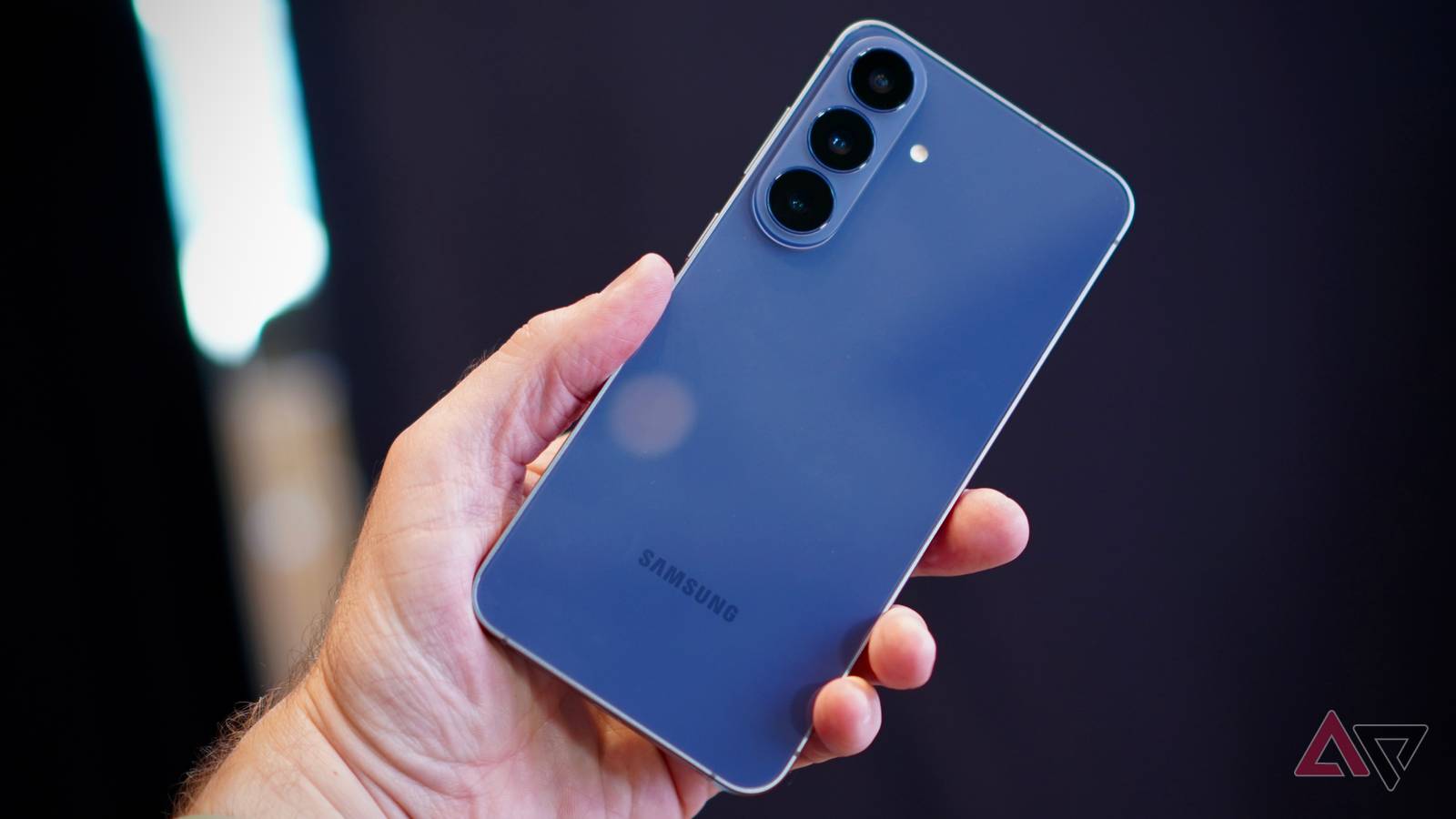
Published Aug 27, 2026, 8:00 AM EDT Andy is a seasoned technology journalist with more than 15 years experience in the mobile industry, writing for Digital Trends, Wired, and more. Andy has reviewed hundreds of smartphones and tablets, dozens of smartwatches, and a host of smart rings, smart glasses, and fitness trackers, giving him a unique ability to assess and evaluate the latest products. His daily mobile tech life includes Android and iOS devices, smart rings, and a smartwatch, unless it's a special occasion, when a traditional watch takes its place on his wrist. Andy always has a strong opinion on the state of the mobile industry, and writes in-depth analysis features to put the latest news and products into context. He has attended multiple CES, MWC, and IFA tradeshows, has a passion for photography and cars, listens to far too much K-pop, and follows F1. You can find Andy's portfolio of work on his Authory page. It’s time to check out the newest version of the phone that’s often the sweet spot for many people looking to buy from Samsung’s range. The Galaxy S26 FE fills the space between the Galaxy A57 and the Galaxy S26, and it provides a great blend of what makes both those phones desirable. What it’s not, is all that different to the Galaxy S25 FE. Quiz 8 Questions · Test Your KnowledgeSamsung Galaxy S seriesTrivia challenge From the original Galaxy S to the latest S25 Ultra — how well do you really know Samsung's flagship lineup? HistoryHardwareCamerasFeaturesDesign Begin In what year did Samsung release the original Galaxy S smartphone? A2009B2010C2011D2012 Correct! The original Samsung Galaxy S launched in 2010 and was a massive turning point for Samsung. It was powered by a 1GHz Exynos processor and ran Android 2.1, helping Samsung establish itself as a serious rival to Apple's iPhone. Not quite — the original Galaxy S launched in 2010. It debuted at Mobile World Congress that year and went on to sell over 10 million units globally, cementing Samsung's place at the top of the Android world. Continue Which Galaxy S model was the first to feature a built-in S Pen stylus? AGalaxy S21 UltraBGalaxy S22 PlusCGalaxy S20 UltraDGalaxy S23 Ultra Correct! The Galaxy S21 Ultra was the first S series phone to support the S Pen stylus, though it didn't include one in the box. Samsung fully integrated S Pen storage into the chassis starting with the Galaxy S22 Ultra, which also absorbed the Galaxy Note line's DNA. The correct answer is the Galaxy S21 Ultra. It was the first S series device to support the S Pen, though you had to buy the stylus separately. The S22 Ultra took things further by including S Pen storage built directly into the phone's body. Continue The Samsung Galaxy S20 Ultra made headlines for its enormous camera sensor. What was its maximum advertised photo resolution? A64MPB108MPC200MPD100MP Correct! The Galaxy S20 Ultra featured a 108MP main camera sensor, which was groundbreaking at launch in 2020. Samsung also controversially advertised 100x Space Zoom, though image quality at that extreme magnification was quite poor in practice. The Galaxy S20 Ultra packed a 108MP main sensor — a huge spec for its time. Samsung also promoted 100x Space Zoom on the device, which generated a lot of buzz, though real-world results at maximum zoom were shakier than the marketing suggested. Continue Which Samsung Galaxy S series phone was the first to feature a curved 'Edge' display on both sides? AGalaxy S6 EdgeBGalaxy S7 EdgeCGalaxy S6 Edge PlusDGalaxy S5 Edge Correct! The Galaxy S6 Edge, launched in 2015, introduced Samsung's iconic dual-curved display design. It was a striking departure from previous flat-screen Galaxy phones and showed Samsung's ambition to lead in premium smartphone design. It was actually the Galaxy S6 Edge that first introduced the dual-curved screen design in 2015. There was no Galaxy S5 Edge — Samsung introduced the curved concept on one side with the Galaxy Note Edge in 2014 before going dual-sided with the S6 Edge. Continue Which Galaxy S model was involved in a global recall due to batteries catching fire, leading to a complete discontinuation of the product? AGalaxy S7 ActiveBGalaxy S6 Edge PlusCGalaxy Note 7DGalaxy S8 Plus Correct! The Galaxy Note 7 — while technically a Note, not an S series — was recalled globally in 2016 after reports of batteries catching fire. It was eventually banned on commercial flights worldwide and permanently discontinued, becoming one of the most infamous smartphone recalls in history. The answer is the Galaxy Note 7. While it belongs to the Note lineup rather than the S series, its 2016 recall due to battery fires had a massive impact on Samsung's entire smartphone strategy, including how Samsung designed and tested batteries in subsequent Galaxy S phones. Continue The Samsung Galaxy S25 series uses which processor in all global markets? ASamsung Exynos 2500BMediaTek Dimensity 9400CQualcomm Snapdragon 8 EliteDApple A18 Pro Correct! Unlike previous Galaxy S generations that used Exynos chips in certain regions, the entire Galaxy S25 lineup — including all global variants — runs on the Qualcomm Snapdragon 8 Elite. This was a notable shift in Samsung's chip strategy. The Galaxy S25 series uses the Qualcomm Snapdragon 8 Elite across all markets. Samsung moved away from its usual split between Exynos and Snapdragon depending on region, giving all S25 buyers the same chip regardless of where they purchased their phone. Continue Which Galaxy S series phone first introduced 200MP camera photography to the lineup? AGalaxy S22 UltraBGalaxy S23 UltraCGalaxy S24 UltraDGalaxy S23 Plus Correct! The Galaxy S23 Ultra was the first Galaxy S phone to feature a 200MP main camera sensor. Samsung used pixel-binning technology to combine smaller pixels for improved low-light performance while still offering the option to shoot at full resolution. It was the Galaxy S23 Ultra that first hit 200MP in the Galaxy S lineup. The S22 Ultra topped out at 108MP. Samsung used advanced pixel-binning on the S23 Ultra so the camera could intelligently combine pixels for better low-light shots while retaining the ability to capture full 200MP images. Continue Samsung's Galaxy S8 introduced a major interface change that became standard across the industry. What was it? AAn in-display fingerprint sensorBA full-screen Infinity Display with minimal bezelsCA punch-hole front cameraDA 120Hz refresh rate screen Correct! The Galaxy S8 debuted Samsung's Infinity Display in 2017 — a near bezel-less curved screen that dramatically changed what people expected from a smartphone. The design was widely imitated and pushed the entire industry toward taller, fuller displays. The Galaxy S8 introduced Samsung's Infinity Display — an expansive, near bezel-free curved screen that set the template for modern smartphone design. In-display fingerprint sensors came later with the S10, punch-hole cameras arrived with the S10 series too, and 120Hz displays didn't appear in the Galaxy S line until the S20 series in 2020. See My Score Challenge CompleteYour Score / 8 Thanks for playing! Try Again What do you get with the Galaxy S26 FE? Only a few new features If you’re an expert on the Galaxy S25 FE, you can play a game of spot the difference here. Samsung has updated the processor and the S26 FE comes with the Exynos 2500, which was previously seen in the Galaxy Z Flip 7, plus the S26 FE comes with Android 17 and One UI 9 installed out of the box. This is good news, and it’s the first phone outside the Galaxy Z Fold 8 range to feature the latest software. It’s so clean and slick too, and using the phone for a short while reminded me how natural and easy it is to use. There’s a host of the latest One UI 9 and Galaxy AI features inside the Galaxy S26 FE too. The MyFanCam mode, where you can edit your concert videos to focus on a single performer, is onboard, along with Photo Assist where AI edits and transforms videos. Both Now Brief and Now Nudge prepare you for the day, and shorten the time it takes to switch apps when making appointments or plans, plus features like Audio Eraser, which very effectively removes unwanted background noises from your own videos and those playing on YouTube and Instagram, and tools like Document Scan and Circle to Search. How does the Galaxy S26 FE feel in your hand? Expensive and comfortable Equipped with a 120Hz, 1,900 nit brightness, 6.7-inch screen, the Galaxy S26 FE feels very similar to the Galaxy A57 and the Galaxy S26+ in your hand. The metal chassis is smooth with a slight curve, making it comfortable to hold. The bezels around the screen are slim, the redesigned camera module is quite tall and wide, but it’s really slim, avoiding any design imbalances. I think it looks excellent. Corning Gorilla Glass Victus 2 covers the front and the rear. Inside the camera module is a 50-megapixel main camera, a 12MP wide-angle camera, and an 8MP telephoto camera for a 3x optical zoom. Apparently, the 12MP wide-angle is new, and there have been software changes to improve sharpness between 1x and 2x zoom on the main camera. The software is fast, and there’s no pause between swapping lenses. I took some 3x zoom photos to try and understand the quality of the 8MP telephoto. The photos looked good on the phone screen, with no obvious pixelation or color and contrast issues. This may change when the photo is viewed on a monitor, especially based on the relatively low quality photos the Galaxy Z Fold 8 Ultra’s 10MP telephoto takes. Other camera features include Super Steady Video with Horizontal Lock, and Nightography enhancements for low light video. What about the rest of the specs? All very familiar The battery has a 4,900mAh capacity, but it’s not one of the flashy new silicon-carbon cells seen in the Galaxy Z Fold 8 and Z Fold 8 Ultra. It’s equipped with 45W wired charging and 15W wireless charging, and Samsung expects a 70% charge to arrive in 30 minutes using a compatible wired charger. You get a choice of internal storage spaces, 128GB, 256GB, or 512GB, but the RAM stays the same as the S25 FE at 8GB. There are three colors available, a simple graphite, plus a very on-trend Pistachio and a smart Blueberry. The phones are glossy and stylish, and look just as expensive and premium as the full, non-FE Galaxy S26 models. Worth an upgrade? No, but it's still going to be popular The Samsung Galaxy S26 FE is, as you can see, not all that different to the Galaxy S25 FE. This is representative of the industry, rather than a Samsung-specific tactic, but it’s hard to see any upgrade path from the S25 FE, or even from the Galaxy S24 FE if you’re already happy with it. What the S26 FE does well is fill the gap between the Galaxy A57 and Galaxy S26. In the UK it costs £699 for the base 8GB/128GB model, so it sits in the middle of the pair, price-wise. I liked the Galaxy S26 FE, but it hasn’t stayed in my mind after I used it for an hour. It’s the awkward middle ground, where it’s not quite stellar value, and not quite flagship level either. However, rather than making it a bad buy, this will probably make the Galaxy S26 FE a great buy for newcomers, or for anyone using a much older Galaxy A series. The latest software is already installed, there's the highly desirable seven-year OS and security update commitment, and a slick modern design. No, it's not all that exciting, but that doesn't stop it being desirable, even with a slight price increase.
Samsung Galaxy S26 FE hands-on: It won't excite you, but here's why it might be a smart buy
Full Article
Original Source
Read the full article at Androidpolice →KhanList aggregates and links to publicly available news content. We do not host full articles from third-party sources. Always verify important information with original sources.