
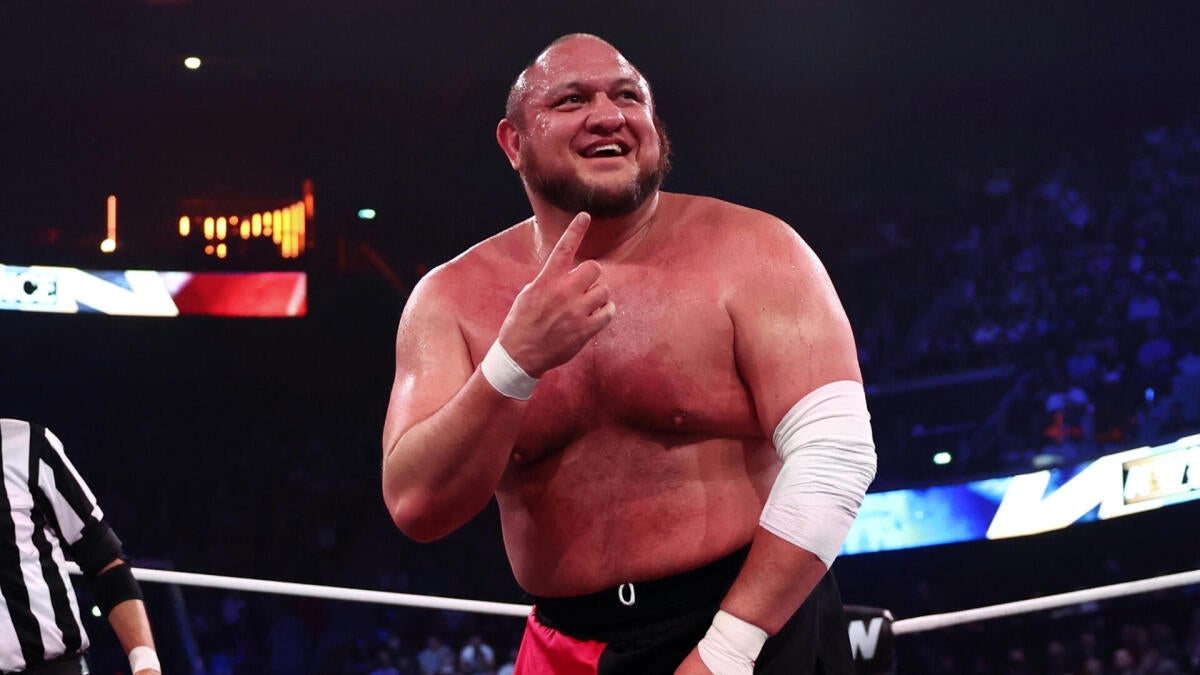
The former AEW world champion reflects on locker room leadership and the next generation of wrestlers Oct 16, 2026 at 1:06 pm ET • 4 min read Samoa Joe has spent nearly three decades helping reshape professional wrestling. Now as the 47-year-old veteran, he wonders what more he can leave behind ahead of yet another world title match at AEW WrestleDream.Joe helped change what professional wrestling looked like in the 2000s alongside contemporaries like AJ Styles, Bryan Danielson and CM Punk. They helped revolutionize an independent wrestling movement, blending different elements into a hard-hitting style and proving you didn't need a bodybuilder physique to become a star.The former AEW world champion previously told CBS Sports that his current contract will "most likely" end in his retirement. He's already established an acting career, portraying Sweet Tooth in the television adaptation of "Twisted Metal" and lending his voice to various projects across film and video games. But before he walks away from wrestling, Joe wants to give back to the industry that has given him so much. "I'm doing my best to enrich the places that have enriched me over my career," Joe told CBS Sports. "It sounds super noble, but, in reality, I've had this amazing journey that is really not fraught with a lot of heartache and despair." Professional wrestling isn't particularly forgiving. The hours are brutal, the money isn't always good and backstage politics can be more exhausting than the matches. Joe doesn't have many horror stories to share. He's worked for practically every major wrestling promotion of the last 20 years, winning championships in TNA, WWE and AEW. He's chasing major accomplishments right up until the finish line. On Saturday, he and multiple wrestlers from different generations challenge AEW world champion Will Ospreay in a Clockwork Carnage match at WrestleDream. At this stage, Joe's contributions extend well beyond what he does between the ropes. His experience and reputation carry considerable weight backstage, though he challenges what a locker room leader should be.Pro wrestling has historically operated under an informal hierarchy in which young wrestlers are expected to fall in line and follow informal rules set by veteran performers. Joe believes the best locker room leaders earn influence through relationships and respect, rather than intimidation or threats. "No great man is led by fear; usually they're led by people that they respect, find knowledgeable and give a shit about their opinion," Joe said. "You must first establish a basic respect and rapport with people. If they choose to respect and like you, and you find yourself in that position, then so be it. "But I think the idea of this physically domineering presence who will bury your career if you don't adhere to the unwritten book of laws is a ridiculous ideology. I've never come across it, and I've never felt pressured by that. I think it's a weird fallacy. I think a lot of people respect The Undertaker because they respect The Undertaker as a person, not out of career fear."It's a fitting outlook for someone who made his name challenging wrestling conventions. Joe was part of a generation that demonstrated there was more than one way to become a successful professional wrestler. He doesn't see much value in imposing his generation's standards on the next one, though you can plainly see his influence in the new crop of stars. "I think the adaptability and coordination are way better than they probably have been in years," Joe explained. "You get a lot of people who have more of a natural aptitude, but maybe less physical potential. I think that's kind of the best way to put it... I think the technicality probably is a lot higher than it's been."The physical demands have evolved considerably since Joe first broke through, but technical proficiency only goes so far when the audience determines whether something works. Joe believes young wrestlers should spend more time learning how to connect with fans. It's a skill you can't necessarily teach in a training facility. Even the most naturally gifted performers develop it through experience."Finding more ways to connect what they do with the crowd. That comes with time," Joe said. "I think any young generation suffers from that. I don't think it's particularly unique to any particular young generation. It's probably one of the biggest things: as time goes on, you become more confident, calmer, and more poised in the presence of a large crowd. You begin to interact with them on a different level; you begin to read them and understand their vibe and how to get them going at a different level." Joe has had plenty of time to learn those lessons himself. He's wrestled in front of audiences around the world while experiencing the industry's changing landscape firsthand. He has plenty to offer those following in his footsteps, and increasingly sees that as part of his responsibility.There's no bitterness about the end approaching, nor any suggestion that wrestling owes him something more before he leaves. Joe has enjoyed the ride, and he'd like the people who come after him to have the same opportunity."Really, it was this grand adventure that I got to meet a ton of cool people and go to a ton of cool places and learn to love the world, which is a rare opportunity," Joe said. "If anybody ever gets to literally travel the world and understand that, it's a beautiful place. There are a lot of places that have a lot of love for you, as long as you have the best intentions. "I like to sprinkle a little bit back before I'm done and hopefully leave the pro wrestling industry a much better place than I found it."
Samoa Joe challenges locker room leader stereotypes ahead of AEW WrestleDream: 'No great man is led by fear'
Full Article
Original Source
Read the full article at Cbssports →KhanList aggregates and links to publicly available news content. We do not host full articles from third-party sources. Always verify important information with original sources.