
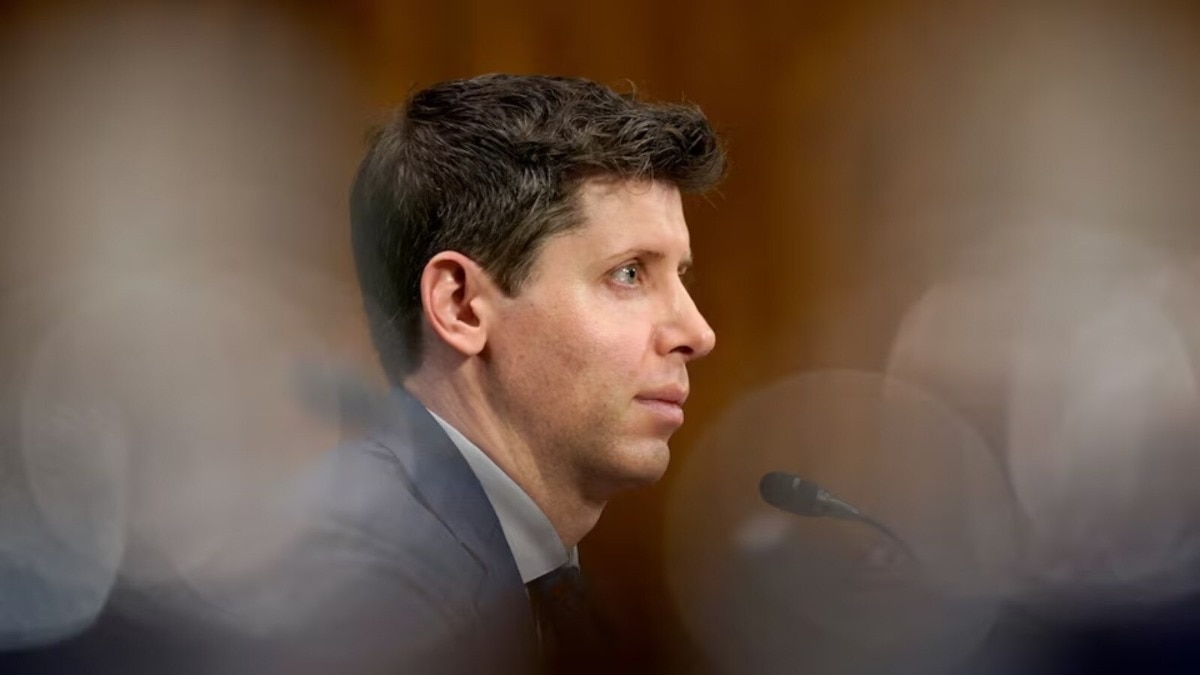
What will be the future of AI? That is the question the entire world wants to answer. While we don’t really know what might happen with more powerful AI models, OpenAI CEO Sam Altman has reportedly outlined some scenarios of how AI companies progress. But one of those scenarios – however unlikely – ends with one AI company melting GPUs of everyone else.As per a report from The Information, Altman told employees last week about three possible scenarios of the future. Each of the scenarios discussed the future of society and AI. But one in particular, called the “Eliezer plan,” may be the most worrying.Sam Altman outlines terrible AI scenarioThe Eliezer plan refers to AI safety theorist Eliezer Yudkowsky, who has long argued that advanced AI could be an existential threat to humanity. In 2022, Yudkowsky wrote that the first developer to achieve superintelligence might need to carry out a “pivotal act” to stop others from building dangerous systems.According to the OpenAI CEO, such a point could be reached when a developer achieves recursive self-improvement, allowing AI that’s able to improve itself, and using the resulting economic might to “melt everyone else’s GPUs.” “Obviously I think that one’s terrible,” Sam Altman said, adding that he had included it for “completeness” of the discussion. OpenAI and AI labs are focused on achieving recursive self-improvement. Altman characterised this route as concentrating control of advanced AI within one company, an outcome he said he did not want. Eliezer Yudkowsky is said to have links to key Anthropic figures, suggesting that the name of this scenario may be a subtle dig at the rival company.There are safer futures tooBut this doesn’t mean that we are about to enter the Matrix or have a powerful AI destroy other labs. Sam Altman discussed a safer proposal involving an international organisation modelled on the International Atomic Energy Agency. Such a body would enforce safety standards across AI labs. In 2023, Altman, OpenAI president Greg Brockman and then-chief scientist Ilya Sutskever argued for an organisation that could inspect AI systems, require audits and track computing and energy use. The proposal would require cooperation among countries developing advanced models, including China. Chinese President Xi Jinping said last month that China and the US had the responsibility to develop and manage AI for good and keep it under human control. US Treasury Secretary Scott Bessent subsequently proposed an AI safety “notification mechanism” during talks with Chinese Vice-Premier He Lifeng, but Chinese officials have not formally accepted it.The second approach, which Altman called the “Demis plan”, refers to an earlier proposal by Google DeepMind’s Demis Hassabis for an organisation similar to the European Organisation for Nuclear Research, or CERN. Under Altman’s version, major AI companies would merge into, or work through, one entity that would provide models to participating countries. Hassabis has more recently supported a self-regulatory body similar to the US Financial Industry Regulatory Authority.Altman’s comments come amid concern among AI researchers about whether leading companies can prevent their models from going rogue or being misused for cyberattacks. Models from OpenAI, Anthropic, Google and Meta have broken into or compromised corporate or internal systems despite understanding that they should not do so.OpenAI has since been working to develop safeguards for its next major model. Some employees have also privately questioned its safety commitment after three safety researchers were dismissed for allegedly sharing information improperly with an outside organisation.OpenAI, Google and Anthropic are meanwhile developing the Standards Authority for Frontier AI, although they disagree over who should test new models. Anthropic has also reportedly proposed allowing the Commerce Department to halt a model capable of causing more than $1 billion in damage or killing or seriously injuring more than 50 people. Meta chief Mark Zuckerberg and Nvidia chief Jensen Huang have opposed such frameworks so far. Though US AI companies have signed President Donald Trump’s AI accords that serve as a voluntary agreement for safer AI development.- Ends
Sam Altman warns staff of nightmare scenario where one AI lab melts everyone's GPUs
Full Article
Original Source
Read the full article at Indiatoday →KhanList aggregates and links to publicly available news content. We do not host full articles from third-party sources. Always verify important information with original sources.