
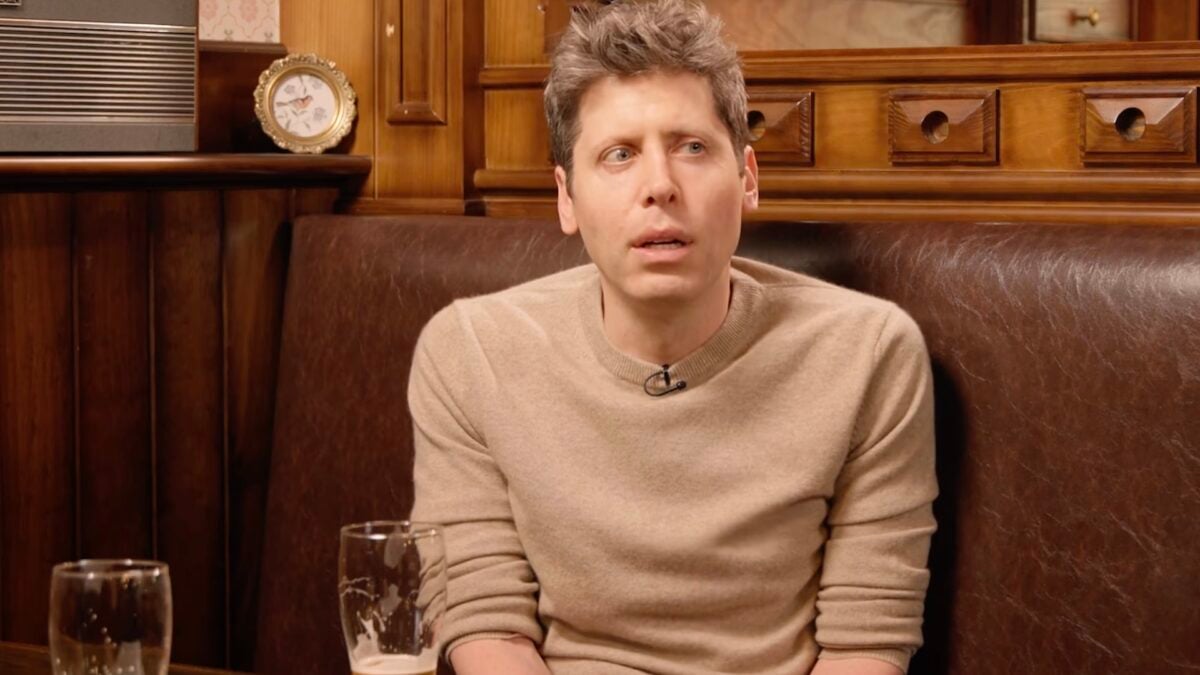
Even Sam “magic intelligence in the sky” Altman, the chief executive of OpenAI and the poster child of the AI boom, has mixed feelings about the speed at which the technology is developing. In an appearance earlier this week on Stripe cofounder John Collison’s podcast, called Cheeky Pint, Altman reclined in a pub booth, sipped IPA and Guinness, and eulogized the many experts whose careers are actively being upended by the rise of AI. That sting has been felt especially keenly in recent weeks by mathematicians, after OpenAI controversially published its AI-assisted solution to the Navier-Stokes problem, which had vexed the field for decades. Some mathematicians called foul, accusing the company of what amounted in their view to plagiarism. Then, earlier this month, OpenAI followed up by publishing results for nearly 400 additional long-standing math problems. In much the same way that professional chess players look back on Deep Blue’s victory over Kasparov, future generations of mathematicians will probably look back at OpenAI’s string of proofs in late 2026 as the watershed moment when their field was irrevocably altered by AI. Adding insult to injury, Altman let slip on his Cheeky Pint appearance—“I’m actually probably not supposed to say this, but I will since we’re drinking”—that one of the models OpenAI had been using internally to solve some especially difficult technical problems was known among employees as: “Model Name-Hold My Beer.” “We had this collective experience of people’s hardest research problems from their academic career; the model was just knocking them down, one after the other,” Altman said. “Many different fields—it was incredible to watch.” (He added that among them were “many of those problems that we published,” which could refer to the hundreds of math solutions OpenAI posted earlier this month. OpenAI did not immediately respond to a request for clarification.) Watching Model Name-Hold My Beer was also apparently a tad bit unnerving. “Two nights in a row I was up most of the night because I was just so excited I couldn’t go to bed,” Altman said. “I was tremendously excited and happy, but I also had much more sadness and melancholy and a feeling of something ending than I was expecting.” What follows is a disconcerting bit of back and forth in which Altman seemingly tries to express the basic human expression of empathy for the lives that are going to be permanently altered by AI, while his interlocutor reassures him that this is just the way of things and he need not trouble his conscience. Altman: “I agree this is the right thing on behalf of the world, and also I agree that this is just the shape of reality and nothing that anyone can stop, or should stop. But I do have real—” Collison: “It’s a wistfulness and nostalgia you can feel.” Altman: “It’s more than nostalgia.” Collison: “Wistfulness.” Altman: “Yeah.” Here we can witness an echo chamber being perpetuated before our eyes: two individuals confirming a shared belief in the idea that the spread of AI, and all its consequent upheavals, is an unavoidable next stage in technological—and indeed human—evolution. At the end of the day, it doesn’t matter how many lives, communities, or ecosystems are being disrupted in the present if you earnestly believe that what you’re building will make life better for everyone in the future. And this, above all else, is the ideology pushing the AI juggernaut forward. In another moment of reflection earlier on in the conversation, Altman mused: “I don’t think we”—meaning OpenAI—“have done a great job of explaining to people why we think all of the potential downsides of this technology is worth it.” He may actually be onto something there.
Sam Altman Reveals Internal Model Name Was ‘Hold My Beer,’ Pours One Out for All the Lives AI Could Destroy
Full Article
Original Source
Read the full article at Gizmodo →KhanList aggregates and links to publicly available news content. We do not host full articles from third-party sources. Always verify important information with original sources.