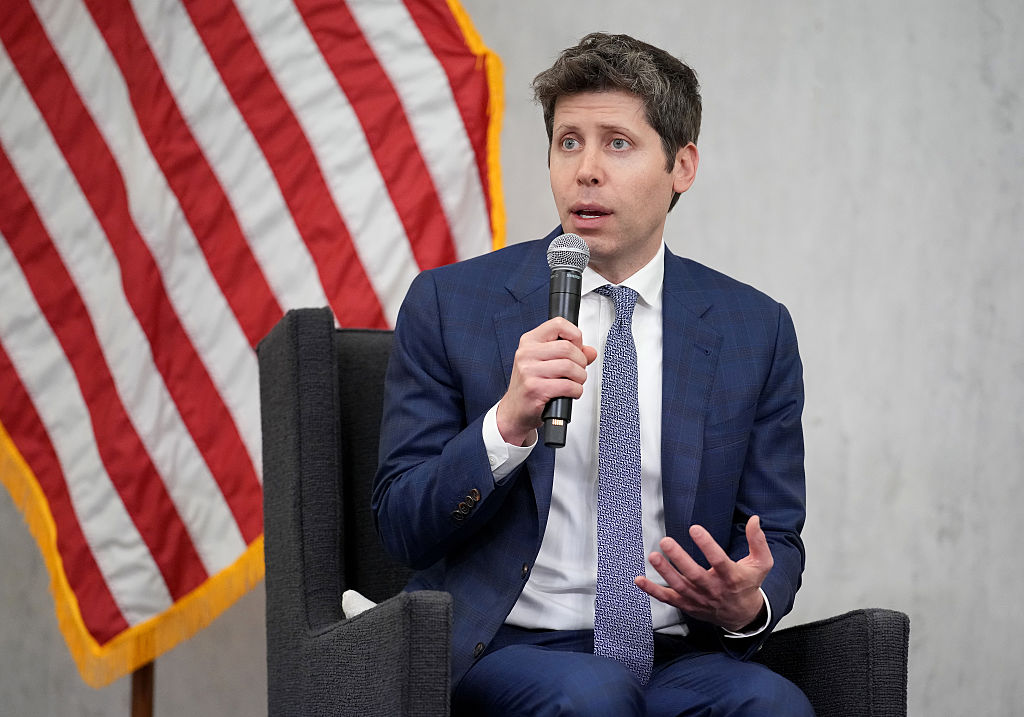
OpenAI CEO Sam Altman says that it may be time to “pace” AI development so the world will be ready for it. “We may have to pace the rate of AI development to give ourselves enough time for society to harden around some of these new capability levels,” he told Patrick O’Shaughnessy, the host of the Invest Like the Best podcast, while also “trying to figure out how we do that in a way that does not feel like regulatory capture for anyone and also does not feel like collusion among the frontier labs.” Altman has avoided signing on to past campaigns to slow AI progress, calling a 2023 open letter that proposed a similar slowdown “missing most technical nuance about where we need the pause.” Apparently, he’s softened on the idea, thanks in part to the incident where one of OpenAI’s advanced models managed to break out of a secure computing environment and hack into Hugging Face, an online model database, using several zero-day exploits. On the podcast, the OpenAI co-founder called it an “extremely sci-fi cyber incident…[t]his is the first security incident that I have felt very viscerally.” OpenAI researchers have paused training on that model while they work out how to keep their sandbox secure. But Altman said that as models become more powerful, the need to “pace” their development could become key to safe deployment. Employees at OpenAI and Anthropic have already begun circulating a petition using similar language. While model safety and alignment has always been a concern in the AI world, the arrival of Anthropic’s highly capable Mythos model earlier this year has turned hypotheticals into real-world problems. However, the industry has a trust problem, and challenging economics that give major players an incentive to play up the dangers of their systems in ways that experts disagree about — for example, whether or not Anthropic’s Fable model should have been briefly banned from use or not. Similarly, when Kimi K3, a large, open-weight model built in China, was released, OpenAI head of strategic futures Dean W. Ball said that it threatened the economics of frontier labs, making it difficult to separate their safety concerns from their financial interest. “I think a lot of the talk about safety concerns is well-founded, and then a lot of it is about people that just really, even if it’s slightly subconscious, want to concentrate power,” Altman mused, in what reads as a dig at his rival, Anthropic CEO Dario Amodei. “I am terrified of a world where the very real fears of AI are used as a way to say, ‘Only this small group of people can have it because it’s too dangerous, and only they understand it, but don’t worry, like, they’re gonna make the right decisions for all of us.’ I don’t believe in that.” Still, OpenAI has pushed back against efforts to develop government rules for AI models, instead preferring an industry-led approach where AI labs would create ostensibly independent organizations that would evaluate the security of models and the safety approach of their makers. The challenge for both that approach to regulation, and any efforts to slow AI development, will be getting the various players in the industry on the same page, whether they are rival frontier labs in the US, or their competitors in China. When you purchase through links in our articles, we may earn a small commission. This doesn’t affect our editorial independence. Tim Fernholz is a journalist who writes about technology, finance and public policy. He has closely covered the rise of the private space industry and is the author of Rocket Billionaires: Elon Musk, Jeff Bezos and the New Space Race. Formerly, he was a senior reporter at Quartz, the global business news site, for more than a decade, and began his career as a political reporter in Washington, D.C. You can contact or verify outreach from Tim by emailing tim.fernholz@techcrunch.com or via an encrypted message to tim_fernholz.21 on Signal. View Bio
Sam Altman is ready to decelerate
Full Article
Original Source
Read the full article at Techcrunch →KhanList aggregates and links to publicly available news content. We do not host full articles from third-party sources. Always verify important information with original sources.