
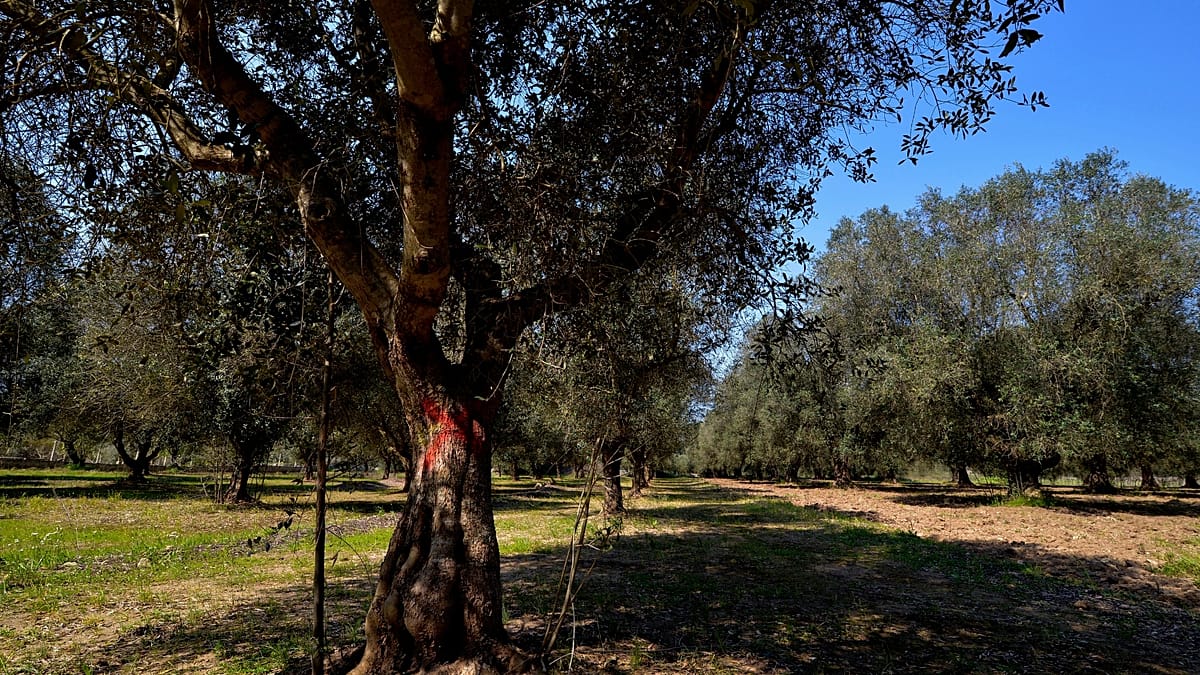
Hass, Bacon and Fuerte: in Salento the new protagonists of the farmland have exotic names. Between Calimera and Vernole, in the province of Lecce, these avocado varieties are now an increasingly tangible presence, to the point that harvesting got into full swing in mid November. It is no longer just an agricultural curiosity, but a conversion gamble for conversion for Apulian farms looking for an alternative after the devastation of olive trees caused by Xylella fastidiosa. ADVERTISEMENT ADVERTISEMENT It is a gamble that, however, also has a flip side. Avocado trees need a lot of water precisely during the hottest summers, in a region already struggling with drought and stressed aquifers. The transformation is visible at the Tommasi farm, where the first trees were planted in 2017. Almost ten years on, each tree produces between 70 and 100 fruits, for an estimated yield of around 10 quintals per hectare. Another 700 trees were planted last April. And while Salento is changing its crops, Xylella continues to pose a threat to European agriculture, turning a crisis born in Apulia into a problem for the entire Mediterranean. Xylella, a threat that no longer concerns only Apulia The story of Salento’s avocados in fact begins with that of the lost olive trees. In October 2013 Xylella fastidiosa was detected for the first time in the European Union, right in Apulia. It is a bacterium that colonises the xylem, the tissue through which water and nutrients circulate, progressively compromising the functioning of the plant. In olive trees it can cause rapid dieback and, in the most serious cases, the death of the tree. Since then the disease has transformed vast areas of Apulia’s agricultural landscape. And it has not remained confined to Italy: over the years it has also been detected in France, Spain and Portugal. The crops affected include not only olive trees, but also almond trees, citrus, vines and several ornamental plants. The scale of the problem is confirmed by scientific research. In its latest update of the host plant database, published in 2025, the European Food Safety Authority (EFSA) recorded 727 plant species in which Xylella has been reported. For 463 of these there is more robust scientific evidence, based on specific detection criteria. This does not mean that all are equally vulnerable or that every subspecies of the bacterium can infect them: the ability to cause disease depends on the combination of bacterial strain, host plant and environmental conditions. 2026 has also brought new warning signs in Italy. In Calabria, in the area of Taurianova in the province of Reggio Calabria, seven olive trees have tested positive for the subspecies pauca. It is the first outbreak in the region. In Basilicata, meanwhile, the subspecies multiplex has been found on an almond tree in the area of Matera. Emergency plant health measures and eradication interventions have been put in place for both territories. The spread of the bacterium makes surveillance an issue that goes beyond regional and national borders. For Europe, protecting agricultural production also means preventing a local outbreak from becoming a problem for entire supply chains. The potential bill for European agriculture How much could an uncontrolled spread of Xylella cost? An assessment published in November 2025 by the Joint Research Centre of the European Commission (JRC), together with EFSA, confirmed the bacterium as one of the main plant health threats for the Union. In a scenario of large scale spread, annual production losses could reach 7.1 billion euro, with more than 540,000 jobs at risk. This is a simulation of the potential impact, not an account of damage that has already occurred. The figure shows clearly why Xylella is not just an Apulian issue. Olive growing, almond production, citrus and viticulture are important economic activities in several European countries. Loss of output would also affect processing companies, distribution and businesses linked to agricultural supply chains. The European Union has therefore introduced specific rules to counter the bacterium. Xylella is classified as a quarantine pest, and implementing regulation 2020/1201 lays down obligations for surveillance, delimiting outbreaks and removing infected plants. When the bacterium is detected in a new area, the general rule is eradication: infected areas and buffer zones are established, with checks and plant removals as required by the legislation. Where the disease is already well established and elimination is no longer considered realistic, as in some parts of Apulia, containment measures apply instead. Annual surveys in member states are also required, along with forms of European cofinancing for surveillance and control activities. Prevention, however, does not bring back the olive trees that have been lost. This is where the search for new types of production comes in. Avocado, mango and papaya: the new face of southern farmland For farmers who have lost a substantial part of their olive heritage, diversifying can mean avoiding abandoning their land and building new sources of income. According to calculations by the Department of Soil, Plant and Food Sciences at the University of Bari, in Apulian areas affected by Xylella there are 23,885 hectares of olive groves potentially suitable for avocado cultivation. Land in Apulia devoted to tropical crops is estimated to have already reached a total of 4,000 hectares. This is not only a business decision. Rising temperatures are changing the conditions in which traditional crops grow and are creating opportunities for species that a few decades ago would have been hard to cultivate in these areas. Avocado, mango and papaya are among the clearest examples. Climate data confirm how fast things are changing. According to Coldiretti Apulia’s analysis of Copernicus ERA5-Land data, in the first ten months of 2026 Italy’s temperature anomaly reached +2.11 degrees compared with the 1991-2020 average. It is the highest value in the national data series for the January to October period. But higher temperatures do not automatically mean better agricultural conditions. A crop may find a thermally favourable environment and still be unsuitable because of water use, soil quality or vulnerability to extreme events. Avocado: thrives in heat, but is thirsty This is the main critical point of the Salento conversion. Avocado is a subtropical species that needs a significant water supply, especially in the summer months. Olive trees, by contrast, are a Mediterranean species able to cope with prolonged periods of drought, thanks to physiological adaptations to local environmental conditions. The root system of the avocado is concentrated mainly in the shallow layers of the soil, making the plant particularly dependent on the moisture available. Agronomic estimates indicate water use that can reach 136-220 litres per day for a mature tree in summer, with lower values in spring. The water footprint of the fruit is also significant. According to calculations by the Water Footprint Network by Mekonnen and Hoekstra, producing one kilogram of avocado requires on average 1,981 litres of water, taking into account rainwater, water used for irrigation and water needed to dilute pollutants. Of course, not all litres carry the same weight: rainwater and water drawn from aquifers and watercourses are different resources. It is therefore important to distinguish between the overall water footprint and the actual consumption of irrigation water. For Salento, though, the problem is still very real. Avocado trees are sensitive both to water salinity and to poorly draining soils. These are particularly problematic features in an area where underground reserves are under pressure and seawater intrusion is a documented risk. A respite from drought is not enough Apulia formally ended its state of emergency over water shortages on 30 June 2026, after heavy rainfall in the previous winter and spring. But the end of the emergency does not mean the problem has been solved. Data from the ANBI Observatory, updated at the beginning of October, showed that the four artificial reservoirs in the Capitanata area contained 98.12 million cubic metres of water, less than 30 per cent of the total authorised capacity of 331.9 million. In Salento, moreover, agricultural supplies depend to a significant extent on groundwater. Hydrogeological surveys by Ispra have long documented depletion of aquifers and seawater intrusion, which can compromise the quality of the water available. The risk is that the expansion of crops with high water needs will increase pressure on wells, fuelling competition between farming and domestic use. This challenge is not confined to Apulia: water management is now one of the central issues for the future of Mediterranean agriculture, which is increasingly exposed to dry spells and irregular rainfall. A new kind of agriculture, but not at any price Salento’s avocado shows that agricultural conversion can open up opportunities even in areas hit by a devastating plant disease crisis. But it is not a universal solution. Trees take years to come into production, require specific investment and remain vulnerable to winter cold snaps that can damage plantations. The challenge, therefore, is to choose crops not only on the basis of new temperatures, but also taking into account the actual availability of water, soil quality and the ability to withstand extreme weather events.
Salento turns from olives to avocados as Xylella threat spreads in Europe
Full Article
Original Source
Read the full article at Euronews →KhanList aggregates and links to publicly available news content. We do not host full articles from third-party sources. Always verify important information with original sources.