
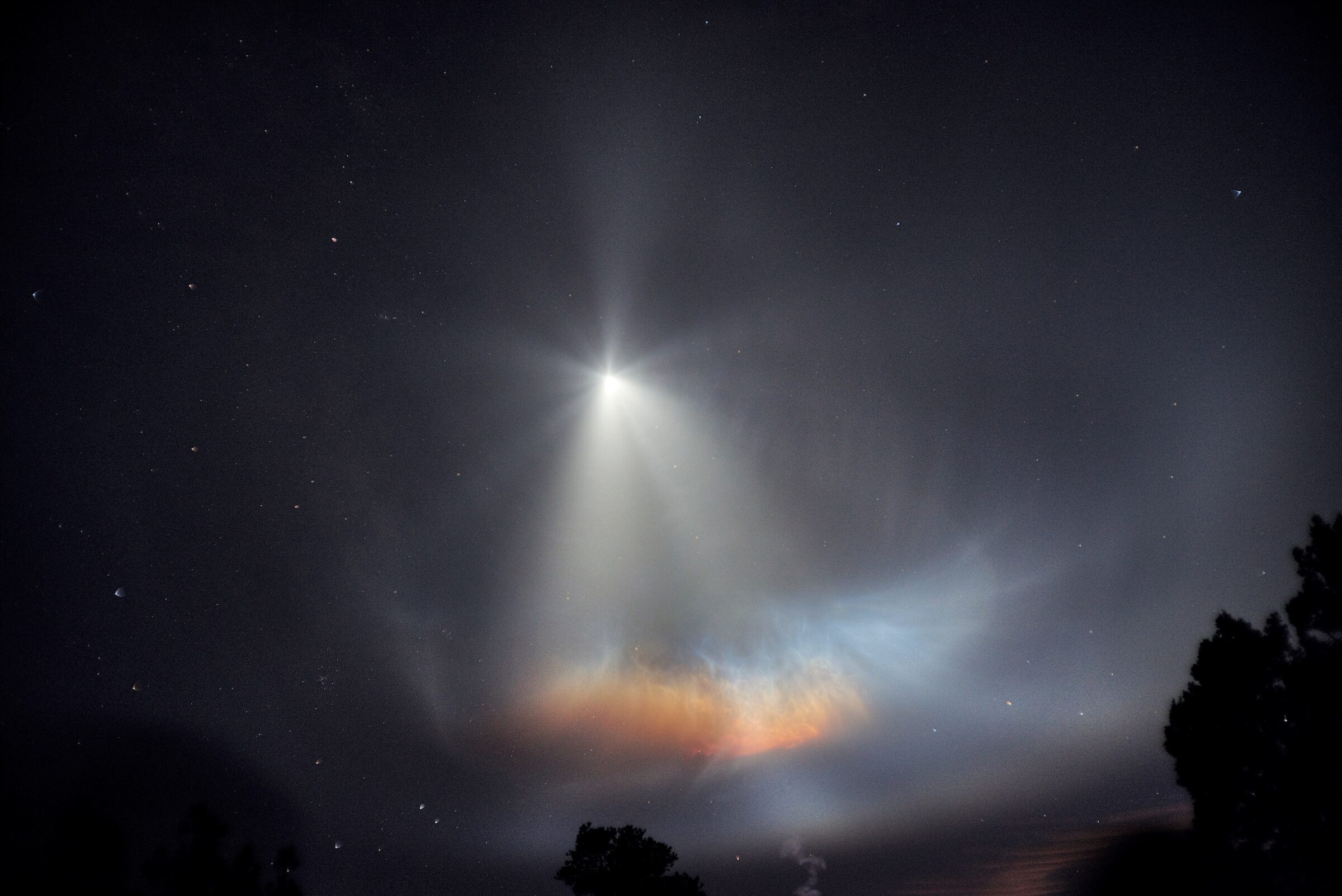
Every day, the Ukraine Battlefield update newsletter offers a clear look at how the war is unfolding on the ground. Subscribe for free here to get the full text delivered to your inbox. The Rassvet-3 system could fundamentally influence the course of the war. Fortunately, it is not yet working as it should. Kyiv is the target of almost continuous air raids, with Russian drones and missiles killing at least 12 people. The Russian defence ministry announced the capture of two villages north of Orikhiv, but this almost certainly has nothing to do with reality. The Ukrainian counteroffensive near Lyman continues, with Russians admitting that the situation has worsened. Maps of the day — Lyman; Orikhiv Videos of the day — Russian air raids on Kyiv The Rassvet-3 system could fundamentally influence the course of the war, but fortunately, it is not yet working as it should. Once completed, it should resolve Russia’s problem with internet coverage from space. It is an attempt to respond to Starlink being switched off for Russian users, while also seeking to achieve strategic independence from other powers. From Russia’s perspective, this is therefore a highly rational project, which also poses a deadly threat to Ukraine. Ukraine can use Starlink-controlled drones only over its own territory, including occupied areas, whereas a fully operational Rassvet would allow Russia to do the same without restrictions across the entire territory of the invaded country. And elsewhere too, of course. Like Starlink, Rassvet works on the principle of covering the Earth’s surface with a large network of satellites. Russian satellites began being launched on 23 March, when a spacecraft carried 16 of them into space at once (six test satellites had previously reached space during two test missions). Another 17 followed in July. We now know that very little went as planned, that the system is operating in a limited mode, and that the situation will deteriorate further. One of the first to draw attention to the problems was Anatoly Zak, a journalist born in Moscow and living in the United States who specialises in Russia’s space programme. He also publishes the website RussianSpaceWeb.com. During August, he noticed that satellites from the second group had not only failed to reach their designated altitude, but that some of them had begun descending towards Earth. Astronomer Jonathan McDowell analysed their movements and produced a graph which did not appear dramatic at first glance. According to him, most of the satellites reached an altitude just above 500 km above the surface. However, the originally planned altitude was as high as 800 km. As pointed out by Anatoliy Zak, there appear to be a number of orbit raising failures in the Rassvet-3 constellation; here is the height-vs-time diagram pic.twitter.com/RWvbID2bBG— Jonathan McDowell (@planet4589) August 25, 2026 The difficulties facing Rassvet are now also being openly discussed in Russia. The Military Informant Telegram channel reported that the Byuro-1440 design bureau was “struggling with serious problems involving the second batch of satellites launched in July this year”. Nor is the first batch operating as planned. Military Informant reported that one of the 17 satellites launched had fallen to Earth, two were having trouble maintaining altitude and were operating at an altitude of 350 to 360 km above the planet, while the others remained stable at an altitude of 511 km. The launch of the second batch in July 2026 fared worse, with “all 16 satellites positioned significantly lower than the orbit of the first batch and having failed to reach it at the same time. So far, none has been able to rise above 390 km. The situation is particularly poor for six satellites, which not only reached an altitude of just 290 to 340 km, but have already begun losing altitude.” This means that some of the satellites will fall to Earth, like one from the first batch. Military Informant also explained why it was a problem for the entire Rassvet system that the originally planned altitude of 800 km had been adjusted to roughly 510 km. While this is comparable to the altitude at which Starlink satellites operate and also offers the advantage of a stronger signal, “there is one fundamental drawback — the area covered by a single satellite is significantly smaller. This is an important detail when comparing the number of satellites launched by Byuro-1440 and Starlink, which can afford a lower altitude thanks to its enormous volumes.” As of June, there were 10,397 operational Starlink satellites in space, with more being added. Russian plans are more modest: 156 satellites were meant to be in space by the end of this year, only 292 in 2027, 610 in 2028, and 900 are planned by 2035. It already seems certain that the plan will not be fulfilled and that Rassvet’s military use will be more limited than the Kremlin had hoped. Kyiv is the target of almost continuous air raids, with Russian drones and missiles killing at least 12 people. As many as seven of them were killed at a railway depot. Another four victims lived in Boryspil, one of Kyiv’s suburbs. Russia used a combination of drones and missiles. The Ukrainian army no longer reports what proportion it was able to shoot down, but following the delivery of a limited number of missiles for air-defence systems, at least the situation in which it was defenceless against ballistic missiles has not been repeated. There were instances when it shot down none, because Patriot systems had no missiles in stock. This time, the Ukrainians said they had shot down 10 weapons in this category, reporting that half of those used were Zircon missiles and missiles originally designed for air defence in S-400 systems. Russia also deployed Iskander missiles and North Korean KN-23 missiles. The Ukrainians also released satellite imagery of a Russian base in Oryol used to launch attack drones. The elongated objects in the photographs are launch ramps. Two on the first image are damaged, but the overall view of the entire base reveals its extensive size. Individual drones capable of reaching it cannot be enough to destroy it. Another hit at the Tsimbulov droneport in Oryol and an explanation for people who think that if you hit the launchers, the drones won't fly. The scale of the entire droneport is in the second picture. Only cluster ballistics can destroy something like this. pic.twitter.com/3Ouqt3OpWz— Exilenova+ (@Exilenova_plus) August 31, 2026 The following videos are from Monday morning, when Russian drones struck warehouses in one of Kyiv’s districts. Both show how little time people have to react, and how little determines their survival. The systematic Russian campaign is now also manifesting itself in supply problems. The photographs show half-empty shelves in supermarkets. Russia keeps destroying warehouses full of food across Ukraine.Major supermarket chains across the country are warning about delays and disruptions in food deliveries as Russia continues attacking the warehouses and logistics infrastructure that keep stores supplied.According… pic.twitter.com/ghbufm5pKu— Saint Javelin (@saintjavelin) August 31, 2026 The Ukrainian counteroffensive near Lyman continues, with Russians admitting that the situation has worsened. During the weekend and on Monday, evidence accumulated that the Ukrainians were successfully easing Russian pressure north of Lyman and, consequently, on the Sloviansk-Kramatorsk urban area from the same direction. On Sunday, it was primarily this photograph of a Ukrainian soldier at the entrance to the village of Novoselivka, which even the most realistic Russian maps had placed safely behind Russian lines only last week: In the next few days, the results of the Lyman "counter-attack" should be announced by various pro-ukrainian 🇺🇦 media outletThe operation is still ongoing, but the most important was done. OPSEC was very well conducted and managed to avoid any attention on the operation, which… pic.twitter.com/zTN8j7Ctu1— Clément Molin (@clement_molin) August 30, 2026 “The flow of evidence indicating a deterioration of the situation on the Lyman axis is gradually intensifying,” the influential Rybar Telegram channel admitted, before listing the developments: “Ukrainian units have occupied several positions in the Hrekivka area and are attacking south of Ridkodub. The presence of the Armed Forces of Ukraine has been recorded in Novoselivka, and the enemy is building supply routes from Yatskivka. Cargo ground drones supplying the adversary have been spotted south of Lyman, which clearly indicates the presence of Ukrainian army infantry groups on the outskirts of the city.” As is traditionally the case with Rybar, it admitted Russian failures with a significant delay, as it did now, but it remains among the Russian Z channels that at least acknowledge them. By comparison, here is a report by Two Majors from Tuesday morning: “Enemy counterattacks continue on several sectors of the Lyman axis, with the aim of tying down Russian armed forces in this direction and preventing them from developing their offensive against the city. Although the Armed Forces of Ukraine have managed to occupy insignificant areas, the initiative remains with our troops.” The Russian defence ministry announced the capture of two villages north of Orikhiv, but this almost certainly has nothing to do with reality. Below is a map from the Russian defence ministry that deserves attention for at least two reasons. First, the red area marking territory under the control of the Russian army differs significantly from both Ukrainian and independent maps. However, the Russians went even further and announced on Tuesday morning that they had captured the villages of Novopavlivka and Chervona Krynytsia. The first is larger, had just under one thousand inhabitants before the war, and lies three km north-west of Orikhiv. The second is more of a settlement, where 70 people used to live. It is six km north-west of Orikhiv. If the Russians were right, a highly important stronghold on the approach to Zaporizhzhia would unexpectedly find itself in a pincer movement. So far, however, they have provided no evidence, and the most likely outcome is that videos will emerge of suicidal flag-bearers waving at the camera of a Russian drone. The OSINT account Playfra focused on Monday on only a small section within the triangle formed by Orikhiv, Novodanylivka and Mala Tokmachka. On the Russian map, the entire area is considered occupied; in practice, both villages remain under Ukrainian control. Playfra nevertheless marked the routes through which Russians infiltrate Orikhiv without being able to establish a foothold there. Orikhiv direction.The Russians continue infiltrating along the now identified infiltration routes highlighted in the picture.At the moment a stalemate was reached in Orikhiv, where the Ukrainians clear Russian infiltrators out, and the Russians keep being found in the city,… pic.twitter.com/4aJ1TQ5dWn— Playfra (@Playfra0) August 31, 2026 Finnish analysts from Black Bird Group concurred with the previous author. Their current map makes it possible to compare the Russian army’s claim. Take Novoselivka in the upper-right corner, for example. During the summer, Russian flag-bearers entered it; the Ukrainians repeatedly demonstrated that they had cleared the village, but the Russians nevertheless continue to claim that they captured it. Videos of the day Russia has begun systematically publishing videos of successful drone strikes, something it did not do in the past and for which it was criticised by Z channels. The following compilation is the result of this change in approach. It shows successful strikes on targets in the vicinity of Kyiv. A large Nova Poshta terminal in Odesa was destroyed. In Odesa, a Russian attack destroyed an innovative "Nova Poshta" terminal. The facility is beyond repair. A European-standard sorting line was also destroyed. pic.twitter.com/5RPHaFTDc3— WarTranslated (@wartranslated) August 31, 2026 What are the losses No update. By Monday (31 August), Russia had demonstrably lost 24,052 pieces of heavy equipment (24,035 on Tuesday, 25 August). Of these, 19,020 (19,005) were destroyed by Ukrainians, 1,000 (999) were damaged, 1,194 (1,193) were abandoned by their crews, and 2,838 (2,838) were captured by the Ukrainian army. These included 4,443 (4,440) tanks, of which 3,348 (3,346) were destroyed in combat. Ukraine lost 12,052 (12,018) pieces of equipment, of which 9,462 (9,429) were destroyed, 697 (697) damaged, 694 (694) abandoned and 1,199 (1,198) captured. These included 1,460 (1,456) tanks, of which 1,121 (1,117) were destroyed in combat. Note: Neither side regularly reports its own fatalities or destroyed equipment. Ukraine publishes daily figures for Russian casualties and destroyed equipment, but these cannot be independently verified. This overview uses data from the Oryx project, which has compiled a list of equipment losses documented exclusively by photographs since the start of the war.
Russia’s answer to Starlink satellites seen falling towards earth (Ukraine Battlefield update, Day 1,650)
Full Article
Original Source
Read the full article at Euobserver →KhanList aggregates and links to publicly available news content. We do not host full articles from third-party sources. Always verify important information with original sources.