
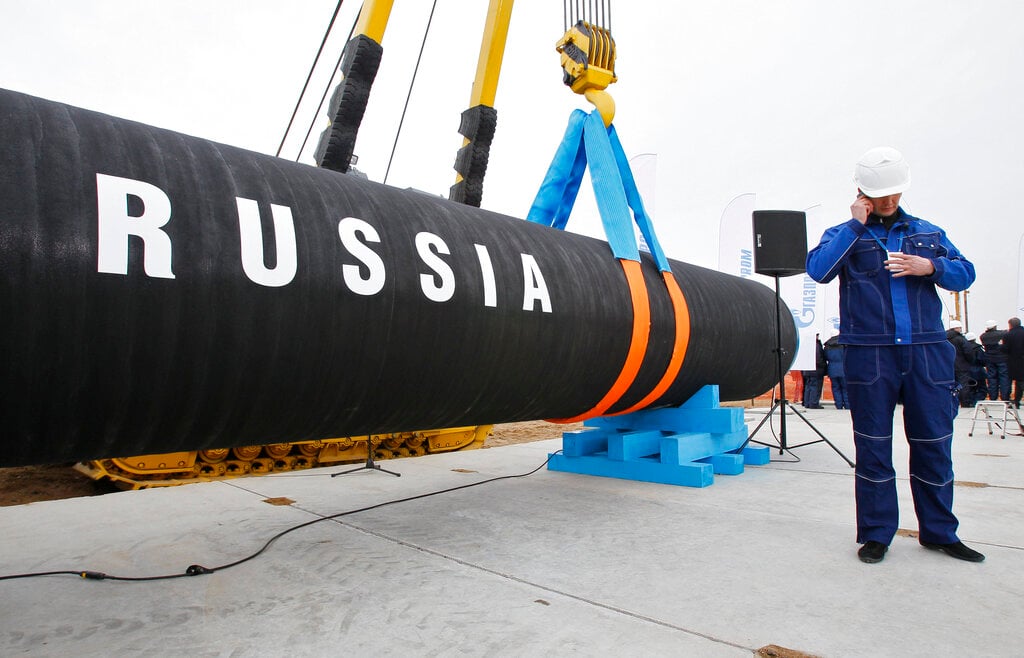
Judges at the European Court of Justice found EU officials had not given the Nord Stream 2's owner firm assurance it would stay exempt from the bloc’s regulations.(CN) — A gas pipeline from Russia to Germany was still under construction when it missed its chance at a break from EU market rules, and seven years in court couldn’t get it back.The Court of Justice of the European Union on Thursday rejected an appeal by Nord Stream 2 AG, the Swiss company wholly owned by Russia’s Gazprom that built two pipes to carry gas from Ust-Luga, Russia, under the Baltic Sea to Lubmin, Germany.In 2024, the EU’s lower court had rejected the company’s challenge to a waiver provision in a 2019 law that extended EU gas rules to pipelines from outside the bloc. On appeal, the company asked the top court to overturn that ruling and strike down the law, or at least scrap the waiver provision or its cutoff date.Germany could have waived rules on its stretch of the pipeline for up to 20 years, with possible renewal, if the project had been finished before May 23, 2019. A waiver could help an operator recoup its investment, provided it didn’t harm competition, the gas market or security of supply. For Gazprom, it could have meant keeping control of the pipeline while selling gas or avoiding a requirement to let rivals use the line at published rates.The EU’s General Court initially dismissed the lawsuit on procedural grounds. In 2022, the top court ruled part of the challenge could go ahead and sent it back. The General Court then heard the case and rejected the company’s challenge in 2024. Nord Stream 2 appealed again, arguing the 2022 ruling had already established unequal treatment.The top court wrote on Thursday, “It is clear from reading the judgment of the Court of Justice in Nord Stream 2 that the Court of Justice in no way examined whether there was any difference in treatment between the appellant and the other pipeline operators.”Nord Stream 2 argued the EU should have given it more time to comply or paid compensation. The judges found EU institutions had given the company no firm assurance the rules would leave its pipeline alone. By 2010, there were already signs the EU could apply its gas rules to pipelines from outside the bloc. The European Commission later sought permission to negotiate with Russia over what rules would apply to Nord Stream 2.Nord Stream 2 was designed to double the gas-carrying capacity of the Baltic route established by Nord Stream 1. Germany put certification on hold just before Russia launched its full-scale invasion of Ukraine in February 2022. Sabotage damaged both pipeline systems that September.Russian pipeline deliveries to Europe had already begun to fall in late 2021. In 2022, Russia sent European OECD countries about half as much gas by pipeline as the year before. That summer, a benchmark European wholesale gas price averaged four times its summer 2021 level. To prepare for winter, Europe imported record amounts of liquefied natural gas in 2022 and filled underground storage sites. Gas use fell sharply, especially in industries that used the most energy.Moniek de Jong, an energy policy researcher at Friedrich-Alexander University Erlangen-Nuremberg, said the EU had used its market rules to pursue geopolitical goals. She suspected negotiations within the EU, where Germany was among the countries still backing the project, helped produce broader wording that made the link to Nord Stream 2 less obvious.The company had changed its operating structure before the invasion, de Jong said. The war and sabotage made it harder to tell whether those changes would have been enough for the pipeline to operate under EU law. “How successful the EU or the commission was in this case, we will never know because of the Russian invasion of Ukraine,” de Jong said.The judges agreed that extending rules already applied to overland import routes closed a gap for offshore pipelines in EU waters. For Nord Stream 2, that meant the stretch off Germany. A rival supplier could seek space to ship gas through the pipeline without asking to build a connection of its own.Valentin Jeutner, a professor of international law at Lund University, said the ruling settled the dispute under EU law but left a separate international law question unanswered: whether Germany had made binding promises to Russia about the pipeline through agreements or assurances. If so, Germany could still face responsibility for breaking those promises, even if EU law required it to act differently.“Compliance with EU law does not necessarily absolve a state of responsibility under international law,” Jeutner said.The Council of the European Union declined to comment. The European Parliament and Nord Stream 2 AG did not respond to requests for comment.There is no further ordinary appeal. The gas rules stay in force, and Nord Stream 2 AG must pay its own appeal costs and those of the European Parliament and the council.Courthouse News reporter Eunseo Hong is based in the Netherlands.Subscribe to our free newslettersOur weekly newsletter Closing Arguments offers the latest about ongoing trials, major litigation and rulings in courthouses around the U.S. and the world, while the monthly Under the Lights dishes the legal dirt from Hollywood, sports, Big Tech and the arts.Additional Reads
Russian pipeline loses bid to skirt EU gas rules
Full Article
Original Source
Read the full article at Courthousenews →KhanList aggregates and links to publicly available news content. We do not host full articles from third-party sources. Always verify important information with original sources.