
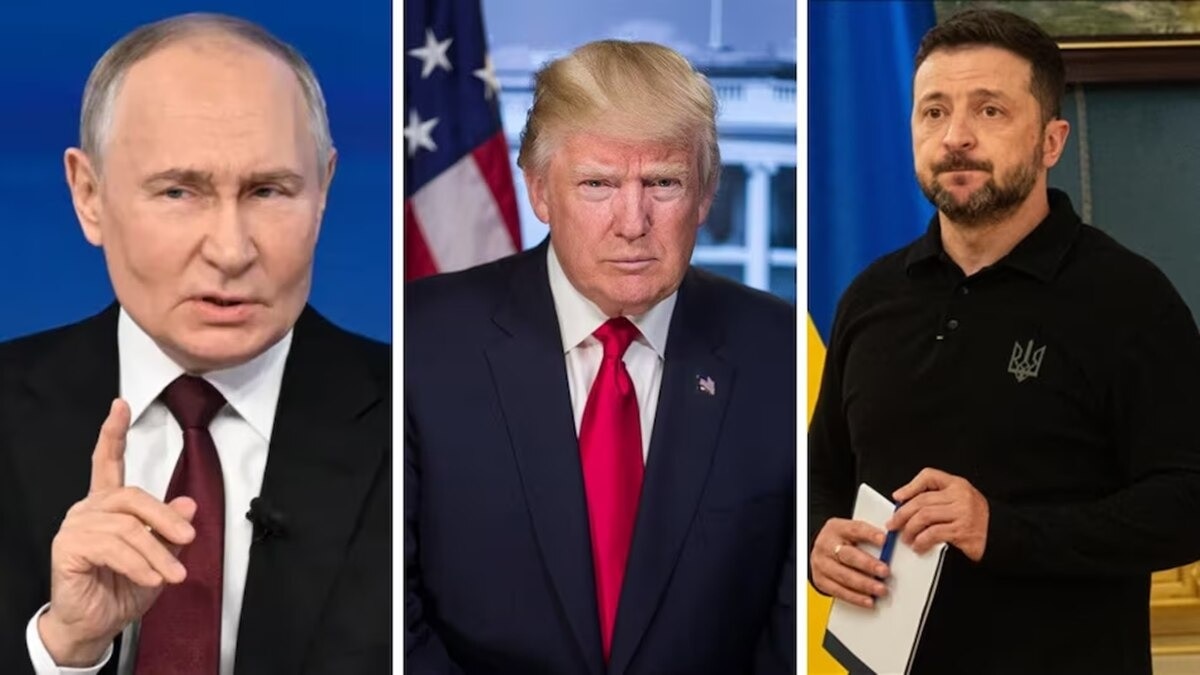
Russian and Ukrainian officials held their first direct peace talks since February in Abu Dhabi. The discussions exposed persistent divisions over territory, Nato membership and long-term security guarantees.Vladimir Putin (L), Donald Trump (M), and Volodymyr Zelenskyy.Russian and Ukrainian officials held their first direct peace talks since February in Abu Dhabi on Tuesday, as US President Donald Trump's administration stepped up efforts to broker an end to the war. The opening round was described as productive by Washington, while Ukrainian President Volodymyr Zelenskiy called the discussions "constructive and quite substantive."The negotiations, involving US presidential envoys Steve Witkoff and Jared Kushner, covered humanitarian and security issues, including the release of prisoners of war and long-term security guarantees for Ukraine. A second round of discussions is scheduled for Wednesday.US Secretary of State Marco Rubio described the meeting as "very productive", although he did not disclose details of the discussions.Zelenskiy, speaking to reporters in Denmark after the meeting, said he was encouraged by the messages coming from the American envoys and believed there had been a shift in the negotiations. "I see changes. I am very happy about what I hear," he said.In a post on X, the Ukrainian president said the release of prisoners remained a priority and that the delegations had discussed security guarantees in detail. "The release of prisoners (of war) is a priority. They spoke in detail about the substance of security guarantees for Ukraine and the foundations for ensuring these guarantees function over the long term," he wrote.Kushner also struck an optimistic note after the first day's discussions, saying Washington was encouraged by the progress made."We are encouraged by the constructive discussions today," he wrote on X, adding that the US was working towards ending the conflict and establishing arrangements for "a sovereign, secure, and prosperous Ukraine and lasting peace across Europe".Russian Deputy Foreign Minister Sergei Ryabkov, however, cautioned against drawing conclusions too early, saying it was premature to assess the outcome before the next round of talks.TERRITORY AND NATO MEMBERSHIP REMAIN MAJOR STICKING POINTSDespite renewed diplomatic activity and optimism from Trump, Moscow and Kyiv remain sharply divided over the terms of a possible peace agreement, more than four-and-a-half years after Russia launched its full-scale invasion of Ukraine.Russian forces currently control roughly a fifth of Ukrainian territory. However, territorial concessions are only one of several obstacles to a settlement. Moscow wants Ukraine to adopt neutral status and abandon its ambition to join NATO, while Kyiv is seeking firm security guarantees to prevent another Russian invasion.Trump has stepped up pressure on Ukraine to agree to a settlement, warning that it must end the war or face "a very bad thing". Last week, he said the conflict was close to being resolved through a "big beautiful agreement", although his previous predictions of diplomatic breakthroughs have not materialised.There has also been little public indication that Russian President Vladimir Putin is prepared to abandon his demand for Ukraine to surrender the entire eastern Donbas region before a deal can be reached. Zelenskiy, meanwhile, has refused to hand over territory that Ukrainian forces have fought to defend.RUSSIA PUSHES FOR WIDER EUROPEAN SECURITY FRAMEWORKEven as the negotiations focus on ending the war in Ukraine, Moscow wants discussions on a broader European security arrangement to take precedence over resolving the conflict itself.Russian Foreign Minister Sergei Lavrov said establishing the framework for a future security architecture before addressing the specifics of the war was a reasonable approach."The idea of defining clear parameters for a future security architecture, and only then moving on to resolving the actual Russia-Ukraine conflict, is absolutely reasonable," Lavrov said in Moscow.Zelenskiy, however, expressed reservations about the proposal, saying there was little clarity about what such an arrangement would entail."We are all very cautious with this topic because nobody really understands 100% what they want," he said.The Ukrainian president laid out Kyiv's priorities, saying the immediate objective should be to stop the fighting, followed by security guarantees for Ukraine and, eventually, discussions on wider European and global security."Everybody is ready for dialogue. First, stop the war in Ukraine. Second, security guarantees for Ukraine. Third, maybe some dialogue about the topic of security in Europe, in the world," he said.European Commission President Ursula von der Leyen has also argued that broader security discussions should take place only after a ceasefire. Lavrov rejected the proposal for a truce, accusing European governments of seeking to give Ukraine time to regroup.EUROPE SEEKS A PLACE AT THE NEGOTIATING TABLEThe renewed US diplomatic initiative has prompted European governments to push for a role in negotiations, arguing that any settlement must take their security concerns into account.Before Tuesday's main meeting, Ukrainian representatives held separate discussions with European, Nato and European Union officials, as well as the two US envoys.France said a lasting peace agreement could not be achieved without addressing wider European security concerns and insisted that European countries must be involved in the process.Russia, however, has made clear that it does not want European representatives participating in the Abu Dhabi meeting with Ukraine and the United States.Rubio, speaking in Paris, said Washington eventually wanted to expand the trilateral negotiations to include European countries.European leaders have largely avoided direct engagement with Putin since the invasion, although the Finnish and Norwegian leaders held a telephone conversation with the Russian president on October 27, drawing criticism from some of their European counterparts.FIGHTING CONTINUES AS DIPLOMATIC EFFORTS GATHER PACEThe latest negotiations come amid continued military escalation, with neither side showing signs of backing down on the battlefield.On the eve of the Abu Dhabi meeting, Trump said Washington had detected a "very strong inclination" on both sides to end the conflict, arguing that Russia and Ukraine were "tired of fighting".However, Russian forces have continued their attacks on Ukrainian cities and energy infrastructure, while Kyiv has intensified strikes on Russian oil refineries and other strategic facilities.Ukrainian Foreign Minister Andrii Sybiha told Reuters that he had urged Rubio to speed up deliveries of air defence interceptors as Moscow intensified attacks on energy targets."We should work on the peace track, but in parallel we should continue to pressure Russia," Sybiha said.The Abu Dhabi negotiations mark a fresh diplomatic attempt to end Europe's deadliest conflict since World War Two. However, with Moscow and Kyiv still divided over territory, Nato membership and security guarantees, translating the renewed optimism into a concrete peace agreement remains a formidable challenge.- EndsWith inputs from Reuters
Russia, Ukraine hold first peace talks since February as Trump pushes for deal
Full Article
Original Source
Read the full article at Indiatoday →KhanList aggregates and links to publicly available news content. We do not host full articles from third-party sources. Always verify important information with original sources.