
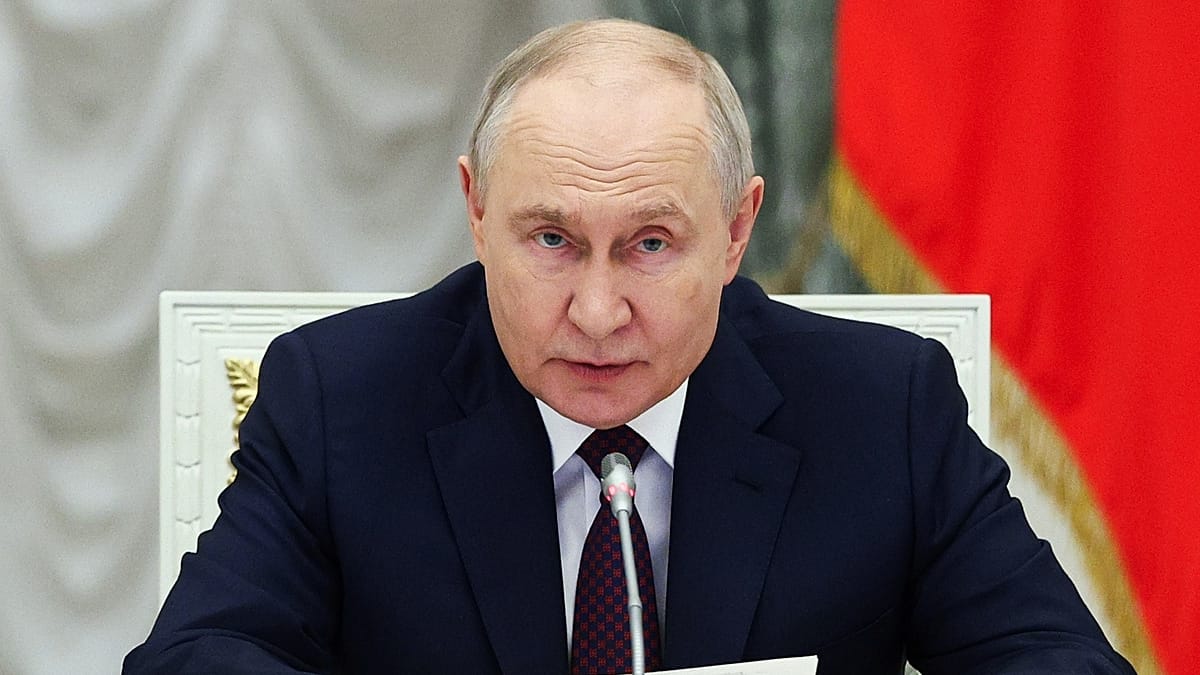
Russia has played down comments made by US special envoys Steve Witkoff and Jared Kushner suggesting Russian President Vladimir Putin has agreed to accept a European presence in the peace negotiations to end the full-scale invasion of Ukraine. ADVERTISEMENT ADVERTISEMENT Instead, it has asked Europe to cease military aid to Ukraine as a condition. Witkoff and Kushner landed in Moscow on Thursday to seek Putin's consent for Europeans to join a sought-after multilateral format. So far, the process has unfolded trilaterally between Ukraine and Russia with US moderation. The trip came after two days of negotiations in Abu Dhabi, during which Moscow's delegation refused to sit down with the European team. "The Europeans will join at the next meeting, which we consider to be a very important moment because they are our partners and it's important to us that they take part," Witkoff told reporters at the end of the meeting, according to Reuters. Kushner said the discussions had been "very fulsome and detailed" on all the topics and would "hopefully" feed into a multilateral format. But Putin's aide, Yuri Ushakov, cautioned against the prospect of having Russians and Europeans at the same table, saying that, first, Europeans need to decide between "peace" or "war", referring to their military support to Ukraine. Moscow has long equated Europe to a warring party due to the provision of weapons and ammunition that allies have sent to Kyiv. "So far, all their practical actions point precisely to the latter," Ushakov said. During the meeting, Putin made it clear that his real interest lies in revising the continent's security architecture, a complex topic that Europeans see as a ploy to divert attention from the war in Ukraine and realise Russia's great-power aspirations, including gaining veto power over NATO's future membership. The Russian president cited US President Donald Trump's plan for a "big, beautiful agreement" that "might involve all of Europe" to underline his point. "President Trump offers to agree on instruments for European security as a whole," Putin told Witkoff and Kushner. "What do we hear from the Europeans? No, only after there is peace in Ukraine," he said, seemingly in reply to comments by European Commission President Ursula von der Leyen and High Representative Kaja Kallas, both of whom have made the discussion on security architecture contingent on a ceasefire in Ukraine. "But once there is peace in Ukraine, they intend to deploy troops into its territory, which would mean the continuation of the war." Witkoff and Kushner argued that a European presence was necessary to advance the peace process, which has so far yielded limited progress beyond the prisoner swaps. Kushner dangled the prospect of discussing security architecture as an incentive. "The Europeans have a desire for this war to really be the end and for there to be a long peace after," Kushner told Putin. "And understanding the long-term security between Russia, Ukraine, and Europe is a conversation that we started having with them." Meanwhile, in Dublin, European leaders pushed back against Putin's revisionist attempt, arguing it was Moscow that breached the security agreements that had been in place for decades. Any discussion on architecture, they said, required a European presence. "It is important that Russia comes to the table and that Russia is ready for talks," German Chancellor Friedrich Merz said. EU leaders are set to discuss on Friday the possibility of appointing a special envoy for the diplomatic process. Ukrainian President Volodymyr Zelenskyy has asked them to designate one common representative by the end of the month. Kremlin spokesperson Dmitry Peskov said such a designation was a pre-requisite for joining the negotiations. "The Europeans squabble like spiders in a jar. If someone takes the initiative to establish contact with the Russian side, such people are facing ostracism," Peskov said. Russia's opposition, though, is not a blanket ban: last month, Putin held a 90-minute phone callwith the leaders of Finland and Norway.
Russia plays down peace talks with Europe after Witkoff raises hopes of breakthrough
Full Article
Original Source
Read the full article at Euronews →KhanList aggregates and links to publicly available news content. We do not host full articles from third-party sources. Always verify important information with original sources.