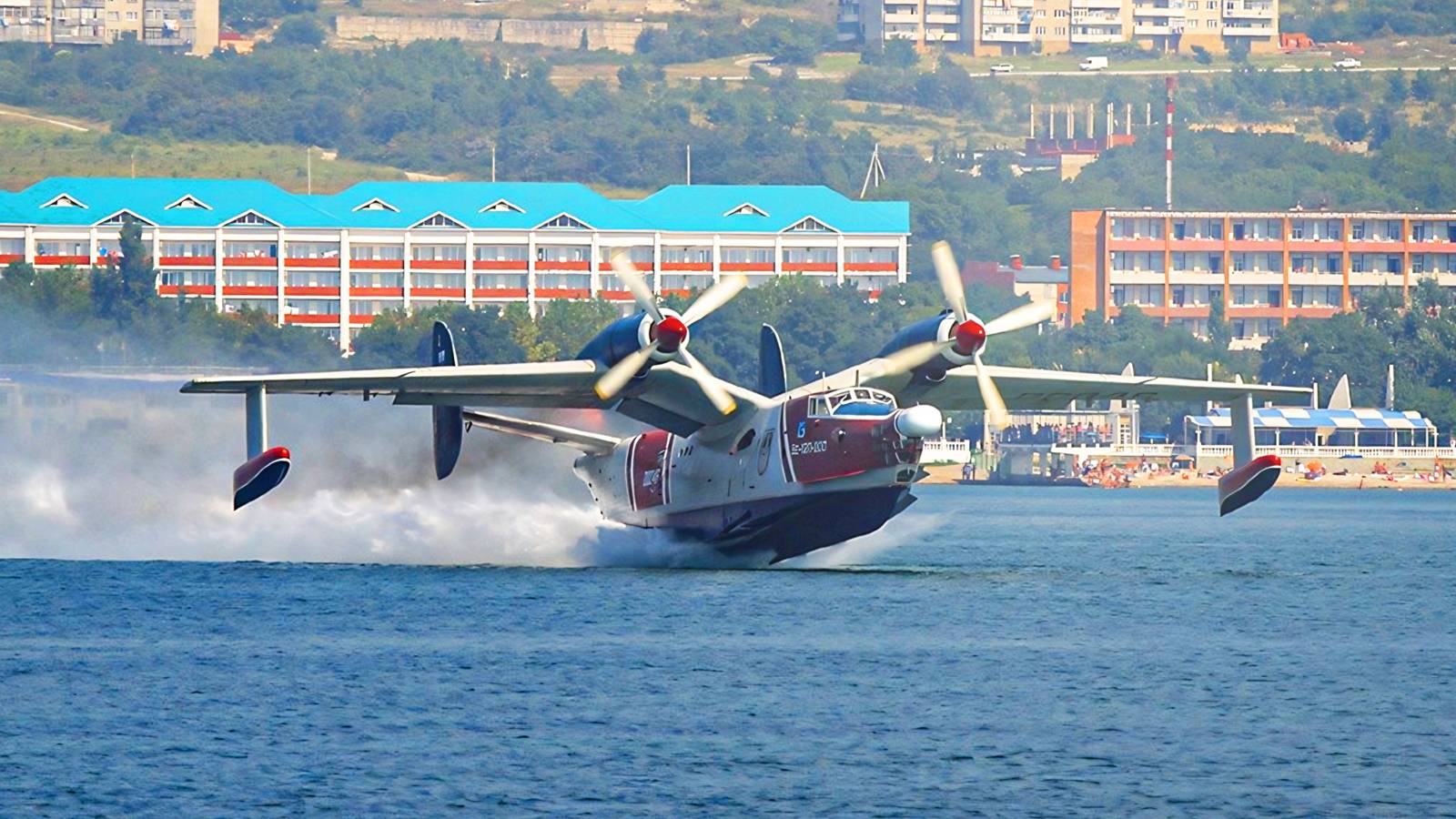
Published Aug 14, 2026, 2:00 PM EDT Luke Diaz is a freelance military writer with experience with active duty experience in the US Navy as well as defense and industrial engineering. He is a former Naval Flight Officer who performed tactical air control on the carrier-based E-2 Hawkeye. Adorned in the livery of the Russian Navy, a relic of the 1960s still soars over the Black Sea in a desperate bid to fill a mission gap that the diminishing surface fleet and decrepit aircraft carrier cannot. That plane is the Beriev Be-12 Chayka, a turboprop seaplane known to NATO as 'Mail.' Despite the grand armada that Russia wielded to exert dominance over the region, Ukraine's uncrewed surface vessels have dealt numerous heavy blows that have forced the unprepared navy to change its strategy. In a classic twist of fate, the performance shortcomings of this Cold War amphibian that make it seemingly useless in a near-peer conflict are why it is now mission-critical once again. As flying boats, the Chayka can skim over the surface of the sea at low speeds for extended periods of time to perform maritime patrols and search for Ukraine's drones. Yet, there are about two dozen Be-12s believed to still exist, and the assembly line shuttered decades ago. Russia has no successor in its role in the network of improvised defenses that is critical to fill the gap left by harbor barriers, drones, and helicopter gunships. As the Russian Black Sea Fleet finds itself cornered, these antiquated seaplanes have become vital MPAs in the 21st century. Be-12: Relic Of A Bygone Era Credit: Shutterstock The Be-12's original anti-submarine mission has been effectively obsolete for decades. What has kept the type militarily relevant since 2022 is a repurposed mission entirely disconnected from its Cold War design: aerial search and tracking in support of Russian efforts to counter Ukrainian uncrewed surface vessels, or sea drones, in the Black Sea. Ukraine's USV campaign has proven strikingly effective against a technologically far more sophisticated opponent. Ukrainian drone warfare has even claimed Chayka for its toll on the Russian Navy. In September 2025, a drone raid successfully destroyed two Be-12 aircraft parked at a military repair plant in Sevastopol, Crimea. This incident marked the first time the type was ever lost in combat. Long before Ukraine targeted the Be-12 fleet, their numbers were already dropping simply from the attrition of neglect. It's estimated that over 50 were airworthy when the Berlin Wall fell, and the Cold War came to a close. The current number in flying condition is believed to be a half-dozen to a dozen as of 2026. It is unknown what condition the ASW equipment on board is in, but even fully functional, everything is from the 1970s. The Be-12N upgrade program introduced magnetic anomaly detectors and new search systems to some of about half of the planes flying at the time. By The Numbers: The Chayka Credit: Shutterstock Originally designed in 1960, the Be-12 entered production a few years later. The assembly line stayed open until 1973, at which point it is believed that as many as 150 were completed. The design was an upgrade over the piston-powered. The turboprops that power the Be-12 are the same as those used on Ilyushin and Antonov transport planes and produce just under 4,000 horsepower, which gives it a top speed of around 330 miles per hour (530 km/h). It's estimated that the plane has a 3-hour loiter time with a combat radius of about 373 miles (600 km) or a maximum range of 932-1,243 miles (1,500-2,000 km). That range is more than sufficient to patrol waters surrounding the Crimean Peninsula and extending along the coastline of Ukraine, with the base at Sevastopol being about 150 miles from Ukrainian shores. The aircraft is estimated to be capable of carrying almost 6,000-11,000 pounds (3,000-5,000 kg) in payload, according to Janes. That includes externally mounted weapons like sonobuoys, depth charges, torpedoes, mines, and conventional bombs. Although this half-century-old armament is wholly inadequate for modern naval warfare, it does represent a meaningful threat to USVs caught on the open sea by a Chayka. Yet, there were reports that the fleet had been converted to airborne search and rescue prior to 2023, according to The War Zone. So, it is unclear what kind of configuration the planes flying today are outfitted with. Grounded Successor: Beriev's Albatross Credit: Shutterstock The intended successor, the Beriev A-40 Albatros, was a considerably more ambitious aircraft. It first flew in 1986 and entered limited service in 1990, at one point setting numerous world records for aircraft of its type. The jet-powered A-40 was designed to replace not just the Be-12 but also the land-based Ilyushin Il-38 in the ASW role. The program was suspended almost immediately after the Soviet Union's collapse. Only one prototype A-40 was ever completed. Revival efforts recurred periodically over the following decades, with the Russian Ministry of Defense resuming production on more than one occasion. As recently as March 2016, a Black Sea Fleet naval aviation commander told the state news agency RIA Novosti that the Be-12 fleet would be replaced by modernized A-40s by 2020. However, no airworthy example has yet emerged from the assembly line. A contender has emerged in the years that have passed. Beriev's own Be-200 firefighting amphibian has been in service in civilian configuration since 2020. This aircraft is powered by turbofans, which would make it a substantial upgrade over the Be-12. It would offer a means of replacing the lost airframes and increasing Russia's fleet size with a more modern platform. Yet the sanctions on Russian aerospace have also impacted the production capacity for these planes. None have been delivered to the Navy as of today, if they were even ordered in the first place. The Battle Of Attrition On The Black Sea Credit: Shutterstock According to official observations from sources like the United Kingdom's Ministry of Defense, Ukraine holds the strategic initiative over the Black Sea conflict with Russia. The Be-12's rushed reintroduction to frontline service is indicative of the broader improvised and reactive measures taken by the Russian Navy in the face of an onslaught of state-of-the-art, low-cost remote weapons systems. The Black Sea flotilla's exquisite warships have taken a beating, with even the flagship guided missile cruiser Moskva suffering damage in April 2022. Over the years since the invasion of Ukraine began, the Black Sea Fleet has seen landing ships sunk by sea drones, others severely damaged, and even submarines take hits. It has even been reported that a Ukrainian drone struck a precious Kilo-class attack sub, the Rostov-on-Don, while it was in berth at Sevastopol, according to Militarnyi. Since the Be-12 has become relevant as an MPA once again, it is also a high-value target for Ukraine's USVs. Another strike was reported in February and allegedly damaged two more Chaykas on the ground at the Yevpatoria aviation repair plant in occupied Crimea. In the same raid, Ukraine's forces struck two Project 22460 Okhotnik-class patrol vessels, of which only 14 exist. In one fell swoop, the USVs dealt another damaging blow to the steadily declining Russian Navy inventory. The Toll Of The Special Operation That Never Ends Credit: Shutterstock The problems afflicting the Be-12 fleet are far from isolated and instead represent a good case study into the broader sustainment issues for a Navy unprepared to conduct operations in a prolonged conflict. Russia has lost a substantial share of its Black Sea surface and amphibious capability to a mix of missile strikes, drone attacks, and uncrewed-vessel operations. This has left the flotilla in what many analysts describe as a retreat phase. The dismal performance of Russia's lone remaining aircraft carrier, Admiral Kuznetsov, further highlights the abysmal state of naval aviation within the country. Both cases are downstream of the same systemic failures that have left shipbuilding, aerospace manufacturing, and other defense industrial sources underfunded and overburdened. The wartime budgetary diversions have left enough funding only for the most crucial programs, leaving even monumental assets like the Kuznetsov to rot in disrepair and likely be scrapped in the near future. The war in Ukraine has diverted both funding and institutional attention toward munitions production and away from long-lasting naval programs. Sanctions that followed the invasion of Ukraine have cut off imports of precision electronics, navigation systems, and specialized materials that Russian shipyards and aircraft manufacturers had relied on for decades. The budget has drifted away from long-led naval programs through the combination of wartime needs and outright institutional corruption. A Bleak Outlook For The Black Sea Fleet Credit: Shutterstock It is highly unlikely that the Be-12 fleet will continue to fly on this unsustainable plan into the far future. Dwindling numbers of airframes combined with the non-existent supply chain to support them means that their days are literally counting down as resources disappear, and Ukrainian strikes destroy the planes themselves. Ukraine has aggressively hunted these rare aircraft, and there is no indication that this will change at any point given the ongoing hostilities between the two nations. Meanwhile, the broader Russian Black Sea Fleet faces an existential crisis, having lost roughly one-third of its entire warship capability to asymmetric Ukrainian strikes. Russian warships have effectively stopped conducting routine sea sorties. After fleeing its primary headquarters in Sevastopol, Crimea, to escape Ukrainian cruise missiles and USVs, Russia consolidated its remaining fleet in Novorossiysk. They have been entirely chased out of open waters and the Sea of Azov, unable to project power or enforce naval blockades. Because Turkey closed the Bosphorus Strait to military vessels at the onset of the war, Russia cannot reinforce the Black Sea Fleet with surface warships from its Northern, Baltic, or Pacific fleets. Russia is desperately attempting to form its own uncrewed systems regiments to counter Ukrainian forces, but the last of the Be-12s may very well fall to enemy fire in a tragic end to a rare and unique line of airplanes built by one of the most legendary plane makers in history.
Russia Is Still Flying A 1960s Soviet Flying Boat On Combat Missions Over The Black Sea
Full Article
Original Source
Read the full article at Simpleflying →KhanList aggregates and links to publicly available news content. We do not host full articles from third-party sources. Always verify important information with original sources.