
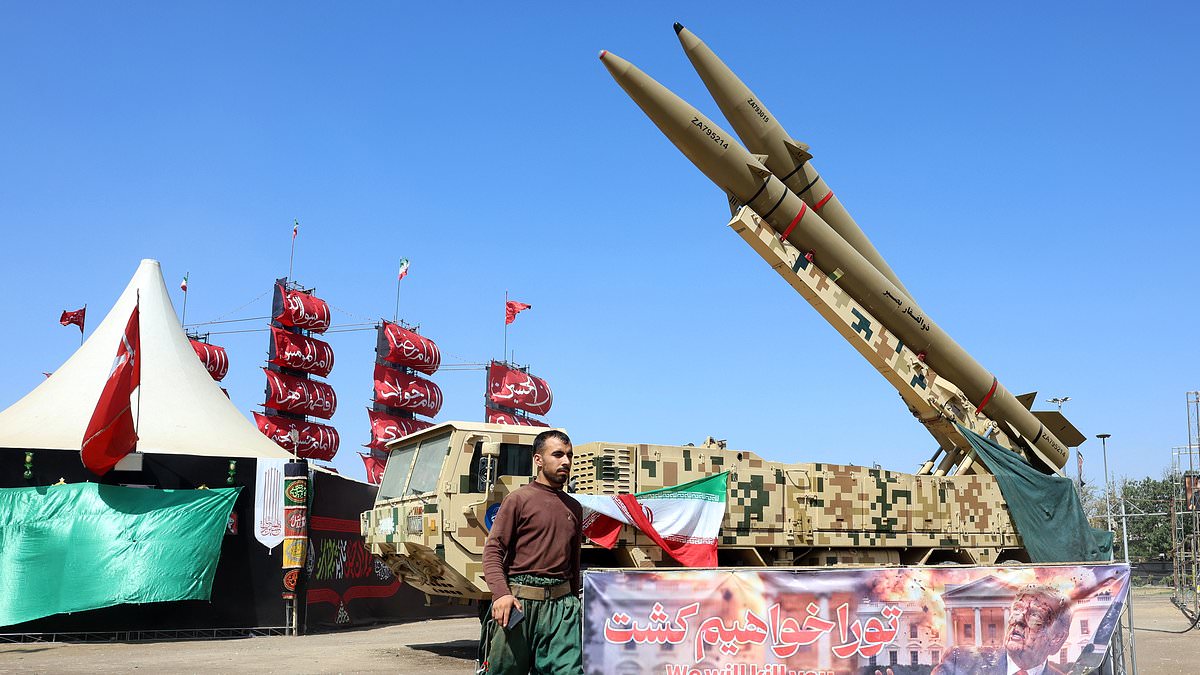
Russia has been secretly helping Iran develop supersonic cruise missiles in what is possibly the most significant known transfer of military technology between the two countries. The programme, codenamed C43OL, has assigned some of Moscow's best missile experts to help Tehran develop a new class of weapon capable of threatening US aircraft carriers in the Middle East, an investigation by the Financial Times has found. According to the report, the C43OL's main purpose is to help Iran develop a ramjet propulsion system, which allows a cruise missile to sustain flight at several times the speed of sound.Supersonic cruise missiles are extremely difficult to intercept because they fly at a low altitude and at speeds of up to 2,200 miles per hour. 'For the Iranians, this would give them a qualitatively new strategic weapon system that could threaten US navy vessels,' said Jim Lamson, a former CIA military analyst.While Iran has built and flight-tested the ramjet propulsion system, there is no evidence that it has been deployed. 'This is the transfer of a highly strategically sensitive military technology from Russia that the Iranians have wanted to acquire for decades,' Fabian Hinz, an Iranian missile expert, told the FT.'A programme like this would require political clearance from the very top in Russia.' File image: A test launch of Russia's Sarmat intercontinental ballistic missile at an unidentified location, in this still image taken from a video released on May 12, 2026 File image: An Iranian worker walks next to the Iranian missiles 'Zolfaghar' on display at the Azadi square in Tehran, Iran, 30 July 2026The Iranian regime has already been supplying Moscow with its 'kamikaze' drones to strike Ukraine, while Russia has reportedly provided intelligence that allows Tehran to strike American bases across the Middle East.However, the ramjet programme 'shows Russia is trying to broaden the Ukraine war and draw the US into different theatres,' according to Nicole Grajewski, a professor at Sciences Po University in Paris.The secret supersonic missile assistance programme was arranged by Russia's state arms exporter, Rosoboronexport, which co-ordinated the project with state-owned rocket designer NPO Mashinostroyenia.The US sanctioned NPO Mashinostroyenia back in 2014 over its development of cruise missile systems that can be launched from ships, submarines and ground platforms.Leaked travel records analysed by the FT show Russian arms export officials and NPO Mashinostroyenia engineers made several trips to Iran before formally signing the C43OL contract in November 2023. By 2025, NPO Mashinostroyenia had received a large cache of Iranian technical material relating to the ramjet propulsion system.It comes as Russian President Vladimir Putin this week told his Iranian counterpart, Masoud Pezeshkian, that Moscow was 'trying to give you the help you need in this difficult period' and 'supplying you with the goods you need' during Iran's war against Israel and the US. The US has been striking military targets in Iran this week, while Tehran fired missiles and drones at various sites across the region in response as hostilities flare once again. One US strike hit a home hosting a wedding, killing five people and wounding dozens, according to local officials. The US Central Command said in a statement on Tuesday evening that it had completed the latest barrage against Iranian military targets including air defence sites, radar systems and maritime assets. The US strikes followed others on Sunday that abruptly ended a month without military action and threatened to fully reignite a conflict that has spiked global oil prices. Last night, US President Donald Trump said he would not force Iran to the bargaining table. Vladimir Putin (pictured on September 1) told his Iranian counterpart this week that Russia was 'supplying you with the goods you need'. The US has been striking military targets in Iran this week, while Tehran fired missiles and drones at various sites across the region. Screen grab from a video shared by the US Central Command on September 1 shows Iranian military targets being struck by US forces File image: Rubble lies around damaged houses following a reported attack near a wedding gathering in Kuhistik, Sirik, Iran, September 2'I couldn't care less if they sign a worthless, to them, agreement. I like our position now much better, with almost total control of the Hormuz Strait, and their economy totally collapsing. They are just playing out the inevitable. When are the Iranian people going to rise up and fight?' Trump wrote on social media. Earlier, Trump had appeared to pivot toward trying to bend Iran to his will through economic sanctions. He warned that if Iran retaliated for the new strikes, 'they will be hit again at a much harder and higher level.' US Central Command said the latest attacks were in response to Tehran trying to hit commercial ships and American forces in the Middle East. The president offered an additional explanation, telling Fox News in a phone call that US forces struck Iran's radars.'They tried to rebuild their radar because they can't see anything,' Trump told Fox earlier in the day. 'We waited until it was almost built and then we hit it.'After the US attacks started, Iran launched ballistic missiles at Jordan. The Iranian Revolutionary Guard claimed to have targeted a US base along Jordan’s Gulf of Aqaba coast, according to Iran’s state television. Jordan’s military said it shot down 10 of the missiles and the three remaining landed in unpopulated areas. Explosions that appeared to be interceptions of incoming air attacks were seen over Aqaba.
Russia is secretly helping Iran develop supersonic missiles
Full Article
Original Source
Read the full article at Dailymail →KhanList aggregates and links to publicly available news content. We do not host full articles from third-party sources. Always verify important information with original sources.