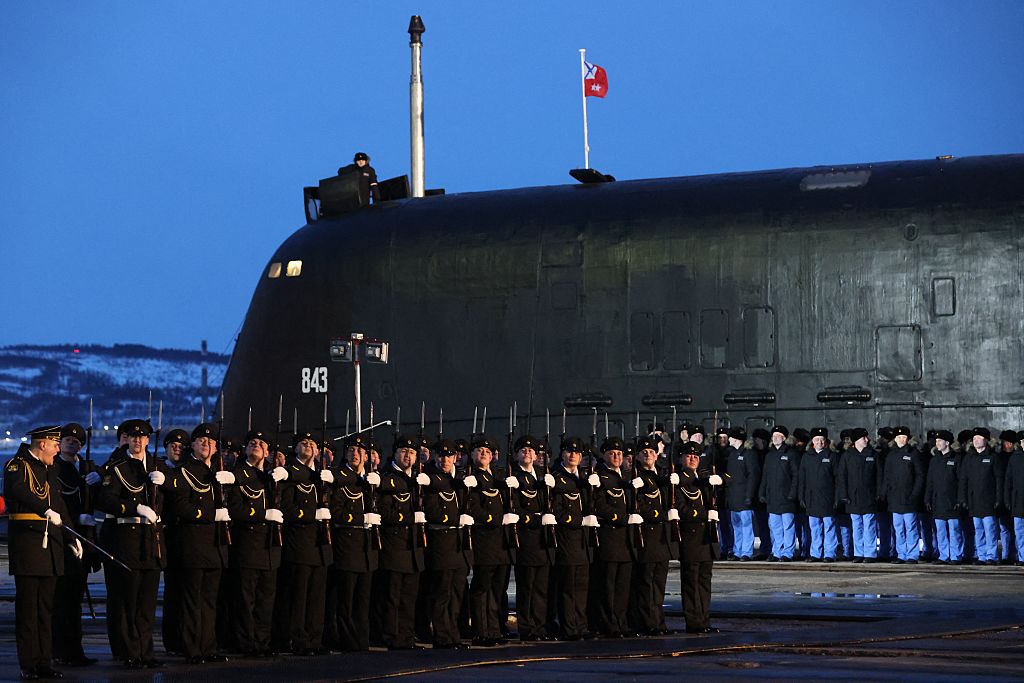
Arctic waters have always been frigid, but Russia’s expansion of its Northern Fleet is making the security environment more chilling. On July 28, Moscow launched the Ulyanovsk, its newest Yasen-M-class nuclear-powered, cruise-missile launching submarine. The launch reflects the Kremlin’s continued investment in undersea-based power projection and reinforces NATO’s need for persistent maritime surveillance to detect and track Russian submarine activity. Russia Is Strengthening Its Northern Fleet Yasen-M submarines can target submarines and surface ships with torpedoes and strike maritime and land targets with cruise missiles. The Ulyanovsk is expected to join Russia’s Northern Fleet by the end of this year. Russia currently has five Yasen-series submarines in service in its Northern and Pacific fleets, with six more planned to be commissioned in the coming years. The Northern Fleet is based on the Kola Peninsula, which lies near Russia’s borders with Norway, Sweden, and Finland. Along with the Pacific Fleet, the Northern Fleet is responsible for operating and protecting ballistic-missile submarines, playing a crucial role in Moscow’s nuclear deterrent. The Northern Fleet is also responsible for helping defend Russia’s Arctic frontier and its Northern Sea Route, ensuring access to the North Atlantic, and projecting power into other theaters. Over the past two decades, Russia has dramatically expanded its naval and air capabilities in the Arctic to prepare for growing competition in the region. NATO Is Testing New Ways To Track Russian Submarines Tracking Russian submarines through the Greenland-Iceland-UK gap is critical to protecting allied forces and undersea assets. In May, NATO’s Dynamic Mongoose 2026 exercise brought together nine nations for anti-submarine warfare training in the Norwegian Sea. The exercise integrated submarines, surface ships, maritime patrol aircraft, helicopters, and autonomous systems. NATO is also testing emerging technology that could fill surveillance gaps. The Norway-led Cold Weather Operations Centre of Excellence has created HEIMDALL, an initiative to test uncrewed systems in Arctic conditions. During its 2026 pilot, allied participants tested autonomous systems above, on, and below the surface of Norwegian fjords to assess whether they could reliably collect and transmit data in Arctic conditions. Meanwhile, NATO’s Task Force X-Arctic, launched in June 2026, is testing uncrewed systems, maritime sensors, data-sharing tools, and other technologies to determine if and how they can work together to improve surveillance and provide allies with a shared picture of maritime activity across the High North. A full demonstration is planned for summer 2027. NATO created the Task Force X framework to shorten the time between identifying an operational need and fielding a useful capability. Each initiative brings together allied militaries, technical experts, and industry to test available technologies against a defined challenge. Allies Need To Prioritize Fielding Tested Capabilities Successful testing within Task Force X does not automatically lead to acquisition. NATO can, however, establish a follow-on phase in which participating allies invest in proven capabilities. These systems remain nationally owned and operated but can be made available for NATO missions. Allied Command Transformation then helps ensure that national systems exchange data and operate as part of a broader alliance network. The initial phase determines what works, while a second phase determines what allies will acquire and how those capabilities will operate together. Task Force X-Baltic shows how this model can progress. During its 2025 experimentation period, NATO tested more than 70 aerial, surface, and subsurface systems that tracked hundreds of vessels and fed information into a shared operating picture. Eight Baltic allies then established phase two to coordinate national investments, while Allied Command Transformation supported integration. The initiative moved beyond demonstrating individual systems toward building a persistent regional surveillance network. Task Force X-Arctic should follow the same path. After the 2027 demonstration, the Pentagon should identify and acquire mature technologies that could close Arctic surveillance gaps. Washington should also encourage NATO allies to establish a Baltic-style phase two for the Arctic focused on acquiring and integrating proven capabilities. Russia is steadily expanding its Arctic undersea capabilities. NATO must keep pace. Emmerson Overell is a project coordinator at the Center on Cyber and Technology Innovation (CCTI) at the Foundation for Defense of Democracies (FDD), where she researches threats to U.S. and allied national security in the Arctic, space, and cyberspace. Katy Wickberg is a senior program manager at FDD where she manages the organization’s expansive research portfolios. For more analysis from the authors and FDD, please subscribe HERE. Follow FDD on X @FDD. FDD is a Washington, DC-based, nonpartisan research institute focused on national security and foreign policy.
Russia Is Expanding Its Arctic Submarine Fleet, Highlighting NATO’s Need for Enhanced Maritime Surveillance in the High North
Full Article
Original Source
Read the full article at Fdd →KhanList aggregates and links to publicly available news content. We do not host full articles from third-party sources. Always verify important information with original sources.