
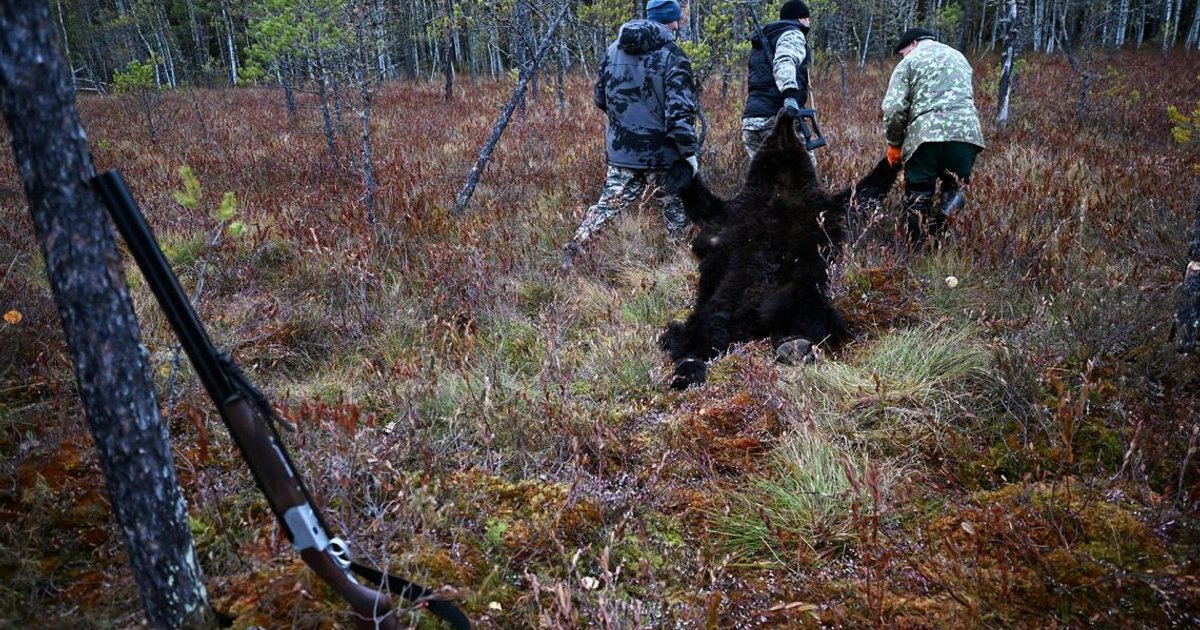
A woman in Russia’s Far East was fined this week after an AI-generated image of a bear, created to prank a friend, went viral and triggered a real-life hunt, the regional courts said.The Russian authorities are on high alert in 2026 due to a spate of deadly attacks in several regions, where growing bear populations and a poor crop of berries and pine nuts have increased the chances of encounters with humans, experts say.The resident of Magdagachi settlement, Amur region, used ChatGPT to generate the picture of a large brown bear seemingly strolling down a local street and sent it to her friend in September.“The joke quickly got out of control. The photograph of the bear spread through messaging apps, and police began receiving alarmed calls from residents,” the Amur courts’ press service said in a statement, describing how the district head dispatched wildlife rangers to deal with the phantom animal.The woman called police and confessed to creating the image. A court this week ordered her to pay a fine of 15,000 roubles (S$230), it said.In mid-September, another woman in the eastern Transbaikal region was fined 30,000 roubles for posting a fake image of a bear in a village, Russian legal news agency RAPSI reported.This year, at least 26 people have been killed in bear attacks since spring, when hungry bears emerge from hibernation, news agency RIA Novosti said on Oct 12.In response to the attacks, the government said last month that it was drawing up urgent measures to control the brown bear population, which has more than doubled in the last three decades to 308,000, in part due to shorter and milder winters.Since the start of the year, more than 3,440 bears that were deemed to pose a threat to humans have been killed, according to a tally compiled by state news agency TASS and published on Oct 10. REUTERS
Russia cracks down on AI bears as real attacks spread fear
Full Article
Original Source
Read the full article at Straitstimes →KhanList aggregates and links to publicly available news content. We do not host full articles from third-party sources. Always verify important information with original sources.