
The petitioners claim the FCC ignored a Supreme Court ruling and continued funding programs that no longer meet the statute’s tightened criteria.(CN) — A Fifth Circuit panel heard a challenge Wednesday that could force the Federal Communications Commission to slash billions in subsidies for rural broadband, schools, libraries and health clinics based on a Supreme Court ruling that tightened what the Universal Service Fund may lawfully support.The fund, created under Section 254 of the Communications Act, subsidizes phone and broadband service in high-cost rural areas, for low-income households, schools and libraries, and rural health care providers. Carriers pay a percentage of certain revenues into the fund; the rate is calculated quarterly.Consumers’ Research and individual petitioners challenged the FCC’s approval of the proposed fourth-quarter 2025 contribution factor, claiming they’re paying inflated rates because some programs fall outside the statute.Just over a year ago, the Supreme Court reversed a prior Fifth Circuit ruling in a related case and found an “intelligible principle” in Section 254. The petitioners say the high court treated 10 principles of Section 254 as mandatory requirements that every funded program must satisfy. The FCC, they contend, continued funding existing programs without checking those criteria.“The commission ignored petitioners’ timely comments, which pointed out the change in law brought about by the Supreme Court’s decision, and which also identified specific features of existing programs that do not meet all of Section 254 criteria and so cannot be funded,” said Laura Ruppalt of Boyden Gray PLLC, arguing for the petitioners. “FCC’s failure to address the change in law and petitioners’ comments is arbitrary and capricious.”Ruppalt focused on two high-cost programs that support gigabit-speed broadband networks: Connect America Fund Phase II and the Rural Digital Opportunity Fund. Those networks, she said, are not subscribed to by a majority of residential customers and therefore fall outside the statute as the Supreme Court interpreted it. She also argued Congress never authorized the FCC to hand over control of the fund to the Universal Service Administrative Company, a private entity.Chief U.S. Circuit Judge Jennifer Walker Elrod, a George W. Bush appointee, asked who decides what gets funded and how technological advances affect the need for subsidies.“Are they using the same technologies for the services that they used in years past? Are they using any more up-to-date technologies that might be less expensive?” she asked. She later pressed whether keeping the contribution rate roughly constant automatically makes the spending “economically reasonable.”James Carr, arguing for the FCC, said the agency retains all decisionmaking authority. The Universal Service Administrative Company performs only ministerial tasks under continuous FCC oversight, including day-to-day staff communication and prior approval for audits, he told the court.“All of the decisionmaking here is being done by the FCC,” Carr said. “USAC has no decisionmaking authority in this context, either with respect to the contribution factor or with respect to who’s receiving funds.”Defending provisions that allow additional services for schools, libraries and rural health care providers, Carr pointed to the requirement that spending be “economically reasonable.” The commission has long considered the contribution burden when deciding whether to fund new services, he said, and has kept spending roughly constant in inflation-adjusted dollars for 25 years.Jason Neal, arguing for intervenors including the Schools, Health & Libraries Broadband Coalition, emphasized the importance of the rural broadband subsidies now on the chopping block. Schools and libraries need internal wiring and network equipment that go beyond basic connectivity to a building, he said.“It’s not just putting it in; it’s maintaining it,” Neal told the court in response to a question from Elrod.U.S. Circuit Judge Andrew S. Oldham, a Donald Trump appointee, questioned the statutory basis for USAC itself. He noted a Government Accountability Office finding decades ago that certain government corporations lacked proper authorization and pressed Carr on whether later legislation — including pandemic-related measures directing the FCC to use USAC for temporary programs — could ratify the company’s original creation. Carr replied that Congress’ decision to rely on USAC for those programs necessarily recognized its legitimacy.U.S. Circuit Judge Edith Brown Clement, a George W. Bush appointee, asked whether the petitioners primarily object that money is going to the wrong recipients or that the overall contributions are simply too high. Ruppalt answered that both problems exist: the rates are inflated because some programs fall outside the statute.Ruppalt closed by noting USAC’s annual budget is roughly $266 million, about 3% of the contribution factor and larger than the budgets of many federal agencies. If the FCC had to administer the fund itself, she suggested, the costs and structure would look different.The panel took the case under submission. The contribution factor remains in effect pending a decision.Subscribe to our free newslettersOur weekly newsletter Closing Arguments offers the latest about ongoing trials, major litigation and rulings in courthouses around the U.S. and the world, while the monthly Under the Lights dishes the legal dirt from Hollywood, sports, Big Tech and the arts.Additional Reads
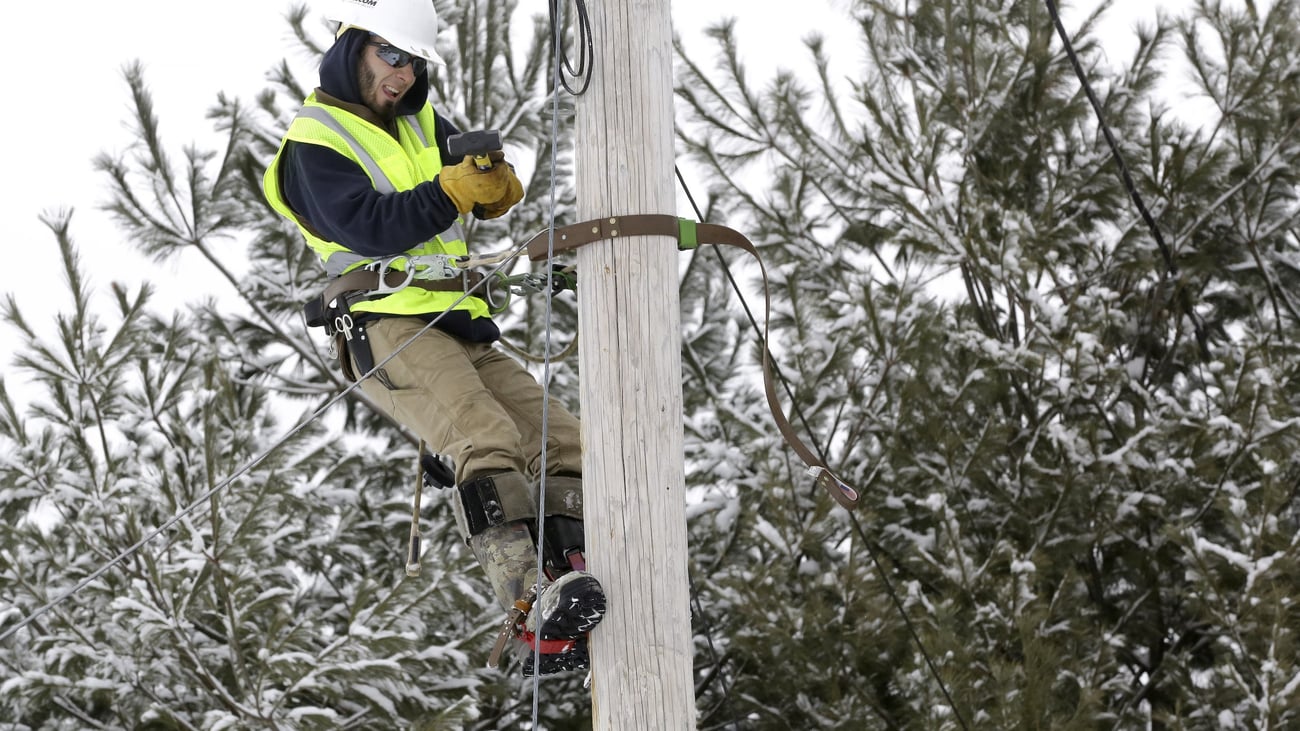
Rural broadband subsidies on the chopping block at Fifth Circuit
Full Article
Original Source
Read the full article at Courthousenews →KhanList aggregates and links to publicly available news content. We do not host full articles from third-party sources. Always verify important information with original sources.