
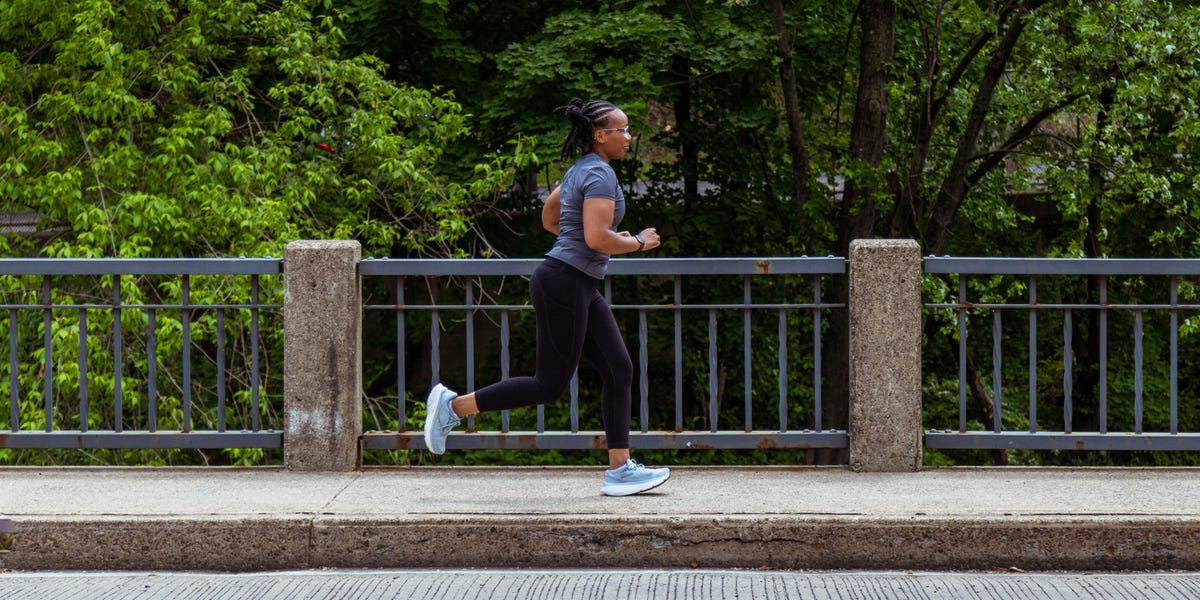
While I was training for my first half marathon during the summer of 2025, I’d clock an average 16:00 run/walk pace. It felt humbling. I wanted to go faster, but I wasn’t physically prepared to accomplish a quicker pace.So I followed the Runner’s World Beginner Run/Walk plan and racked up miles. By focusing on consistency and going longer, I worked up to an average 13:51 pace come race day. But I still wanted to pick it up.I signed up for another race last spring, following the Runner’s World break 2:30 plan, which introduced me to some speed workouts: half marathon pace sessions scheduled every week.I struggled to keep up with those runs, sometimes falling off pace during sessions and other times skipping them entirely. The quicker pace felt intimidating and I typically dreaded the workouts. But I couldn’t deny they led to improvement in my next half, as I finished in 2:48:54, a more than 10-minute PR.Chasing after the same goal and with my eye on the Copenhagen Half Marathon, I jumped at a chance to train with Runna, an app that creates personalized training plans that adjust to your schedule.After answering a few prompts, like estimated finish time and how many days a week to run, the app initially spit out a training plan with rolling 800s in the first week. Thinking back to my previous speedwork experience, I felt too nervous to commit. I scrapped the plan and retook the survey hoping I’d get one with less speedwork.After several tries, I finally got a program with speed sessions every other week—a good compromise for my goal of getting faster without dreading my runs.As a run/walker, tackling speed was challenging because I had to factor in how long I could run before walking, and it didn’t always align with the length of the running interval, which made the workouts feel out of reach. But I figured out a way to harness the power of the run/walk method and got into a biweekly groove of zeroing in on faster paces. It led me to a 2:38:03 finish, cutting another 10 minutes off my previous time.Here’s how I overcame my fears of regular speedwork and the strategies you can steal to do the same. Plus, how to strategically add speed to your training without getting overwhelmed.How I Overcame My Fear of IntensityEven for the most experienced runners, speed workouts are intimidating, Danielle Hirt, NASM-certified personal trainer and RRCA-certified run coach, tells me. The easiest way to get over these fears is to forget about pace, and focus on running at three speeds: easy, medium, and hard. “Most people don’t know their level of difficulty because they’re not willing to explore that discomfort,” she says. This approach helps you do that.Getting comfortable with being uncomfortable—and hitting that hard effort—is the first step to overcoming fears around dedicated speed sessions. Training with Runna helped me better handle that because I could see the full workouts ahead of time and get audio cues about when to change intensities. This made the work more seamless, and when paces felt doable, it gave me confidence to keep going.Winston ZhouIf you’re completely new to running or just getting started with speed, it’s smart to start with strides—short accelerations that usually last about 20 to 30 seconds—during the middle or end of an easy run. These short bursts can help you connect effort to form, Hirt says.She recommends you add at least three strides to easy runs, then work up to about five strides over the course of a few weeks. From there you can build with hill strides (performing the same accelerations but on an incline), before progressing to other workouts.For runners who have a strong fitness foundation and experience with speed training, but get nervous ahead of structured workouts, Stephanie Kessell, elite marathoner and head coach at Runna, recommends doing the first rep of your session at a pace that’s about 10 seconds slower than your target. You can build up to your target pace in the following reps, she says.For example, if the goal is to hit 8:50 pace, do the first interval rep at 9:00. If you feel strong, pick up the pace on the next rep. This gives you a more approachable starting point, and helps you understand what you need to do to get through the session.“I think a lot of people, who are new to intervals, give themselves a hard time because they’re maybe falling off the paces—faster or slower—and they just want to feel that they can get the pace right,” Kessell says, emphasizing that this easing-in approach helps. “The more pace work you do, the more confident you’ll be at executing a certain pace.”The Importance of Speedwork for Half MarathonersOften, when runners think about speedwork, they think of it as a tool to get faster for a shorter distance, like a 5K or 10K. But it’s valuable for a half or full marathon too—even if you’re a run/walker.Doing speed during a half marathon training block can improve your coordination, control, and strength. The more speed workouts you do, the better your body gets at coordinating and controlling your stride, Kessell says. (Strength training, mobility, and form drills help with that, too, she emphasizes.)A walk interval is an opportunity to reset form and breathing—it’s not a break.Running faster will also help you build strength because it places greater demands on your tendons, helping to propel you forward, Kessell says. “Tendons act a bit like springs, storing energy when your foot lands and releasing it as you push off. Running faster increases the forces passing through these structures, providing a stimulus for adaptation,” she explains.With the right balance between training and recovery, your tendons should get stronger and better at handling these loads, allowing you to continue picking up the pace.Winston ZhouYou can add speed to your training in a few different ways, but the key is following a balanced plan—not running super hard every workout, as that will increase your risk of overtraining and injury.The training plan I followed mixed in intervals (for example, 800-meter repeats and a mix of 1K and 200-meter repeats), tempos, and long runs with miles at race pace or faster every other week. This helped improve my pace range, while also building speed endurance so I could hold faster paces for longer, Kessell says.The sessions helped improve my form, too, and that’s important because when you run farther, your form starts to break down. Usually, I notice tension in my shoulders as I run farther, but now my posture feels stronger and more relaxed, even when I push pace.Short speed sessions help runners harness as much strength as possible, so we are more resilient to the breakdown in longer races, Hirt says. It’s the logic behind the phrase: fast before far.Doing speed workouts made me feel more confident as my training progressed, and I no longer dreaded them. I started to see these harder sessions as another tool to help me get closer to my goal, and that made it easier for me to keep showing up.How to Practice Speedwork as a Run/Walker Hirt recommends having different run/walk ratios for different purposes. For example, I run for three minutes and walk for one on easy days, but for runs at a faster pace—like 1K repeats and long runs with race pace miles—I run for 90 seconds and walk for 30. (I adjust my approach based on how I feel on that day, taking a longer walk break if needed.)Winston ZhouIn addition to switching up your ratios, you can alternate between running slightly faster than your pace target and brisker walks to hit your overall average goal pace.No matter how you approach speedwork, Kessell recommends keeping your intervals as symmetrical as possible. For example, if you have 800-meter repeats (about half a mile), but you can’t run that far, break it into smaller chunks. Run 400 meters (about a quarter of a mile), walk at a fast pace for 30 seconds, then do the last 400 meters and keep the original rest breaks as prescribed.Just remember for speed workouts especially, a walk interval is an opportunity to reset form and breathing—it’s not a break, Hirt says. If you’re struggling to hold a faster walk pace, that’s a sign you’re running too fast, which can lead to form mistakes, like overstriding, and potentially increase risk of injury, she adds.Run/walkers can also train based on the rate of perceived exertion to make speed sessions more doable (rather than focusing on a specific pace) or train to run a full mile before taking a walk break, so you can carry out a workout like 800-meter repeats as is.Monique LeBrun is a health and fitness editor who is based in Easton, Pennsylvania. She covers a wide range of health and wellness topics, with a primary focus on running performance and nutrition. Monique is passionate about creating content that empowers runners to become the best versions of themselves. As an avid runner and parent, she loves spending time outdoors with her daughter, who often accompanies her on weekend runs as her personal mini run coach.
Run/Walkers Can Do Speedwork Too. Here’s How Adding Intervals to Training Cut 10 Minutes Off My Half Marathon Time
Full Article
Original Source
Read the full article at Runnersworld →KhanList aggregates and links to publicly available news content. We do not host full articles from third-party sources. Always verify important information with original sources.