
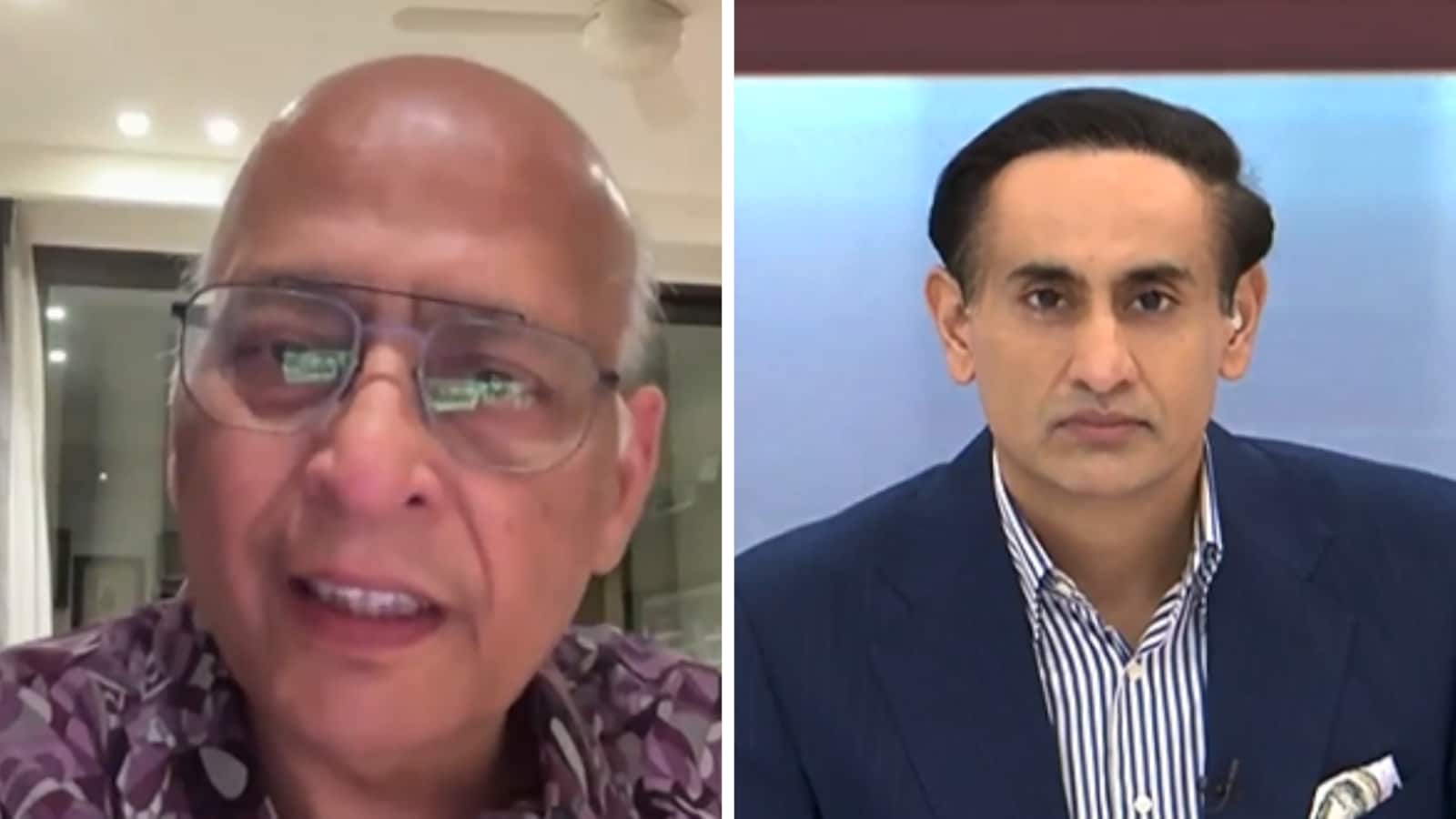
New Delhi: A "runaway board" cannot take major decisions ignoring an "active disagreement" of 66 per cent of shareholders, said senior lawyer Abhishek Manu Singhvi, who is representing Tata Trusts in the corporate dispute that broke out within the conglomerate over the re-appointment of N Chandrasekaran as Tata Sons' chairman.The Tata Sons board passed a resolution to re-appoint N Chandrasekaran as the chairman last week. Noel Tata, the chairman of Tata Trusts, which owns a 66 per cent stake in the conglomerate, voted against the move, arguing that the Tata Sons chairman had decided not to seek reappointment of his own accord and the decision was announced to the public. "The page has turned," he told the board in a statement."Tata's architecture and design is unique from Jamsetji Tata's time, more than 100 years ago, who created this Tata Trusts as a set of trusts, which then have 66 odd per cent as a shareholder owner of Tata Sons, which in turn controls and runs a series of Tata operating companies, each of which is gigantic. Now, the important point in this architecture is that anything and everything which goes out of Tata Sons, as you know, Tata Sons collects whatever dividends it gets, whatever monies it gets from...Whatever penny Tata's Sons gets, which it pays out as dividend, pays out in whatever form, every penny of it, to the extent of 66% shareholding, must go only to the charitable philanthropic trust, unlike to a normal shareholder," Singhvi explained."And from there, it must travel only to the stated charitable objectives like hospitals, universities, scholarships, research. This was the vision of Jamsetji Tata. And that is why I'm not saying this out of just the charitable part. It's important, therefore, to remember the hyphenated relationship. To divorce this umbilical cord would be to strike at the very root of the vision and the design and the architecture of Jamsetji Tata. This cannot be ruptured in any casual manner, short of very overwhelming legislation by a sovereign parliament," he added.Referring to the decision to announce the passing of the resolution on the Tata Sons chairman's reappointment for a period of five years, the lawyer said the "runaway board" can't act independently of an entity that owns 66 per cent of the salt-to-software conglomerate."So therefore, I think everything should be done in letter and spirit to promote that original hyphen and the umbilical cord. Here, what has happened unfortunately, is that now you cannot have this famous movie called Runaway Jury. You can't have a runaway board, which decides things with the active disagreement of a 66 per cent shareholder," he said.He said if the board is allowed to take decisions despite the majority shareholder's express objection, it would be "disastrous" for corporate governance in India."How do you have shareholder owners who are nullified, who are sidelined, who ultimately, at the end of the day, do not have any say in the board, in particular any chairman?... There is a practical commercial corporate fact of life which you can't deny," he said.Singhvi, one of the top lawyers in the country, said the dispute, which began as a corporate disagreement, is veering towards a courtroom battle."It has been brewing for a while. It appears that it is now irreversible, except through a legal battle. I think the ideal situation would be to avoid it some way or the other. But then I am not a principal actor in the dialectics of it. And sometimes, you know, the ideal solutions don't occur. So be that as it may, I hope it is not too protracted. I hope it is not too nasty or too, you know, brutish. But certainly, I think it is headed for some kind of a legal fight," he said.At the board meeting earlier this week, Noel Tata had also raised concerns about Tata Sons' public listing plans. He said that the Tata Group was conceived as a national service. If listed, he added, it would destroy Tata Sons' character.Singhvi said the primary issue that has given rise to the dispute is "shareholder owner primacy"."It is a very major principle issue, a matter of the principle of shareholder-owner primacy. It is not about Noel Tata. He is not an individual shareholder. It is not even about Chandra. He is not an individual shareholder. It is about the primacy of a 66 per cent collectivity called a trust. That's the shareholder-owner," he said.
'Runaway Board': Abhishek Singhvi Backs Tata Trusts' 'Shareholder Primacy'
Full Article
Original Source
Read the full article at Ndtv →KhanList aggregates and links to publicly available news content. We do not host full articles from third-party sources. Always verify important information with original sources.