
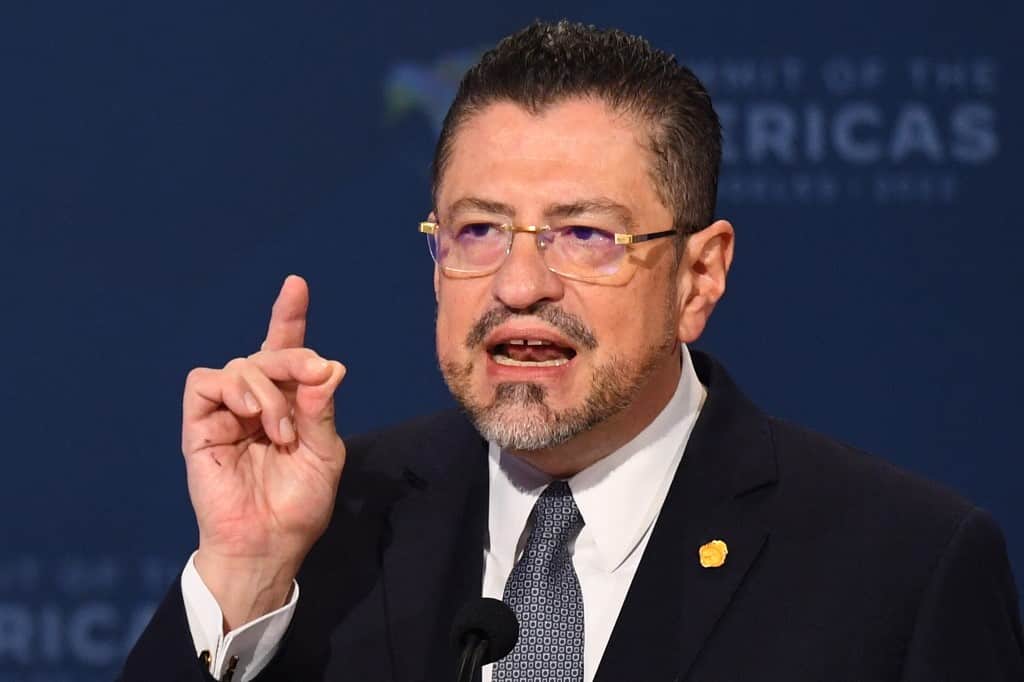
Legislators from Costa Rica’s ruling Pueblo Soberano party filed a constitutional reform on Tuesday that would allow presidents to serve consecutive terms. Its backers said openly that the goal is to put former President Rodrigo Chaves back on the ballot in 2030. The bill, file number 25.867, was presented by legislator Osvaldo Artavia Carballo with the support of the Pueblo Soberano caucus. It would amend Article 132 of the Constitution and add a new Article 132 bis. Under the proposal, a president could serve up to two consecutive four-year terms and would then have to wait four years before running again. The current rule bars anyone who has held the presidency from running until eight years have passed. José Miguel Villalobos, of Pueblo Soberano, said the reform is intended for Chaves because he is the only former president who could be elected again, according to statements reported Tuesday. Chaves governed from 2022 to 2026 and was succeeded by Laura Fernández, who won the presidency as the party’s candidate. The ruling party holds 31 seats in the 57-member Legislative Assembly. A constitutional reform needs at least 38 votes, a two-thirds majority, so the bill cannot pass without opposition support. The process spans two legislative years. The bill must be read three times in the plenary, admitted for discussion by a simple majority and reviewed by a special commission, which has up to 20 business days to report. It then needs two debates with at least 38 votes in the first legislative year, followed by a mandatory consultation with the Constitutional Chamber, known as the Sala IV. If it clears that stage, the president must include it in the State of the Nation address that opens the next legislative year, where it faces three more debates, again requiring 38 votes. Opposition leaders rejected the proposal yesterday as Álvaro Ramírez, head of the National Liberation Party caucus, said the reform seeks to guarantee permanent immunity for a person who has much to answer for before the courts, and called it a distraction. Abril Gordienko, of the Social Christian Unity Party, said she doubted the ruling party could gather 38 votes in the next three and a half years. She compared the proposal to reelection models pursued by Nayib Bukele in El Salvador, Rafael Correa in Ecuador and Evo Morales in Bolivia. José María Villalta, of the Broad Front, said his caucus could discuss reelection under normal conditions, but opposes it now because of what he described as signs of authoritarianism. The bill is not the first attempt this year. In February, then-independent legislator Leslye Bojorges filed a separate reform to allow one additional consecutive term. In July, Vice Minister of the Presidency Alejandro Barrantes acknowledged that the government did not have 38 votes for that measure. The new bill cites a 2003 Sala IV ruling that annulled a 1969 constitutional ban on reelection. That decision allowed former President Óscar Arias to run again and win in 2006. The filing comes days after the Supreme Court elected Patricia Vargas as its president, completing a moment in which women lead all three branches of government amid ongoing tension between the executive and the judiciary. The reform is at the very start of the legislative process and has no effect unless it clears every stage.
Ruling Party Files Bill That Would Let Rodrigo Chaves Run Again in 2030
Full Article
Original Source
Read the full article at Ticotimes →KhanList aggregates and links to publicly available news content. We do not host full articles from third-party sources. Always verify important information with original sources.