
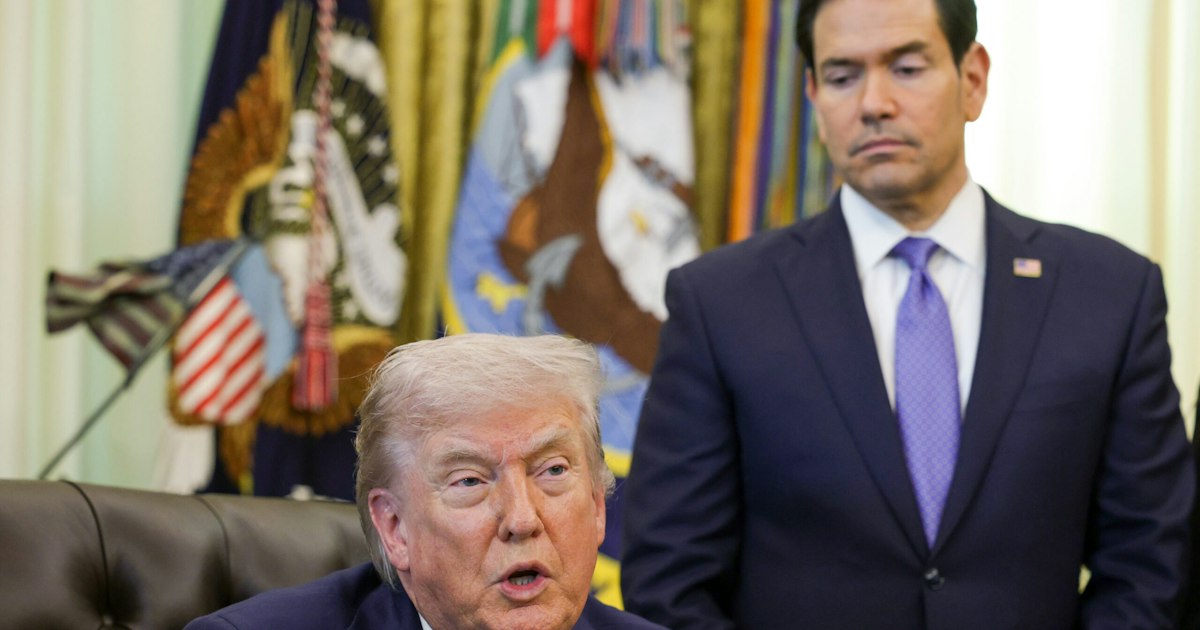
Uncategorized A faction of the Trump administration is courting enormous economic risks for personal political gain. (Photo by Alex Wong/Getty Images) It is difficult to say where the ongoing Nvidia saga will go. The scandal around the CEO Jensen Huang seems to be unfolding—and unravelling—quickly, with initial claims that he was compromised by a Chinese spy starting to fall apart under scrutiny. There appears to be a committed group of people in the media gunning for Huang—and these people have now pivoted to questions around who Nvidia was exporting its chips to and whether these entities were linked in any way to the Chinese government. In the coming days and weeks, we will no doubt see the outcome of this particular drama. But perhaps even more interesting is what it tells us about the Trump administration after it suffered a brutal defeat in the midterms. The Huang would-be scandal seems to indicate that certain players inside the administration are willing to take extraordinary risks to accomplish their goals—risks that include crashing the American financial system and plunging the U.S. economy into a serious recession. Looked at dispassionately, running this level of risk to achieve rather mediocre goals appears unhinged. The Washington Post reports that Secretary of State Marco Rubio was deeply involved in launching the Huang scandal. Per the Post, Rubio wrote a memo to President Donald Trump expressing concerns about Huang’s relationships in Asia. The memo was based on intel assessments Rubio had received from the CIA. After not finding an audience with the president, Rubio juiced up the memo and, apparently, had it leaked to the press. Shortly afterwards, sources from within the CIA told reporters that they weren't sure whether the claims that Huang’s romantic partner was a Chinese spy were true. Rubio is widely known to be a China hawk and has been opposed to Silicon Valley figures like Huang who argue that Washington should compete with Beijing in the technology space rather than try to isolate it. Rubio and others pushing for confrontation—who mostly appear to be lawyers with limited business experience—seem to think that America can achieve dominance in the technology space by not competing with China. Instead, the hawks argue, American companies should refuse to sell China advanced chips, thus ensuring that Chinese AI models will lag American models. This strategy has not worked well in the past. Restricting technology exports to the Chinese merely encourages them to build their own. And when they do, they inevitably create cheaper products and then end up flooding the global market with them. This is the outcome that CEOs like Huang fear. They argue that America is better off maintaining global market share in sectors in which it succeeds. The evidence so far is on the side of Huang and other Silicon Valley CEOs. But beyond this debate, what is fascinating is the sheer level of risk that the China hawks are now willing to run to achieve these goals. In the past few weeks, technology stocks in the United States have been taking a severe beating. Most of the so-called hyperscaler companies—that is, the companies that are building out the data center infrastructure on which the AI boom rests—have seen their stock prices fall. Hedge funds have started rapidly dumping technology stocks too, and investors are starting to question whether AI hype is driving a market bubble that is on the brink of bursting. If the stock market goes down, it will take the data-center-building boom with it—and from there, the American economy will almost certainly fall into a recession. A financial crisis that rivals the 2008 meltdown might follow. Normally, if an administration were faced with this sort of looming crisis there would be an all-hands-on-deck effort to keep the show on the road. But instead, the China hawks have decided that now is the time to take down the company that is the most important single player in the AI ecosystem. Nvidia does not just produce the chips that AI runs on, it also finances a huge amount of the underlying infrastructure. The way this works is that Nvidia sells the chips needed to run the AI platforms to companies like Microsoft, OpenAI, Oracle, AMD, and Intel. Then, it takes the revenue that it earns and reinvests it in these companies to spur on the AI investment boom. However sustainable this is in the long term, it is strongly in the interest of the Trump administration to keep this arrangement going for as long as it remains in power. If the cycle breaks down and drags the stock market and the economy down with it, Trump and those around him will be blamed for the collapse—just as President George W. Bush and his cohort were blamed for the 2008 financial crisis. Subscribe Today Get daily emails in your inbox Since the Huang story was leaked to the press, Nvidia’s stock has fallen 13 percent and shows no sign of recovering. Yet the Trump administration keeps piling on the pressure, with Treasury Secretary Scott Bessent telling the company’s board to investigate whether the company was using chip sales to China to “goose their revenues and earnings.” Based on their public appearances, the China hawks seem to think that destroying the beating heart of the AI boom is a political winner. Shortly after the scandal erupted, Rubio gave a speech at the Federalist Society that has been widely seen as launching his bid for the 2028 presidential nomination. Yet it seems obvious that if the Nvidia scandal ends up crashing the American stock market, Rubio will be the one to take the brunt of the blame. His rivals will simply state that his actions crushed peoples’ 401(k)s, and his candidacy will sink like a stone. Many of us are watching this play out and wondering if certain figures in the Trump administration have not been tricked into destroying themselves and taking down what remains of the movement with them. The problem here is clearly not Trump himself, who is known to be sympathetic to Huang. Rather, the problem is ambitious politicians within the administration, who have convinced themselves that if they can achieve their “vision” of U.S. dominance, this will make them viable candidates for higher office—while giving little to no thought to the possible negative consequences of their actions. One wonders whether crafty people who have long wanted to bury the MAGA movement have not latched onto this ambition and pushed it to the point of self-destruction. After hubris comes nemesis, after all, and the fact that this all started right after the disastrous midterms also favours this conclusion. What we might well be watching is a controlled demolition of the Trump administration.
Rubio, Nvidia, and the Controlled Demolition of MAGA
Full Article
Original Source
Read the full article at Theamericanconservative →KhanList aggregates and links to publicly available news content. We do not host full articles from third-party sources. Always verify important information with original sources.