
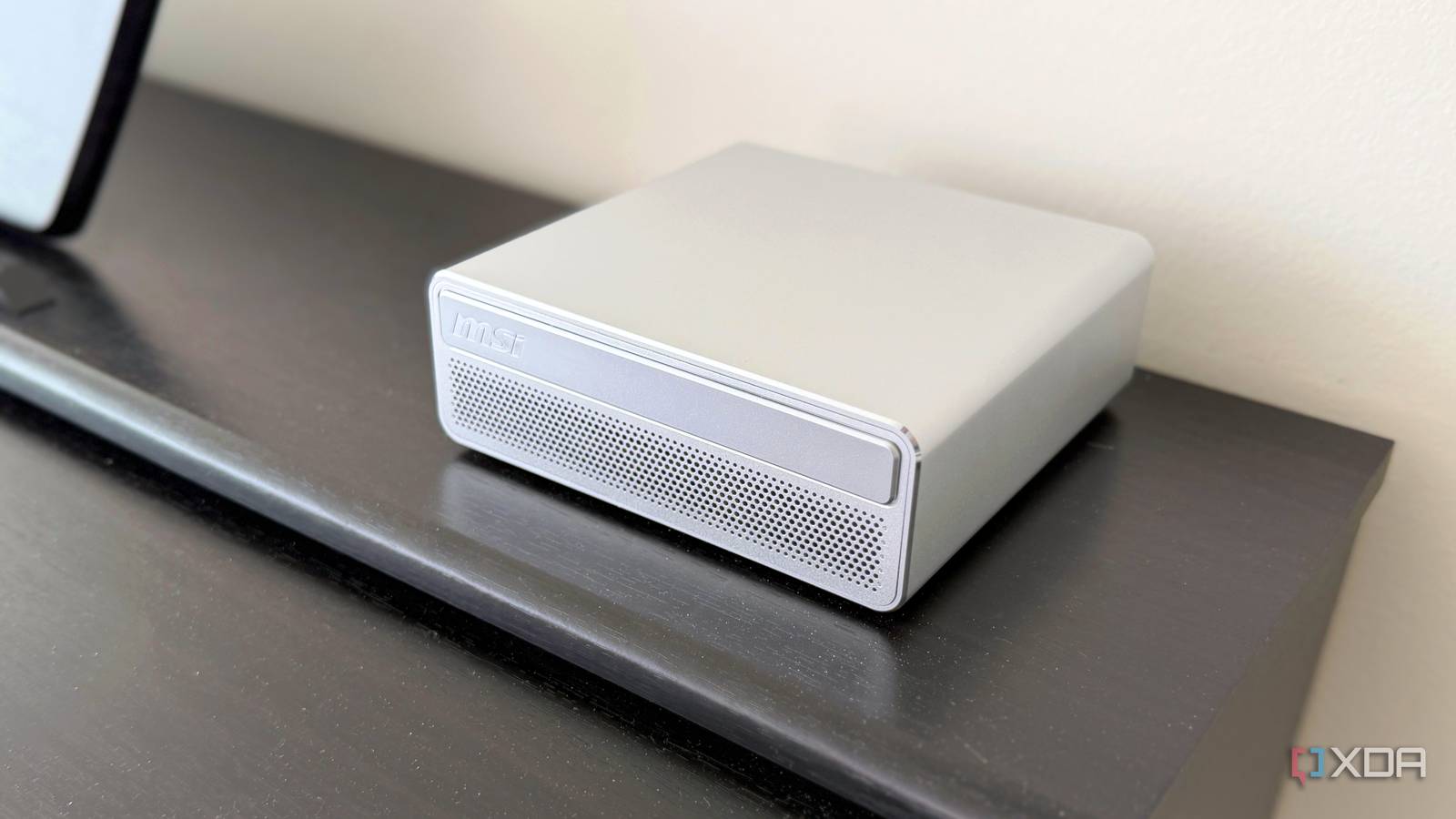
Published Nov 19, 2026, 8:01 PM EST Maker, meme-r, and unabashed geek, Joe has been writing about technology since starting his career in 2018 at KnowTechie. He's covered everything from Apple to apps and crowdfunding and loves getting to the bottom of complicated topics. In that time, he's also written for SlashGear and numerous corporate clients before finding his home at XDA in the spring of 2023. He was the kid who took apart every toy to see how it worked, even if it didn't exactly go back together afterward. That's given him a solid background for explaining how complex systems work together, and he promises he's gotten better at the putting things back together stage since then. Sign in to your XDA account Nvidia's RTX Spark platform is here, and we've been testing it in laptops since launch. Doing silly things like playing Minecraft with a local LLM or emulating games, and seeing how it measures up against AMD's Strix Halo. It's been great fun, but now it's time to play with a different form factor. RTX Spark mini PCs are now out, and I've been putting an MSI EdgeMesa N AI+ with 128GB of RAM and 4TB of SSD through its paces. For local LLM work, the large amount of unified memory makes this a compelling platform for developers who want to stay on Windows. And with the better cooling in the mini PC form factor, it lets the RTX Spark chip run at full whack. About this review: Nvidia provided XDA with the MSI EdgeMesa N AI+ used in this review. Neither company had any input into its contents, nor saw it before publication. Nvidia RTX Spark mini PC 8/10 CPU NVIDIA Grace 20-core CPU Graphics NVIDIA Blackwell RTX 6144-core GPU Memory Up to 128GB LPDDR5x Storage Up to 4TB Gen5 SSD Nvidia's RTX Spark mini PCs are here, to bring Windows-based local LLM work to your desktop. If you can swallow the high asking price, that is. Ports 4x USB-C 20 Gbps, 10 GbE, HDMI 2.1 Operating System Windows 11 (Windows-on-Arm) Dimension 152 x 147 x 53 mm Weight 2.91 lbs (1.32 kg) Networking 1x 10G RTL8127-CG AzureWave AW-EM637 Wi-Fi 7+ Bluetooth v5.4 Wireless LAN Price Up to $8,000 Pros & Cons Faster memory than the DGX Spark for better AI performance Now you can use Windows for local AI work if you prefer Powerful performance overall Not truly unified memory Windows-on-Arm still has a few rough edges No ConnectX-7 networking Price, specs, and availability The Nvidia RTX Spark mini PC is available as of today, November 18. Unlike the DGX Spark, there aren't any OEM Nvidia versions. Instead, you can choose from Asus, Dell, and MSI right now, with Acer, Gigabyte, HP, and Microsoft bringing their versions soon. It's the desktop version of the RTX Spark laptops that have been out for a month or so, with a 20-core Nvidia Grace CPU, Nvidia Blackwell RTX GPU with 6,144 CUDA cores, and up to 128GB of unified memory for local AI stacks to take advantage of. The price depends on which company you get one from. The MSI EdgeMesa N AI+ we got for review has 128GB of RAM, 4TB of Gen5 SSD, and an eye-watering price tag of $8,000. The Microsoft Surface RTX Spark Dev Box has 128GB of RAM and a 2TB SSD for $6,000. Nvidia RTX Spark mini PC CPU NVIDIA Grace 20-core CPU Graphics NVIDIA Blackwell RTX 6144-core GPU Memory Up to 128GB LPDDR5x Storage Up to 4TB Gen5 SSD Ports 4x USB-C 20 Gbps, 10 GbE, HDMI 2.1 Operating System Windows 11 (Windows-on-Arm) Dimension 152 x 147 x 53 mm Weight 2.91 lbs (1.32 kg) Networking 1x 10G RTL8127-CG AzureWave AW-EM637 Wi-Fi 7+ Bluetooth v5.4 Wireless LAN Price Up to $8,000 What I liked about the RTX Spark mini PC That 128GB of RAM goes a long way We've extensively covered the RTX Spark chips in other devices, from running Crysis in RAM to talking about how Windows on Arm can mix native and emulated code. The RTX Spark is faster than AMD's Strix Halo, and by no small measure either, so if you're trying to render assets in the shortest time, the MSI EdgeMesa N AI+ (or any other RTX Spark device) will pay for itself in time saved. Performance hasn't changed much from the laptop versions of the RTX Spark, though GPU-bound tasks did get a small uplift. MSI EdgeMesa N AI+ (Nvidia N1X 20-core) Lenovo Yoga 9n 2-in-1 (Nvidia N1X 20-core) HyperX OMEN 15 (Core Ultra 9 386H, RTX 5070 mobile) Dell 14S (Intel Core Ultra 7 355) Asus Zenbook A16 (Snapdragon X2 Elite Extreme X2E-94-100) Asus Zenbook 14 (Core Ultra 9 285H) Dell XPS 14 (2026) (Intel Core Ultra X7-358H) Geekbench 6 (single/multi) 3,033 / 19,249 3,009 / 19,679 2,734 / 15,353 2,720 / 11,318 3,521 / 22,978 2,807 / 15,390 2,835 / 16,358 Cinebench 2024 (single/multi) 125 / 1,628 115 /1,417 119 / 1,136 177 / 577 146 / 1,490 125 / 746 123 / 806 3DMark (Time Spy/Wild Life/Night Raid) 13,776 / 64,067 / 61,095 12,583 / 65,173 / 59,071 12,577 / 20,047 / 57,503 3,194 / 21,267 / 29,409 4,516 / 38,708 / 50,653 4,401 / - / 31,322 6,136 / 33,695 / 37,886 CrossMark (Overall) 1,675 1,722 1,958 1,969 2,091 2,032 - No, it's not a gaming behemoth. It's not made to be, but being able to run Windows games (even those that need anti-cheat) is a blessing. And it's super quiet. I couldn't tell if the fan was on or not, and temperatures in HWINFO64 stayed low. Most of the space inside the box is taken up with heatsinks, so that's not really much of a surprise. What I didn't like about the RTX Spark mini PC It makes less sense as a mini PC Here's the thing. RTX Spark laptops are also similarly expensive, but you get a keyboard and a nice screen, and speakers, and everything else you need to watch movies, play games, and keep an eye on your agents. Now, you don't need those things if you're running the RTX Spark as a headless device, but then you might be better off with the DGX Spark. Windows has never been a fun operating system to operate remotely. The other annoyances I had are minor. The USB-C ports are all 20 Gbps, when they could be 40 Gbps USB4 ports. There's no USB-A port, no ports on the front of the device, and you lose the speedy ConnectX-7 networking ports the Linux-based DGX Spark boxes have. The 10 GbE networking port is good for a single machine, so Nvidia clearly doesn't expect people to cluster the RTX Spark boxes. And if it's being marketed to creatives, an SD card reader would have gone a long way. Should you buy the Nvidia RTX Spark mini PC? You should buy the Nvidia RTX Spark mini PC if: You want to do AI or local LLM development on Windows You need up to 128GB of VRAM You want to play games as well You should NOT buy the Nvidia RTX Spark mini PC if: You want a better value mini PC You prefer using macOS You want RTX Spark power in a laptop instead Nvidia clearly wants to position the RTX Spark mini PCs as a stay-at-home device while your RTX Spark laptop goes with you, chugging through agentic long-tail tasks unsupervised. And for the most part, it can deliver on that promise. I'm hooked on running local agents, fully offline, with the added privacy that creates, and my workflow has changed as a result. Being able to run research tasks overnight while I sleep is a boon, and that's only one thing that these local AI boxes can accomplish. Nvidia RTX Spark mini PC 8/10 CPU NVIDIA Grace 20-core CPU Graphics NVIDIA Blackwell RTX 6144-core GPU Memory Up to 128GB LPDDR5x Storage Up to 4TB Gen5 SSD Nvidia's RTX Spark mini PCs are here, to bring Windows-based local LLM work to your desktop. If you can swallow the high asking price, that is. Ports 4x USB-C 20 Gbps, 10 GbE, HDMI 2.1 Operating System Windows 11 (Windows-on-Arm) Dimension 152 x 147 x 53 mm Weight 2.91 lbs (1.32 kg) Networking 1x 10G RTL8127-CG AzureWave AW-EM637 Wi-Fi 7+ Bluetooth v5.4 Wireless LAN Price Up to $8,000
RTX Spark mini PCs let you use the full TDP of the chip, and that's perfect for local LLM use
Full Article
Original Source
Read the full article at Xda-developers →KhanList aggregates and links to publicly available news content. We do not host full articles from third-party sources. Always verify important information with original sources.