
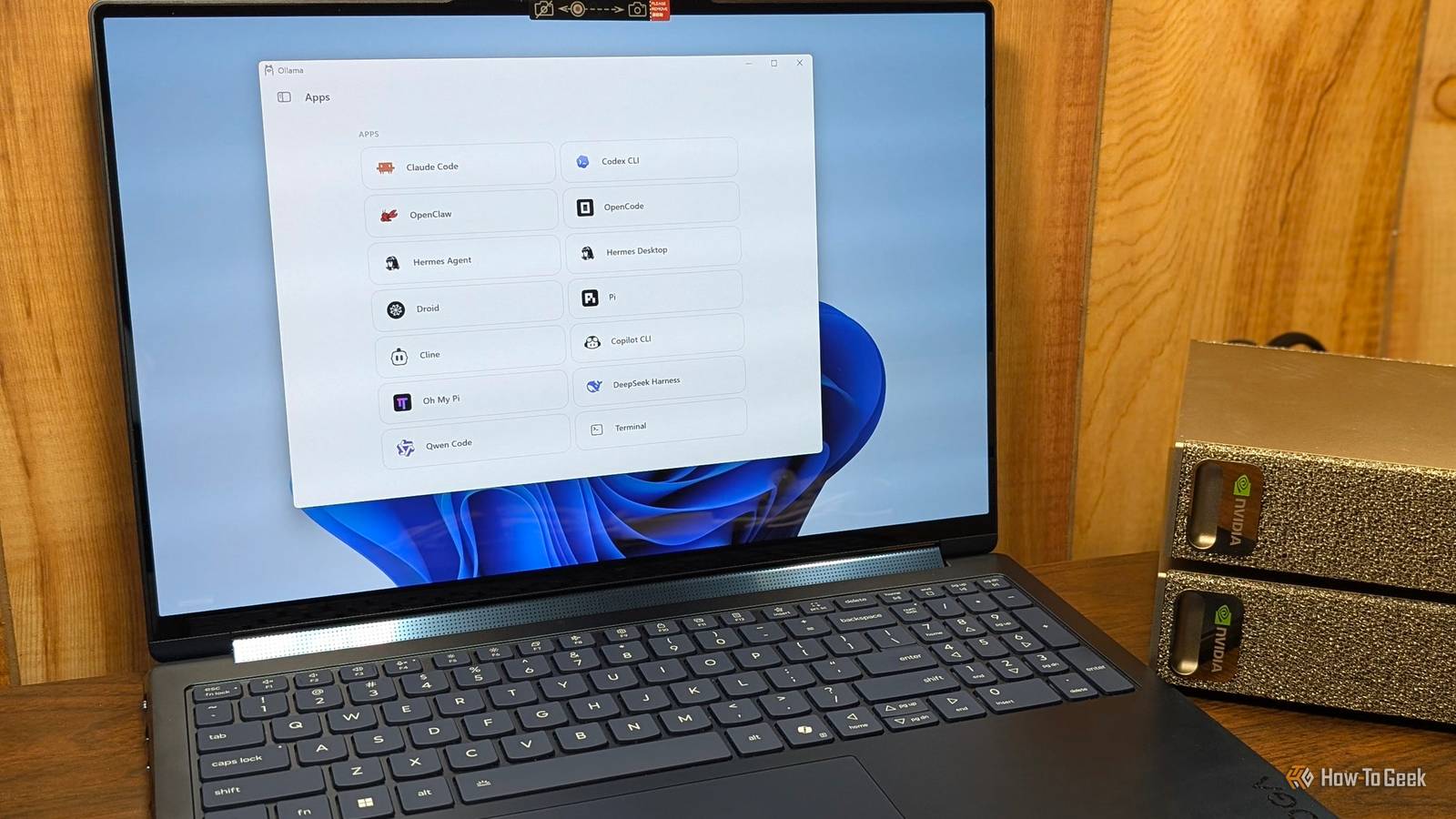
Published Nov 5, 2026, 5:01 PM EST Nick Lewis is an editor at How-To Geek. He has been using computers for 20 years --- tinkering with everything from the UI to the Windows registry to device firmware. Before How-To Geek, he used Python and C++ as a freelance programmer. In college, Nick made extensive use of Fortran while pursuing a physics degree. Nick's love of tinkering with computers extends beyond work. He has been running video game servers from home for more than 10 years using Windows, Ubuntu, or Raspberry Pi OS. He also uses Proxmox to self-host a variety of services, including a Jellyfin Media Server, an Airsonic music server, a handful of game servers, NextCloud, and two Windows virtual machines. He enjoys DIY projects, especially if they involve technology. He regularly repairs and repurposes old computers and hardware for whatever new project is at hand. He has designed crossovers for homemade speakers all the way from the basic design to the PCB. Nick enjoys the outdoors. When he isn't working on a computer or DIY project, he is most likely to be found camping, backpacking, or canoeing. In 2024, Microsoft announced Copilot+ PCs, the "fastest, most intelligent Windows PCs ever built." Copilot+ PCs were announced with a handful of new features, like the much-derided Recall, AI-powered image editing, and a few other things. Recently, Nvidia announced the release of RTX Spark, a lineup consisting of laptops and desktops aimed at AI applications. These RTX Spark devices are more than just a gimmick, and deliver on what Copilot+ PCs should have been. Copilot+ PCs were oversold and underdelivered Branding in search of a problem Credit: Patrick Campanale / How-To Geek When Microsoft first announced Copilot+ PCs, they required every PC to have a neural processing unit (NPU) that could sustain 40 trillion operations per second (TOPS) or more in order to qualify. The real problem with Copilot+ devices was that they seriously oversold the "AI PC" angle. Relatively few AI models at the time could do useful work on an NPU with that little processing power, and none of them were ready to be headline features that dazzled users enough to get them to upgrade. The more impressive AI features were restricted to cloud-powered Copilot, which made your "AI PC" about as much of an AI PC as any other PC with a connection to Claude or ChatGPT. Critically, Copilot+ certification overlooked existing graphics cards (including iGPUs) that were already a standard part of laptops. As one example, a mobile RTX 4050 offers just shy of 200 TOPS—nearly 400% more than the minimum to qualify as an AI PC. AMD and Intel GPUs had a bit more trouble with software support, but many of their GPUs from the same era also eclipsed a Copilot+ PC's minimum requirements. You also couldn't just easily configure Recall or the built-in AI image editing features to use your device's dedicated GPU either; getting them to work required a cobbled-together solution that would be prone to breaking after an update. Millions, possibly tens of millions, of PCs were precluded from Microsoft's flagship AI features because of an arbitrary NPU requirement, even though their GPUs already delivered the performance it called for. The AI models were not ready Recall suffered a few serious public relations issues at its announcement and upon release, and the AI image editing capabilities built into Windows have largely been overshadowed by more capable cloud-based tools or by more specialized tools. That was indicative of a broader problem with the approach to local AI at the time. While frontier, cloud-based models were decent, local AI models were difficult to justify. They were memory hungry, not very capable, and almost comically prone to hallucination. Today, that isn't the case—even a mid-range gaming GPU can run an AI that can do useful work for you, though you're limited to running relatively small models one at a time. But, presumably in an effort to be first off the block, Microsoft pushed AI PCs too hard, too early and soured nearly everyone on it. RTX Spark delivers the hardware AI actually needs A beefy GPU with plenty of memory RTX Spark devices make up ground in all of the areas where Copilot+ hardware had shortcomings. Under the hood, RTX Spark devices come with one of two SoCs. The top-shelf model combines a 20-core CPU with a Blackwell GPU with 6,144 CUDA cores and up to 128GB of unified memory. The trimmed-down model has an 18-core CPU with a Blackwell GPU with 5,120 CUDA cores and up to 32GB of memory. The top model's "superchip" is built on the same design you'll find in DGX Sparks, NVIDIA's personal AI computers, though the memory you'll find in RTX Sparks is often about 10% faster than the DGX Sparks'. All of those tech specs are to say one thing: These PCs are legitimately great at running local AI. In my time testing an RTX Spark (a 64GB, 20-core variant), it performed brilliantly with every AI model I could fit into memory. It beat the DGX Spark I tested it against by about 10% in LLM output (measured in tokens per second), and ran models much larger than I could ever hope to run on my 16GB 5070 Ti. Unlike Copilot+ PCs, which relegated AI tasks to low-power NPUs, RTX Spark devices actually have the hardware and memory to run useful AI models locally. You can run an ensemble of models at once My local AI workflow involves one smart AI model plus a few more specialized AI models running simultaneously, and it is precisely that capability that makes RTX Spark devices so compelling. On the 64GB RTX Spark laptop I've been testing, I can easily run a 30B parameter model (at 4-bit quantization) and fit it into less than 30GB of memory with context. Simultaneously, more specialized models handle speech-to-text, image description, editing, and OCR, while an experimental plain-language-to-PowerShell translator built on Qwen Coder runs in the background. The entire setup consumes less than 40GB of memory, leaving 24GB more for Windows, regular applications, and extra models, all without ever touching the cloud. You can tailor those local models to any job you want, whether you're a writer, editor, graphics artist, data analyst, or computer scientist. You're not trapped using an underpowered NPU, and you're not stuck using the few AI features built into Windows. RTX Spark finally makes the AI PC meaningful Microsoft spent a lot of time in 2024 talking about AI PCs that failed to materialize; the RTX Sparks we see on the market today are not the same thing. They're powerful, flexible, and, critically, actually capable of hosting useful AI models. The 64GB and 128GB variants are especially compelling, since they can run a very intelligent 30B parameter model to orchestrate several other, smaller models, or access quantized versions of 100B parameter models that sometimes rival cloud-based frontier models. Those variants also have enough memory to fine-tune small AI models for your specific needs, something that wasn't really possible before. The AI app ecosystem is still very immature—the best tools are enthusiast tools that are pretty clunky to get working—but the hardware to enable a true AI PC is now available. Unfortunately, RTX Spark devices start at about $2,600 and many devices cost more than $4,000. AI PCs might finally be a reality, but will anyone be able to afford them?
RTX Spark finally deliver the AI capabilities Copilot+ PCs promised
Full Article
Original Source
Read the full article at Howtogeek →KhanList aggregates and links to publicly available news content. We do not host full articles from third-party sources. Always verify important information with original sources.