
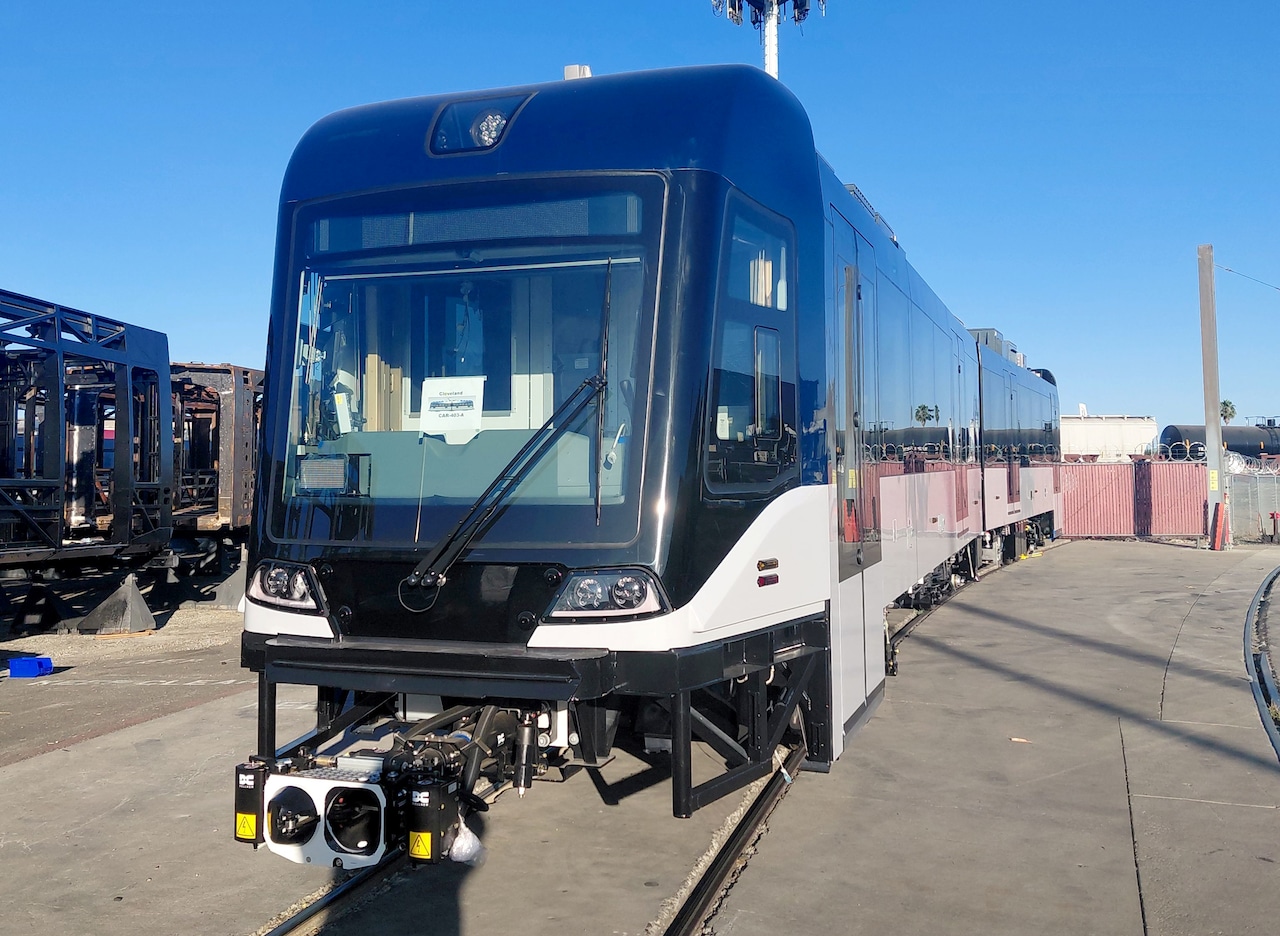
CLEVELAND, Ohio — The Greater Cleveland Regional Transit Authority has a $435 million program to replace its aging railcars even as it cut service in August and considers asking Cuyahoga County voters for more sales-tax revenue.The key distinction is where the money comes from and what it can be used for.According to RTA’s current railcar funding breakdown, federal, state and regional funding accounts for $330.54 million, or 76% of the program. RTA is contributing the other $104.46 million.RTA says on the same program page that railcar replacement is funded largely through restricted capital funding and federal grants that cannot be redirected to daily service or payroll.The first of RTA’s new Siemens S200 railcars arrived in Cleveland Aug. 31, 2026, as cleveland.com reported in the original article. RTA’s announcement of the arrival says the new railcars are expected to enter Red Line passenger service in summer 2027, followed by the Blue, Green and Waterfront lines in summer 2028.RTA plans to replace its fleets of 40 heavy-rail and 34 light-rail cars with 54 railcars of a single design that can operate on both systems. RTA says using one design will reduce the number of railcars needed and simplify maintenance.Where the $435 million comes fromFederal money provides the largest share.RTA’s funding table lists $241.2 million in federal funding, $60.54 million from the Ohio Department of Transportation and $28.8 million from the Northeast Ohio Areawide Coordinating Agency. RTA’s share is $104.46 million.Together, federal, state and NOACA funding accounts for 76% of the $435 million program.RTA’s contribution also was built over time. In its 2025 legislative update, the agency said it already had placed $80 million in a Rolling Stock Reserve Fund and planned to add another $25 million over three years for use as local matching money toward grants.That reserve itself was established for long-term vehicle replacement. RTA’s 2025 fund policies say the agency began setting aside money for rolling-stock replacement in 2017 and describes the fund’s purpose as systematically replacing aging revenue vehicles.One of the largest outside awards came in 2023, when the Federal Transit Administration awarded RTA $130 million. The FTA’s project-selection record identifies the money as part of the federal Rail Vehicle Replacement Program to replace Cleveland’s older railcars.The railcars don’t cost $8 million eachRTA puts the approximate cost of each railcar at $5.2 million. The broader program also includes vehicle design, manufacturing and testing and upgrades to station platforms and maintenance facilities.The platform work has a practical purpose. RTA says the new railcars are narrower than its existing vehicles, requiring station modifications so passengers can safely enter and leave the cars.The Siemens contract also helps explain the difference between the railcar purchase and the broader program.RTA initially ordered 24 railcars in 2023 and later exercised options for more. In September 2025, the board approved Resolution 2025-097, authorizing enough additional railcars to bring the order to 54 and increasing the Siemens contract amount to no more than $344,389,850.The contract covers more than the railcars themselves. RTA’s records show the original agreement also includes spare parts, tools and training.The difference between the $435 million overall program and the $344.4 million Siemens contract ceiling is about $90.6 million.That $90.6 million does not represent a single infrastructure project. RTA’s current program summary does not provide a final line-by-line accounting of the entire $435 million, but it identifies platform and maintenance-facility upgrades among the additional program costs.The tax question is about operating moneyWhile the railcar program moves forward, RTA already has reduced service.Service changes that took effect Aug. 16, 2026 discontinued the B-Line Trolley, suspended regularly scheduled Waterfront Line service and reduced frequencies on several other routes.The agency also is considering asking taxpayers for additional revenue.RTA already receives a 1% sales and use tax in Cuyahoga County. On July 7, its board adopted Resolution 2026-043, allowing the agency to pursue an increase of up to 0.5 percentage points to provide additional general revenue.The board has not yet settled on the size of the possible increase.According to the minutes from the July 7 special board meeting, RTA management was not asking trustees that day to approve a specific tax rate. Board members instead agreed to support pursuing a May 2027 levy and called for the specific percentage to be determined for a board vote no later than Sept. 22.RTA’s 2026 board schedule lists its next regular board meeting for Sept. 22.That meeting is expected to determine what sales-tax increase, if any, RTA proposes asking Cuyahoga County voters to approve. The decision is separate from the railcar replacement program, for which RTA’s current funding plan already accounts for the full $435 million.
RTA has $435 million for new railcars while considering a tax increase. Here’s why the money is separate
Full Article
Original Source
Read the full article at Cleveland →KhanList aggregates and links to publicly available news content. We do not host full articles from third-party sources. Always verify important information with original sources.