
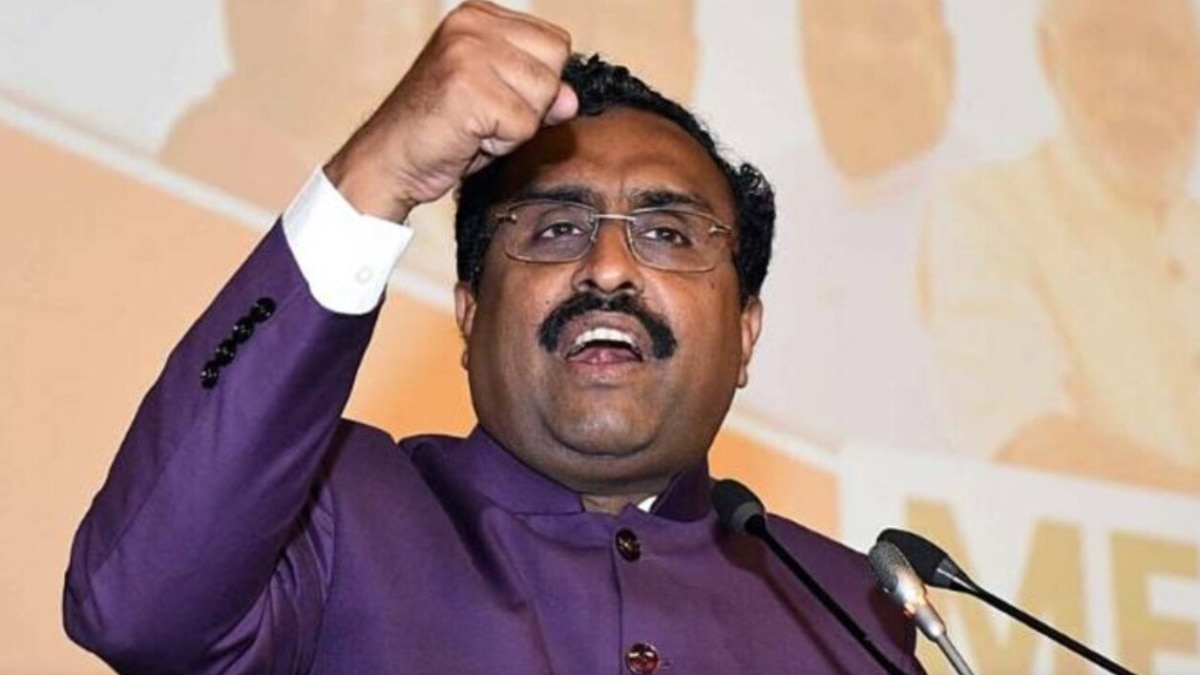
Ram Madhav has returned to the BJP's core team as national vice-president in the latest organisational rejig. His comeback restores a leader who straddles the RSS organisation and the BJP's electoral strategy.Why Ram Madhav's return to BJP's core team matters (File Photo- ITG)‘Andhera Chatega, Suraj Niklega, aur Kamal khilega (the darkness will fade, the sun will rise, and the lotus will bloom). 'To understand Ram Madhav’s return to the BJP’s core team as national vice-president in the latest organisational rejig, one needs to look back at these words from former Prime Minister Atal Bihari Vajpayee, delivered at the party’s first national convention in Mumbai. They captured an ambitious electoral vision — one that has shaped the BJP’s politics over decades.That political ambition has been built over more than four decades through a vast network of grassroots workers, or karyakartas, many of whom have their roots in the Rashtriya Swayamsevak Sangh (RSS). The RSS and BJP have long worked in close coordination, with Sangh functionaries often playing important organisational and political roles within the party.Ram Madhav, 61, is one such leader. His return to the BJP’s national organisation is significant not merely because of his RSS background, but because he has operated extensively within both the Sangh and the BJP. He understands the organisational machinery of the RSS as well as the electoral calculations of the BJP. That makes him particularly relevant at a time when the BJP is looking to strengthen its organisation and expand its political footprint.THE BRIDGE BETWEEN THE BJP AND THE RSSMadhav’s association with the RSS began during his teenage years. In 1981, he became a full-time RSS worker and went on to hold several organisational responsibilities within the Sangh. Between 2003 and 2014, he served as the RSS’s national spokesperson, becoming one of its most recognisable public voices. The role gave him extensive experience of articulating Sangh’s ideological position and engaging with the political discourse surrounding the organisation.In 2014, after the BJP came to power at the Centre, Madhav was deputed by the RSS to work with the party. He served as the BJP’s national general secretary from 2014 to 2020, emerging as an important link between the Sangh and the BJP.That dual experience remains central to his political significance.Madhav has consistently described the BJP and RSS as part of the same ideological family, while recognising that the two organisations operate in different spheres. His career reflects that relationship more directly than most leaders in the BJP’s national structure.His years in the RSS gave him an understanding of its organisational machinery, cadre network and ideological priorities. His stint in the BJP, meanwhile, placed him at the centre of electoral politics, organisational strategy and negotiations with regional political forces.That makes Madhav an unusual political figure — someone who can operate within the BJP while also understanding the thinking and functioning of the RSS from the inside.His return, therefore, is significant beyond the post itself. It brings back into the BJP’s national organisation a leader who has previously served as a conduit between the Sangh and the party.A MASTER TACTICIANMadhav’s significance, however, goes beyond his ability to bridge the BJP and the RSS. His political record also includes negotiating alliances and helping the BJP expand into regions where the party once had limited organisational and electoral influence.His experience in Jammu and Kashmir, particularly during the 2014 government formation, is one example.The 2014 Assembly election in the erstwhile state of Jammu and Kashmir produced a hung House, with no party securing a majority. The BJP and the Peoples Democratic Party (PDP), despite their ideological and regional differences, eventually came together to form the government.Madhav played a significant role in the weeks of discussions between the two parties that culminated in an alliance after a 55-day political deadlock. The BJP-PDP government was subsequently formed, with Mehbooba Mufti becoming Chief Minister.By helping bring together two ideologically different parties, Madhav came to be seen as a leader capable of working beyond ideological and regional differences.That reputation was strengthened by his role in the BJP’s expansion in the Northeast. Between 2016 and 2019, the BJP significantly increased its political footprint across the region, forming governments or ruling coalitions in Assam, Manipur, Meghalaya, Nagaland, Tripura, and Arunachal Pradesh.Madhav was among the central strategists behind the North-East Democratic Alliance (NEDA), a coalition platform created to bring together the BJP and several regional parties. The alliance helped the BJP navigate the region’s distinct political and social dynamics while expanding its presence beyond its traditional strongholds.The experience demonstrated another aspect of Madhav’s political style: the ability to combine ideological alignment with electoral pragmatism and regional alliances.WHAT’S NOW FOR MADHAVAs national vice-president, Madhav is returning to the BJP’s organisational structure at a time when the party faces a different set of electoral and political challenges.Punjab could be one of the areas where his experience is tested. The BJP has struggled to establish itself as a standalone political force in the state, particularly after its long-standing alliance with the Shiromani Akali Dal came to an end. Madhav’s experience in alliance-building and regional politics could become relevant as the party seeks to broaden its base there.Uttar Pradesh presents a different challenge. The BJP remains a formidable political force in the state, and Chief Minister Yogi Adityanath continues to enjoy significant political influence. But the 2024 Lok Sabha election exposed vulnerabilities, particularly after the Samajwadi Party’s successful mobilisation around its PDA — Pichhda, Dalit, Alpsankhyak — social coalition.With Akhilesh Yadav and the opposition already preparing for the 2027 Assembly election, the BJP will need to consolidate its own social coalition while keeping its organisational machinery strong on the ground.This is where Madhav’s experience could become useful — not simply as an electoral strategist, but as someone familiar with coalition-building, regional political equations and the organisational methods of the Sangh.His return, therefore, comes with a dual significance. For the BJP, he brings the experience of a political operator who has previously helped the party navigate complex alliances and expand into difficult terrain. For the RSS-BJP relationship, he represents a familiar link between the Sangh’s organisational worldview and the BJP’s electoral machinery.At a time when the BJP is preparing for the wider 2027–29 electoral cycle, Madhav’s return places that combination of Sangh experience and electoral pragmatism back inside the party’s national organisation.- EndsPublished By: Akash ChatterjeePublished On: Aug 17, 2026 21:33 IST
RSS member, master tactician: Why Ram Madhav's return to BJP's core team matters
Full Article
Original Source
Read the full article at Indiatoday →KhanList aggregates and links to publicly available news content. We do not host full articles from third-party sources. Always verify important information with original sources.