
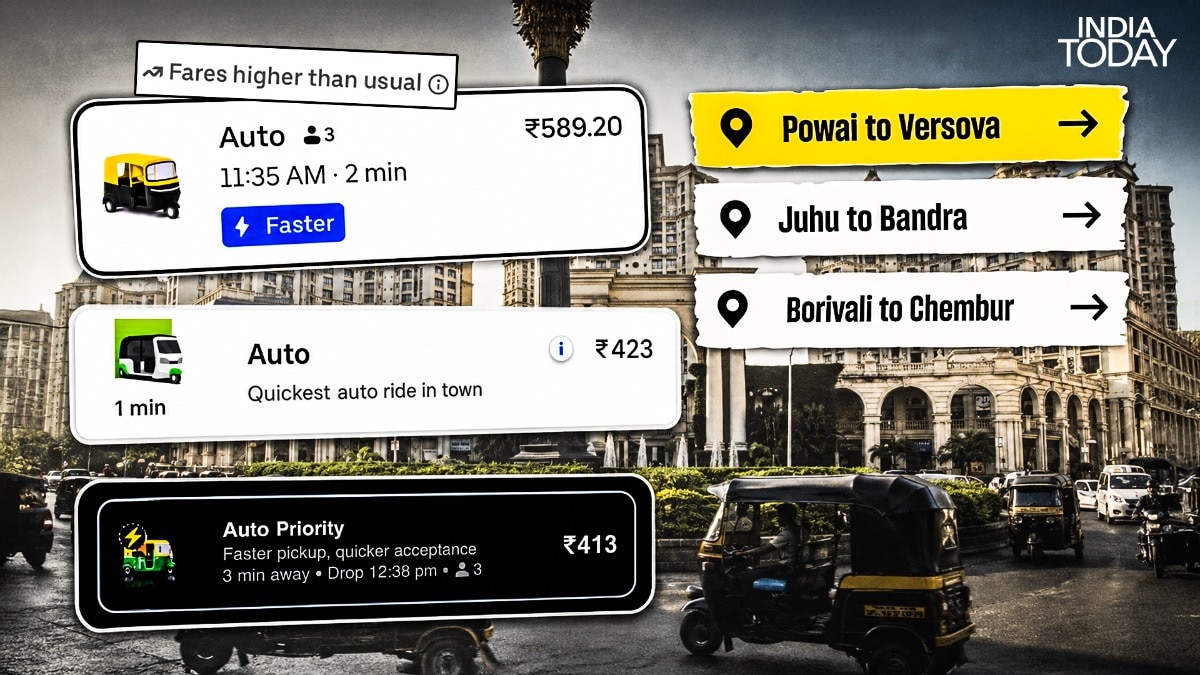
Autorickshaw and cab drivers in India have long been accused of overcharging tourists and foreigners. But amid Mumbai's ongoing cab and autorickshaw shortage and a strike over Maharashtra's Marathi language requirement for commercial drivers, Mumbaikars are now paying up to 100% more than the regular fare. In some cases, the spike is even higher.This comes as the daily sight of an approaching kaali-peeli taxi or autorickshaw has become rare in the financial capital of India, especially during the ongoing monsoon season, when even a short journey can mean a long wait.For those turning to ride-hailing apps like Ola, Uber, and Rapido, among others, high fares have become another problem in India's most expensive city.During morning peak hours (between 8 am and 11 am), fares on these ride-hailing platforms rose sharply on Tuesday, with commuters reporting paying over Rs 450 for roughly 10-km auto rides. The regular autorickshaw fare for a 10-km ride on these apps is generally in the range of Rs 250-300 during peak hours on a weekday. In some cases, fares have gone up by as much as 100%. However, according to the government-approved meter rate, the fare for 10 km should be Rs 172 for autorickshaws. Amid the current strike by auto and cab drivers over the mandatory Marathi requirement, the fare has shot up by 2.5 times the regular rate for a 10-km ride.WHAT MUMBAIKARS ARE PAYING FOR COMMON ROUTESThe exact fare on a ride-hailing app depends on demand, vehicle availability and the time of booking. But the shortage means commuters travelling during peak hours can face significantly higher prices than usual. That's a basic demand and supply equation. A 10-km autorickshaw ride booked on Uber, Ola or Rapido, shot up to around Rs 250-300. With surge pricing, the same journey can become considerably more expensive.For example, a trip from Powai to Versova is around 15 km. The autorickshaw fare on this route, which used to be around Rs 350, reached Rs 589 on Tuesday morning (between 8 am and 11 am).Likewise, Juhu to Ranwar Village in Bandra is a shorter journey, about 7.5 km. Between 8 am and 11 am on Tuesday, the fares on this route on most applications were between Rs 350 and Rs 430.For longer cross-city journeys, the impact is even more noticeable.For Borivali on the Western Line to Chembur, which falls on the Harbour Line, one of the longer east-west routes across Mumbai (around 28.5 km), the autorickshaw fare reached Rs 600 plus on all major apps during peak hours on Tuesday.The fares are not fixed on these apps and fluctuate according to demand, so commuters might see different prices at different times.Many commuters who take these routes regularly flagged the high fares on social media.Mumbai had already been facing difficulty finding autos since the Marathi checking began on August 21 (Friday), with commuters telling India Today Digital they waited 40-50 minutes for rides and, in some cases, reached work late.The three-day strike that began Monday has added to that pressure.AUTO, TAXI FARES WERE INCREASED IN MUMBAI METROPOLITAN REGION BEFORE RECENT STRIKEEven before the latest shortage, commuters in and around Mumbai faced a fare increase.The Mumbai Metropolitan Region Transport Authority (MMRTA) approved new base fares on August 20, raising the minimum fare for autorickshaws to Rs 27 and for taxis to Rs 33 for the first 1.5 km.The auto fare has gone up by Re 1, while the kaali-peeli taxi fare has increased by Rs 2.The MMRTA cited higher fuel and operating costs behind the decision. The meeting was chaired by MMRTA Additional Chief Secretary Sanjay Sethi and attended by senior transport officials.So, to sum up, commuters in Mumbai are now dealing with two pressures at once: higher official fares and sharply elevated app-based prices caused by the shortage.Drivers who spoke to India Today Digital said they are not opposed to learning Marathi. Their grievance is about how the test is being conducted, with some claiming that RTO officials are asking questions that they say had not been mandated by the government.The Maharashtra government, however, has defended the exercise. Chief Minister Devendra Fadnavis said the government was not asking Hindi-speaking drivers to become experts in Marathi, but wanted them to have a working knowledge of the language. Transport Minister Pratap Sarnaik has said the requirement is also about passenger convenience and safety.Even as the government says otherwise, the strike and its fallout may leave many Mumbaikars feeling like tourists in their own city.- EndsPublished By: Anand SinghPublished On: Aug 25, 2026 14:11 IST
Rs 500 for 10km in auto: Mumbaikars paying tourists-like fares amid Marathi checks
Full Article
Original Source
Read the full article at Indiatoday →KhanList aggregates and links to publicly available news content. We do not host full articles from third-party sources. Always verify important information with original sources.