
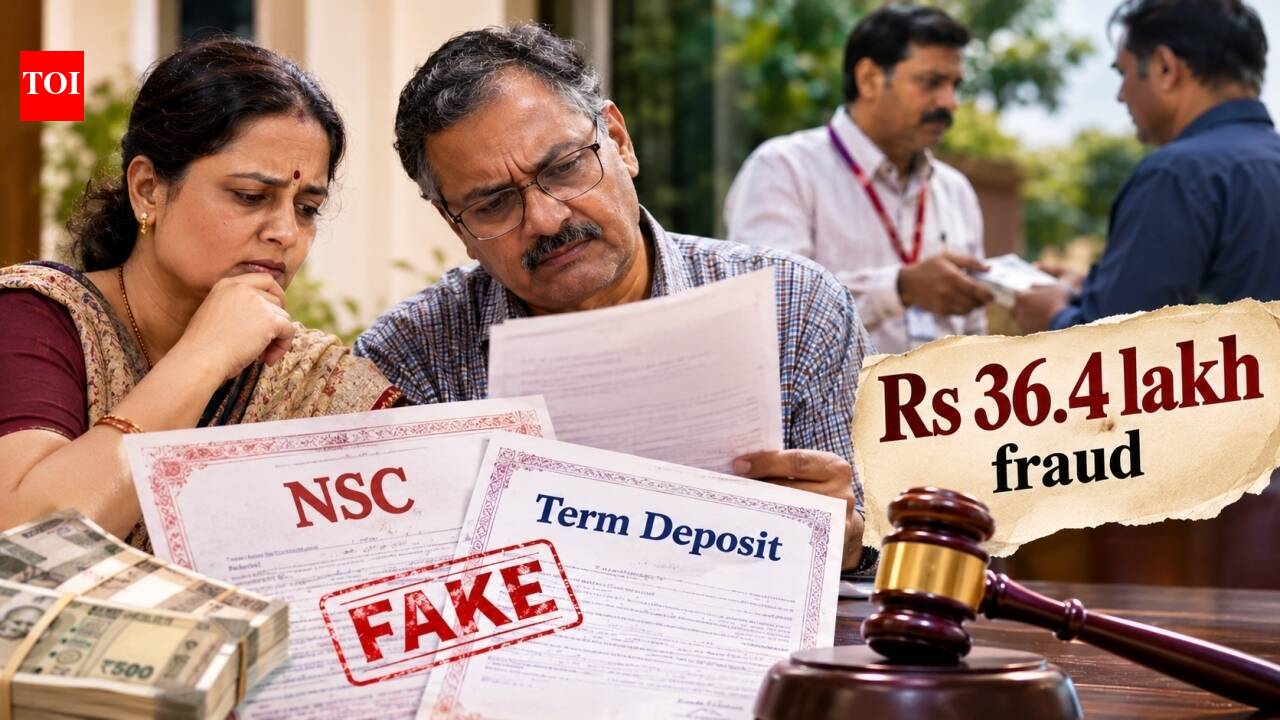
The fraud came to light later, when the depositors discovered that the documents they had received were forged and that no accounts had actually been opened. (Image for representative purpose only)Imagine a scenario where you open some post office savings accounts, but it turns out that the accounts are fake because the people who took the deposits were not authorised to do so and scammed you!In a recent ruling by the Madhya Pradesh High Court some people at the India Post Office's Bina branch duped several depositors by issuing them counterfeit National Savings Certificates (NSCs) and term deposit advice slips. The fraud involved approximately Rs 36.4 lakh.What the case is aboutAccording to the submissions made before the court, the depositors had visited the Bina post office intending to invest in a term deposit account and a National Savings Certificate (NSC). Before they could approach the counter, however, some employees approached them, offered to assist with the paperwork and collected the money from them. These employees allegedly misrepresented their authority and subsequently handed over fabricated account statements and passbooks to the customers.The fraud came to light later, when the depositors discovered that the documents they had received were forged and that no accounts had actually been opened in their names. Despite the losses suffered by the customers, the Department of Posts declined to return their money, according to an ET report.The department argued that the depositors had dealt with an employee who had already been transferred and was no longer posted at the Bina branch when the transactions took place. According to the postal authorities, customers should have approached the authorised officials at the counter instead of relying on employees who were not assigned to that branch.The affected depositors, however, maintained that the fraud had been carried out through the actions of postal department employees. They argued that the department should therefore bear vicarious liability and compensate them for the financial losses caused by the fraudulent activities of its staff.The advocate representing the depositors argued that there was no dispute over the fact that the forged passbooks had been issued and the purported accounts opened through individuals who were employees of the Department of Posts.The depositors had no reason to doubt the identity or authority of these individuals, he contended. They could not reasonably have been expected to know whether an employee present at the post office was officially posted at that particular branch.The lawyer representing the postal department opposed the claims for compensation. The department maintained that it could not be held responsible for the money lost because the victims had not carried out their NSC and term deposit transactions through authorised staff at the counter. Instead, they had dealt with employees who were not posted at the Bina branch at the time.Madhya Pradesh Police arrested the employees responsible, who were subsequently prosecuted and convicted. Despite this, the postal department declined to compensate the affected depositors, arguing that they had failed to check whether the employees were authorised to operate at the Bina post office.The department acknowledged that the individuals involved were its employees but maintained that they had not been officially assigned to the Bina branch. However, these employees were present on the premises and allegedly targeted customers visiting the post office to open NSC and term deposit accounts.The victims eventually secured relief from the Madhya Pradesh High Court on October 15, 2026. The court directed the Department of Posts to return the money lost by the depositors, along with applicable interest.Why did the depositors succeed in their case?Nivedita Bhardwaj, Partner at King Stubb and Kasiva, told ET that the depositors won because the Madhya Pradesh High Court accepted that they had acted in good faith and conducted their transactions with individuals who were employees of the postal department. The employees had assisted them in opening accounts and issued passbooks, which were subsequently discovered to be fake. The employees were later prosecuted and convicted for their role in the fraud.The High Court pointed out that an ordinary depositor could not be expected to have knowledge of the department's internal transfer and posting arrangements, particularly when the employees concerned were present inside the post office, according to the ET report on the judgement.The Madhya Pradesh High Court said an examination of the case records showed that the depositors had been approached at the post office by individuals who were admittedly employees of the Department of Posts. The customers had no knowledge of whether these employees were assigned to the Bina branch, nor could they be expected to know about the department's internal posting arrangements.The Madhya Pradesh High Court said: “Therefore, once the petitioners (victims) acted bona fide and innocently and opened their accounts with the concerned Post Office at the behest of the said persons who were later found to be culprits, the petitioners (victims) were entitled for the amount as claimed by them after the fraud was committed.”It also referred to the department's circular dated May 27, 2021, which specifically lays down a procedure for handling situations in which an account has not actually been opened or a fraudulent passbook has been issued.On this basis, the High Court directed the postal department to entertain the claims submitted by the victims. It instructed the depositors to complete the prescribed form and submit it to the competent authority within 30 working days. Once the applications are received, the authority must examine and process the claims within 90 days.The court further held that the victims would be entitled to interest applicable to their fixed deposits, in accordance with the law.Bhardwaj said depositors should take care to route all their investments through the authorised channels of the post office. They should also collect and retain official records relating to their deposits, including passbooks, deposit receipts, account particulars and other transaction acknowledgements.Bhardwaj says: "In cases involving a fake passbook or an account that was never actually opened, depositors should also make use of the claim mechanism prescribed by the Department of Posts. The present judgment makes it clear that such situations are specifically contemplated under the Department's May 27, 2021 circular."
Rs 36.4 lakh fraud: Transferred Post Office staff issue fake NSCs; what Court ruled
Full Article
Original Source
Read the full article at Timesofindia →KhanList aggregates and links to publicly available news content. We do not host full articles from third-party sources. Always verify important information with original sources.