
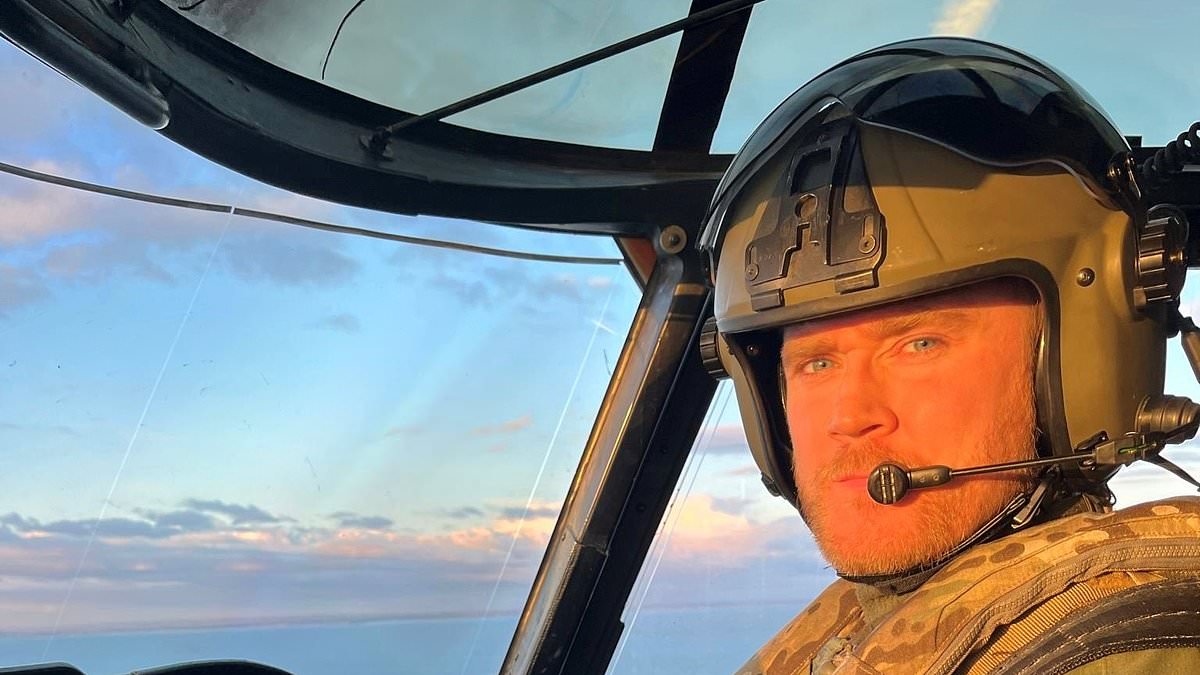
A Royal Navy helicopter crashed into the sea, killing one of its pilots after its crew mistakenly switched off two perfectly functioning engines during an emergency, an inquiry has found. Lieutenant Rhodri Leyshon, 31, died after the Merlin Mk4 plunged into the English Channel during a night training exercise with the carrier HMS Queen Elizabeth off the Dorset coast. A 152-page Defence Safety Authority report found the accident began when a component failed in one of the helicopter's three engines, causing it to produce excessive power. But confusing cockpit warnings led the crew to believe that the other two engines had failed. The two serviceable engines were then deliberately switched off, leaving the aircraft dependent on the malfunctioning engine. Seconds later that engine shut itself down automatically after reaching its overspeed limit, leaving the helicopter with no power.Investigators found the crew had initially planned to make a running landing on HMS Queen Elizabeth, a course of action which would 'almost certainly' have succeeded, according to the report. The aircraft, ZJ135 of 846 Naval Air Squadron, was conducting deck-landing training about 25 nautical miles south of Lyme Regis on September 4, 2024. A Defence Safety Authority inquiry has found that Royal Navy pilot Lieutenant Rhodri Leyshon, 31, was killed after his helicopter crew mistakenly switched off two functioning engines during an emergency over the English Channel The Royal Navy aviator's family paid tribute to a 'talented' and 'passionate' man who was 'immeasurably loved The tail section of the Merlin Mk4 helicopter was recovered and brought into Portland PortLieutenant Leyshon was flying from the right-hand seat, while the more senior aircraft commander was sitting on the left.An aircrewman was in the rear. At 8.46pm, when the helicopter was just 125ft above the sea and travelling at about 65 knots, a rubber diaphragm inside the No2 engine's fuel system split.Fuel flow increased sharply, sending engine torque to more than 136 per cent.The Merlin's automatic systems responded by reducing power from engines No1 and No3 to control rotor speed. But the crew were confronted by a master warning, an audible engine failure alert and a red 'ENG FAIL' warning. The warning did not clearly identify which engine was malfunctioning and the crew interpreted the low torque readings from engines one and three as evidence that they had failed. Investigators said the cockpit alerts 'almost certainly dominated' Lieutenant Leyshon's attention. He stated three times within 21 seconds that the helicopter was flying on one engine and this assessment was not formally challenged by the other crew members. A Mayday was declared reporting a double engine failure and the crew began manoeuvring towards Queen Elizabeth for a running landing. About a minute into the emergency, the aircraft commander discussed shutting down the two apparently failed engines. The switches for engines one and three were then moved directly from 'FLIGHT' to 'OFF'. Lt Leyshon's colleagues were rescued from the choppy waters and were taken to hospital as a precaution Lt Leyshon was aboard a Merlin Mk4 which plunged into the water near the Dorset coast The incident involved a Merlin Mk4 helicopter that ditched into the sea while conducting night flying exercises with HMS Queen Elizabeth (file image)The inquiry found this was done without the confirmation of a second crew member required under Merlin procedures for flight-critical switches. Once the two healthy engines had been switched off, the faulty No2 engine accelerated until its protection system automatically cut off the fuel supply. Attempts to restart the engines failed. Three minutes after the initial component failure, the Merlin struck the sea at about 62 knots while descending at almost 2,000ft a minute. The impact generated forces of more than 10G. The main rotor struck the water, the tail broke away and the fuselage overturned. The aircraft commander and aircrewman escaped, but Lieutenant Leyshon suffered serious injuries and was unable to get out. He was found almost two hours later and was pronounced dead at hospital. The inquiry also raised concerns over training and flying currency. Both pilots needed to regain deck-landing currency and the aircraft commander was not current for night-vision deck landings. He had failed to achieve a target of 15 flying hours a month in four of the preceding six months and had flown only once during the previous 40 days. Investigators concluded that collective 'skill fade' had 'very likely undermined' the crew's ability to deal with the emergency. The report also criticised crew co-ordination, finding members had worked in 'relative isolation' rather than collectively challenging their diagnosis. Investigators traced the initial fault to a diaphragm in the No2 engine which had been weakened by an engineering procedure introduced by manufacturer Safran in 2020.Of 117 suspect diaphragms subsequently examined, ten showed potentially dangerous damage. The inquiry also found problems with crash protection. Lieutenant Leyshon's energy-absorbing seat had been set for a weight below his actual flying weight, while only two of the helicopter's four rear flotation bags operated as intended. The Defence Safety Authority has made 44 recommendations covering engine maintenance, cockpit warning systems, pilot training, rescue equipment and aircraft survivability. Lieutenant Leyshon was a keen rugby player, talented aviator and proud Welshman who had spent around 14 years associated with the Royal Navy, including four years with the Wales University Royal Naval Unit before being commissioned. He qualified as a Commando Helicopter Force pilot in 2018 and deployed to the Caribbean, United States and Norway with 845 Naval Air Squadron. During the final 18 months of his career he trained new Commando Helicopter Force aviators. He had played rugby for Cowbridge RFC, Wales URNU and Cardiff Metropolitan University and also represented a Britannia Royal Naval College alumni side against the US Naval Academy at Annapolis. Colonel Mark Johnson, commanding officer of the Commando Helicopter Force, described him as a 'consummate professional and a shining light with a bright future'. His family said: 'We are all so very proud of the talented, passionate, strong and loyal man he was.'
Royal Navy pilot, 31, was killed in helicopter crash after his commander accidentally turned the engines off when flying over the English Channel, inquiry finds
Full Article
Original Source
Read the full article at Dailymail →KhanList aggregates and links to publicly available news content. We do not host full articles from third-party sources. Always verify important information with original sources.