
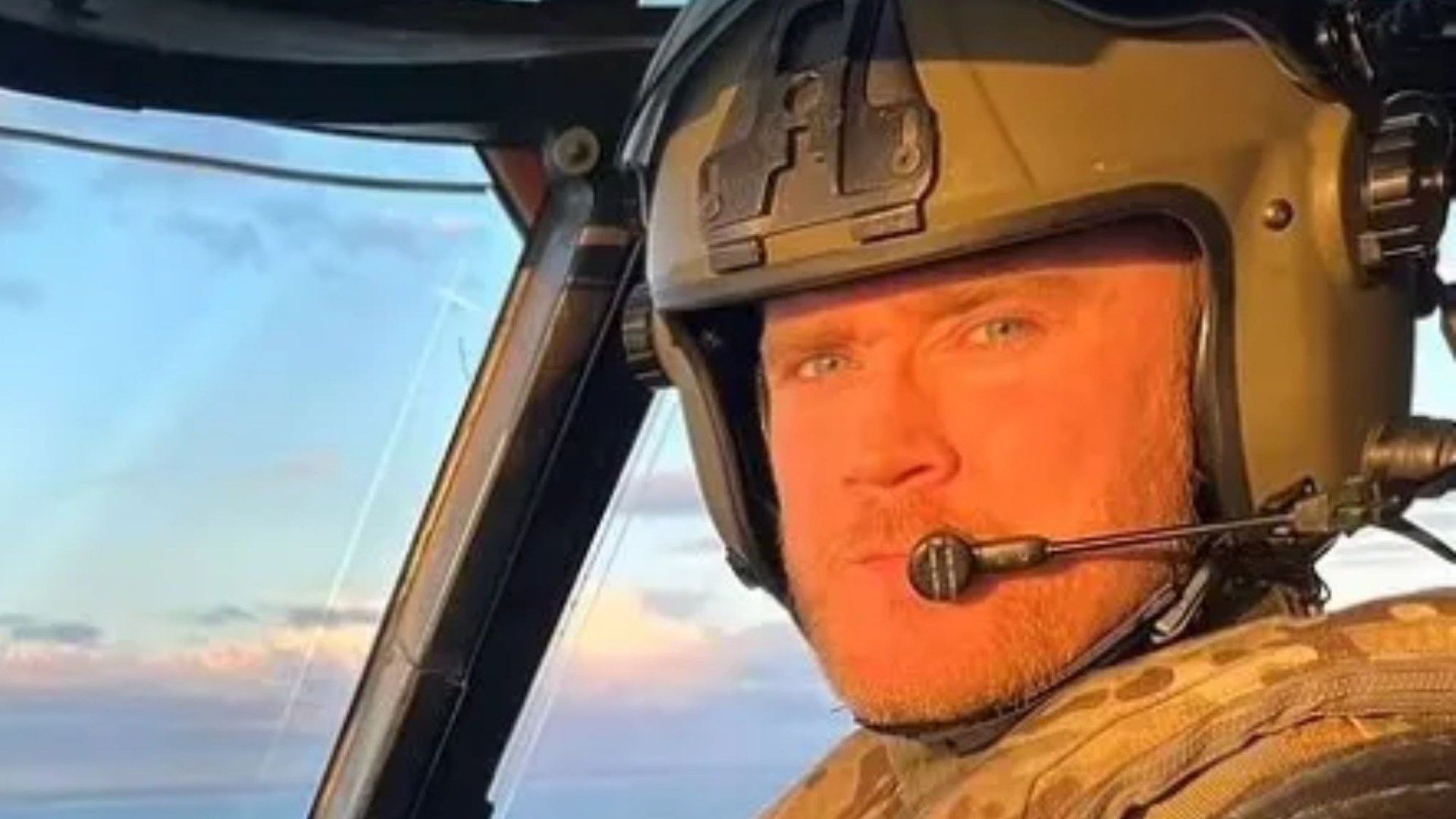
A ROYAL Navy pilot died in a helicopter crash after his commander mistakenly switched off two working engines during a night training exercise, an inquiry has found. Lieutenant Rhodri Leyshon, 31, plunged into the English Channel when the Merlin helicopter lost all power off the Dorset coast on September 4, 2024. Lt Rhodri Leyshon was tragically killed after his helicopter crashed during a training mission Credit: Ministry Of Defence Rhodri’s father said his son was ‘let down’ by things ‘beyond his control’ Credit: rhodri.leyshon_memorial.match/Instagram The tragedy unfolded as the aircraft operated alongside the aircraft carrier HMS Queen Elizabeth. An investigation has now found that a series of errors left the crew fighting to keep the helicopter in the air. Sign up for The Sun newsletter Thank you! At 8.46pm, a rubber component inside one of the Merlin’s three engines split, causing it to spiral out of control. Warnings flashed up in the cockpit but failed to identify which engine was affected. Lt Leyshon’s two surviving crew members were saved and pulled from the water Credit: rhodri.leyshon_memorial.match/Instagram A Royal Navy Merlin helicopter Credit: Alamy The crew mistakenly believed the other two engines had failed, prompting the commander to switch them off. The decision was made without the required confirmation from a second crew member. The remaining faulty engine then revved so violently that its safety system shut it down. The aircraft was suddenly left without any engine power and plunged into the sea. Most read in The Sun The impact snapped off the tail and flipped the helicopter upside down. While the commander and an aircrewman managed to escape, Lt Leyshon was seriously injured and unable to get out. A rescue operation was then hampered by a series of further failures. A senior officer aboard HMS Queen Elizabeth ordered a second Merlin to prepare for the rescue without realising it had no winch. The aircraft could only hover over the wreckage as survivors remained stranded in the water. The carrier’s main rescue boat was also unable to launch because of a sensor fault affecting its crane. A second boat was eventually deployed, setting off at around 9.02pm. The two surviving crew members were pulled from the water, but Lt Leyshon was not found for almost two hours. He was later pronounced dead in hospital. His devastated mother, Mary Scourfield, said: “I know that he would have done everything within his power to get the helicopter back. “It is therefore heartbreaking to see that he was put into this situation.” The inquiry found that the crew had initially planned to land on the moving carrier, a manoeuvre investigators said would “almost certainly” have succeeded. The inquiry made 44 recommendations covering engine maintenance, cockpit warnings, pilot training, rescue equipment and crash survivability. Lt Leyshon’s father, Tim, said: “We believe that he was let down by people and systems beyond his control.” Colonel Mark Johnson, commanding officer of the Commando Helicopter Force, described Lt Leyshon as a “consummate professional and a shining light with a bright future”. 'It reminds us military flying is not risk free', former Rear Admiral says FORMER Rear Admiral Christopher Parry described the death of a Royal Navy member in a training exercise as “very sad news”. He said the death is a reminder that military flying at sea “is not risk free”. He told The Sun: “Well, this is very sad news. It’s always bad when we lose somebody in peacetime, particularly in training. “I think what it reminds all of us is that military flying, particularly at sea, is not risk free. I’ve had a career in naval aviation, and you’re always flying fairly close to the edge. “The conditions are normally marginal at sea if the aircraft actually goes in, the sea is in charge. “All sorts of things that can happen, and that includes death and injury to our service personnel.” The former officer said he had tragically lost colleagues at sea in similar circumstances. He added: “We don’t know yet what’s happened. The fact of life is, the the aircraft’s gone into the sea. “Two crew members have survived. One hasn’t tragically, and I’m afraid that is the nature of business at sea. “It’s not risk free. And certainly in my lifetime I’ve I’ve lost a lot of colleagues at sea, and in similar circumstances.” Describing the first steps of an investigation into the crash, he said the Navy will seek to recover the aircraft. Dr Parry, the first Chair of the Government’s Marine Management Organisation, continued: “I think the first thing that will happen is they will seek to recover the aircraft. “It’s in comparatively shallow water, so it should be able to be picked up reasonably intact. “That’ll give some indications about whether it’s mechanical failure. “They’ll take statements from the surviving crew in a Board of Inquiry, and comparisons will be made to similar incidents in the past, to see how it might have happened, and how it can be avoided again in the future.”
Royal Navy pilot, 31, killed when helicopter crashed into Channel ‘after commander mistakenly switched off two engines’
Full Article
Original Source
Read the full article at Thesun →KhanList aggregates and links to publicly available news content. We do not host full articles from third-party sources. Always verify important information with original sources.