
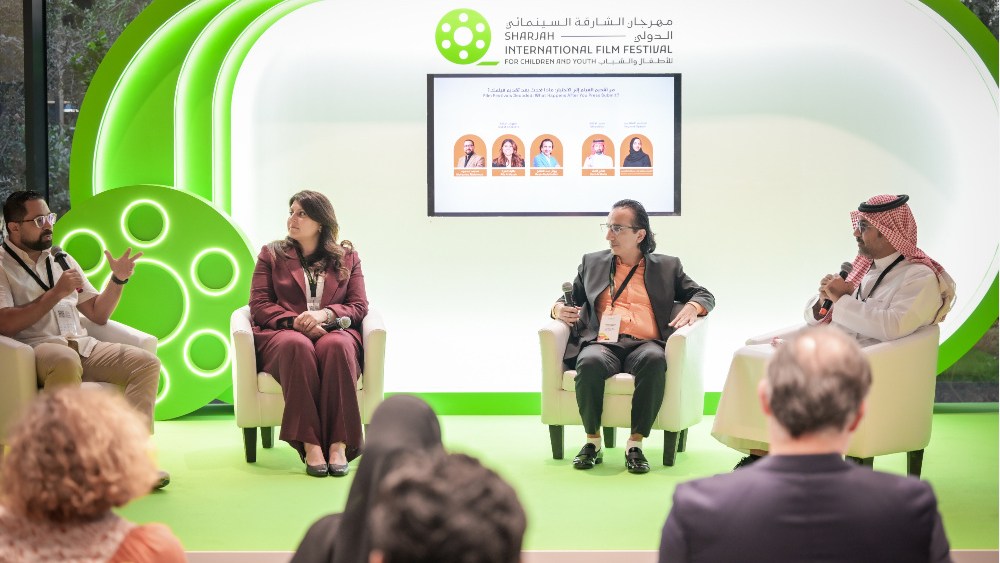
A film festival selection or rejection is not necessarily a verdict on a film’s quality. For programmers sorting through hundreds or even thousands of submissions, the decision can depend on everything from the balance of a lineup to the audience for which they are programming. That issue was at the center of “Film Festivals Decoded: What Happens After You Press Submit?,” a panel held this week during the 13th Sharjah Intl. Film Festival for Children and Youth in the UAE. Variety spoke further with two of its participants, Rotterdam Arab Film Festival artistic director Rosh Abdelfattah and Alexandria International Short Film Festival president Mohamed Mahmoud, about what actually shapes their decisions once submissions arrive. For Abdelfattah, artistic quality is only one consideration when assembling a program. Rotterdam’s festival aims to showcase cinema from across the Arab world, meaning the volume of films produced in different countries can itself affect a selection. “If I have a film from Sudan or a film from Egypt and they have the same level of artistic quality, and I have to choose one, I give the film from Sudan the opportunity and the stage,” he explains, since Egypt produces far more films than Sudan. Abdelfattah is also looking for filmmakers who resist an increasingly familiar festival aesthetic. He points to the proliferation of labs, co-production programs and other development pipelines over the past decade, arguing that films can lose some of their individuality as they move through them. “In each stage, they cut something,” he observes. “They lose the personal touch.” Navigating relationships with producers and co-producers therefore requires filmmakers to remain firm about what they are trying to make. “You have to be very, very strong to protect your vision,” he adds. “It can be very difficult.” Mahmoud, meanwhile, sees one of the biggest problems occurring before programmers even watch submissions. Filmmakers, he argues, too often submit without determining whether a festival is suited to their work. “A film that explores social issues might be submitted to a festival that focuses primarily on environmental themes or the natural world,” he notes. “Why submit a film to a festival that does not align with its subject matter or artistic vision?” That makes distribution strategy increasingly central to the filmmaking process. “I believe that film distribution has become just as important as editing, cinematography, production and directing,” Mahmoud continues. Whether filmmakers distribute their own work or work with professionals, he argues that they should consider premiere strategy, a festival’s programming priorities and whether its audience is appropriate for the film rather than simply submitting as widely as possible. Once a filmmaker has identified the right festival, Mahmoud points to more basic mistakes that can derail a submission. Filmmakers enter the wrong competition, leave required information or materials incomplete, fail to respond to festival requests or submit films that fall outside eligibility dates. “Filmmakers should carefully review the festival’s rules and requirements before submitting,” he urges. “A film being accepted into a festival does not necessarily mean that it is a good film, nor does it mean that it is the best,” Mahmoud stresses. “Conversely, a film being rejected does not mean that it lacks quality or artistic value.” Rotterdam Arab Film Festival’s own programming priorities differ from those of the major European festivals. Abdelfattah estimates that roughly half or more of its program comes through Arab festivals such as Cairo, Red Sea, El Gouna, Marrakech or Amman, with relatively few films sourced through Cannes, Berlin or Venice. He also rejects the idea of a single Arab cinema. “The films from the Maghreb are different from films from Egypt,” he says, pointing to the different ways cinema has developed in Morocco, Egypt and Lebanon, for example. “We share some values, but we have different kinds of cinema.” That distinction matters for a festival serving both Arab and Dutch audiences. Abdelfattah says Rotterdam’s audience is roughly evenly divided between the two, and films do not always land with each group in the same way. Comedy can be particularly revealing. During one screening, he remembers hearing different halves of the room laugh at different moments. Mohamed Mahmoud, Rosh Abdelfattah, Darin Sallam Courtesy of Alexandria International Short Film Festival, Rotterdam Arab Film Festival, Mais Gammoh “Translating is a difficult art,” he says, noting that the challenge extends beyond language to cultural context. For Mahmoud, a festival’s responsibility to emerging filmmakers should also extend beyond selecting and screening their work. He believes festivals should connect young filmmakers with established directors and producers while offering workshops and masterclasses where they can develop their skills and learn from people already working in the industry. “This allows young filmmakers to learn, network, gain inspiration and grow professionally,” he says. Palestinian-Jordanian filmmaker Darin J. Sallam, director of “Farha” and a member of SIFF’s narrative feature jury this year, approaches festival decisions from the other side of the selection process. As a filmmaker who has also served on juries, she recognizes how much individual perspective shapes those decisions. “Evaluating films is ultimately a subjective process shaped by individual perspectives and sensibilities,” Sallam says. When judging, Sallam is less interested in comparing styles or technical accomplishments than in what remains after the screening. “It’s about how these ideas were treated by their filmmakers and how they made us feel as jury members, and which characters and stories stayed with us when we woke up the day after,” she explains. “For me, the success of the film is related to how the film lives in people’s minds and hearts after the film is over.”
Rotterdam and Alexandria Festival Programmers on What Gets a Movie Accepted and Why Rejection Isn’t a Verdict on Quality
Full Article
Original Source
Read the full article at Variety →KhanList aggregates and links to publicly available news content. We do not host full articles from third-party sources. Always verify important information with original sources.