
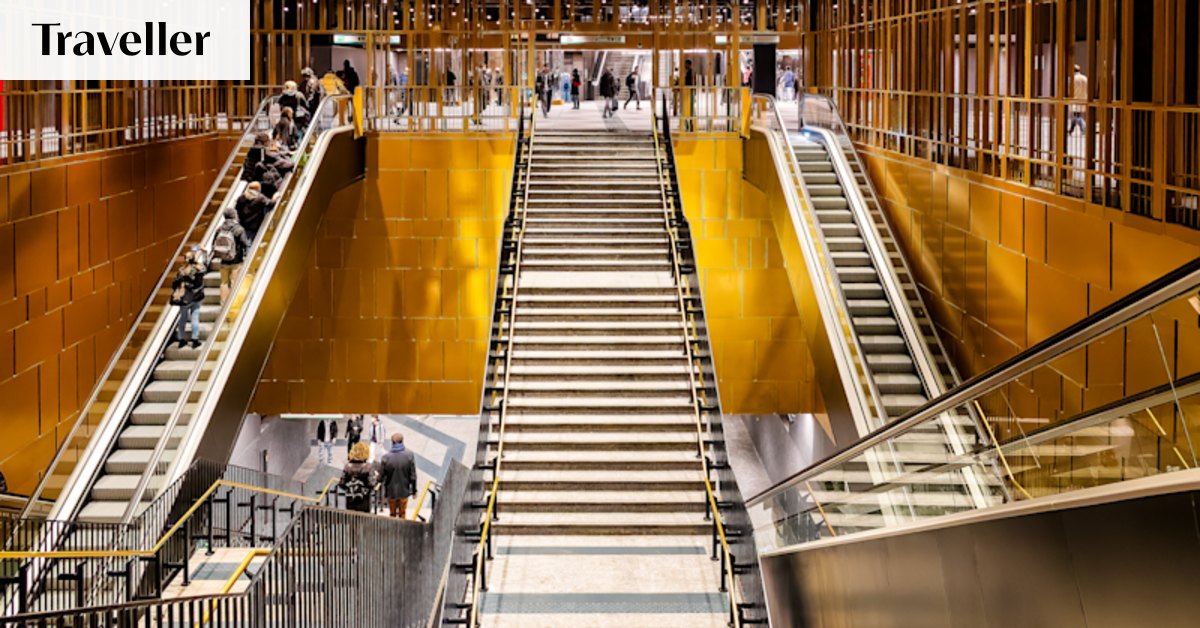
September 7, 2026 — 5:00amThere’s arguably no city in the world where antiquity sits more comfortably alongside modern life than Rome. Romans don’t give a second thought to sipping coffee overlooking a 2000-year-old former pagan temple or walking their dog alongside a crumbling aqueduct; in fact, turn any corner and you’re likely to stumble upon an ancient ruin, adding gravitas to the city’s nickname of the Eternal City.What we see above ground, however, is just scratching the surface, with many secrets of the ancient Roman capital still being revealed.Archaeological finds, including Roman walls and a well, remain in situ and on display.iStockIn December 2025, Rome celebrated the long-awaited opening of two new stations of Metro Line C, finally bringing commuters into the historic city centre after nearly two decades of delays. But this infrastructure blow-out was not due to budgetary issues or mere incompetence – rather, it was because of ancient treasures discovered during excavation, turning line construction into a lengthy and painstaking archaeological dig.At Porta Metronia, a residential house and military barracks dating back 2000 years were discovered; while beneath the surrounds of the Colosseum, workers discovered 28 ancient wells and an original bathhouse, as well as countless artefacts from everyday life.Rather than remove these findings in the name of progress, the decision was made to leave them in place, building the infrastructure around the digs and displaying treasures in situ, turning the stations into museums.Sign up for the Traveller Deals newsletterGet exclusive travel deals delivered straight to your inbox. Sign up now.Escaping the above-ground hordes and descending into the sleek and modern bowels of Colosseo-Fori Imperiali Station, I join a handful of other curious commuters around the remains of a thermal bath, part of a residential structure believed to have been destroyed in Nero’s infamous fire of AD64. Just like a modern bathhouse, there’s a sweat room and a circular plunge pool; hydraulic systems are still visible; there’s also what appears to be a changing room, remains of its mosaic floor displayed in cabinets.Architectural fragments inside Rome’s Colosseo-Fori Imperiali metro station.iStockMeanwhile, on the eastern side of the station atrium, there are six remarkably preserved wells used in daily life around the fourth century BC, while a level below are more wells believed to have been used ritualistically, the remains of sacrificed animals revealed in the sediment.Descending three floors through this slick, modern station – a strategic interchange with Metro Line B – I jump on the driverless train and make my way to San Giovanni Station, a further two stops down Line C. The first of Rome’s museum-stations opened in 2018, and the excavation of San Giovanni yielded over 40,000 artefacts, including remains from a commercial farm, sophisticated plumbing systems and huge irrigation tanks.Ascending the escalators at San Giovanni is like travelling through a time machine, with the atrium designed around the concept of vertical storytelling. Colour-coded timelines show the depth of excavation aligned with its corresponding historical era from Palaeolithic to modern times, highlighting important moments in Rome’s architectural history along the way.On each level, there are display cabinets showcasing artefacts unearthed during excavation: marble friezes, headless statues, imperial coins, glass perfume bottles, bronze farm implements and clay vessels. On the lowest level, there are even tree root fossils on display, evidence of a massive first century agricultural estate.The sleek new metro also provides respite from crowds above ground. iStockHeading back towards the city centre, I alight at Porta Metronia station next to the Aurelian Walls where a massive second century military barracks, consisting of more than 30 rooms decorated with frescoes and mosaic floors, was discovered, along with a grand commander’s house. This is considered one of the most significant archaeological findings of recent years, with the remains to be displayed in situ in a dedicated museum in the western part of the station.Unfortunately, the museum opening – originally slated for February 2026 – has been delayed, passing the early summer of my visit and with no actual opening date announced.But things take time in the Eternal City … and as we all know, Rome wasn’t built in a day.THE DETAILSRIDEThe museum-stations of Metro Line C are accessible to anyone with a valid Metro ticket, available for €1.50 ($2.45). Multi-day passes are also available and can be purchased at any station or online.MOREatac.roma.it/en/tickets-and-passesThe writer travelled to Rome as a guest of Princess Cruises.Julie Miller scrapes a living writing about the things she loves: travel, riding horses and drinking cocktails on tropical beaches. Between airports, she lives in a rural retreat just beyond Sydney.From our partners
Rome opened two new train stations. They’re must-visit attractions
Full Article
Original Source
Read the full article at Smh →KhanList aggregates and links to publicly available news content. We do not host full articles from third-party sources. Always verify important information with original sources.