Published Jul 18, 2026, 5:00 PM EDT Brandon's passion for aviation started at a young age. Growing up, he was involved in the flight simulator and VATSIM communities, and he went on to earn his private pilot license while in college. Brandon holds a BSE in computer science and currently works as a software engineer. Outside of work, he continues to build flight hours and explore new airports around the country. In 2023, Rolls-Royce committed £1 billion ($1.3 billion) to improving the durability of its Trent engine family and set a target of 40% better time on wing across the fleet. Three years later, the company says it has achieved a 100% improvement, meaning its engines are staying on wing twice as long between scheduled shop visits as they were when the program began. Rolls-Royce President of Civil Aerospace Rob Watson confirmed the figure at a pre-Farnborough Airshow briefing attended by Simple Flying in July 2026. The improvement covers the full modern Trent family: the Trent 1000 on the Boeing 787, the Trent 7000 on the Airbus A330neo, and the Trent XWB on the A350. Here is how the target kept rising, what changed inside the engines, and what comes next for Rolls-Royce's civil aerospace business. From 40% To 100%: How The Target Kept Rising In 2023, Rolls-Royce announced a £1 billion investment in its Trent engine fleet focused on improving time on wing, the duration an engine remains installed on an aircraft between scheduled maintenance shop visits. At that year's Capital Markets Day, the company set a target of 40% improvement across its modern Trent engine family, which includes the Trent 1000 on the Boeing 787, the Trent 7000 on the Airbus A330neo, the Trent XWB-84 on the A350-900, and the Trent XWB-97 on the A350-1000. By 2024, the target had increased. Rolls-Royce told investors it believed the improvement would reach 80% rather than 40%, driven by faster-than-expected progress on critical part life extension for the Trent XWB-84 and the proven results of durability upgrades already running on the Trent 7000 fleet. More than half of that improvement had already been delivered by early 2026, according to FlightGlobal reporting. At a pre-Farnborough Airshow update attended by Simple Flying in July 2026, Rolls-Royce President of Civil Aerospace Rob Watson confirmed the target had been met and exceeded. "We said in 2023 our ambition around time on wing was to drive a 40% improvement across our engine fleets," Watson told journalists. "In 2024 we updated that and said we believed we were going to drive towards 80%. Now today, in 2026, we're saying we've got a 100% improvement around time on wing across all of the routes to it." Watson added: "We have really, really delivered on our commitment to get our engines performing where they were likely to perform, where our customers wanted them to perform." The 100% figure means Rolls-Royce's Trent engines are now staying on wing twice as long between shop visits as they were when the transformation program launched three years ago. What Time On Wing Means And Why It Matters To Airlines Time on wing measures how long an engine stays installed on an aircraft before it needs to be removed for a scheduled shop visit, typically measured in flight cycles or flight hours. A shop visit involves removing the engine from the wing, transporting it to a maintenance facility, disassembling it, inspecting and replacing worn components, reassembling it, testing it, and returning it to the airline. The process takes weeks to months, depending on the scope of the work, and the cost of a single widebody engine shop visit runs into the millions of dollars. For airlines, time on wing is the most important metric in engine economics because it determines how frequently those costs and disruptions occur. An engine that stays on wing for 5,000 cycles before requiring a shop visit costs half as much in scheduled maintenance per cycle as one that needs a visit every 2,500 cycles. The aircraft also remains available for revenue service during the time it would otherwise spend in a maintenance hangar with an engine removed. Every additional month an engine stays on wing is a month the airline does not need a spare engine, does not need to pay for a shop visit, and does not lose revenue from a grounded aircraft. The improvement also affects fleet planning predictability. Airlines schedule engine removals years in advance and plan spare engine inventory around expected shop visit intervals. When engines come off wing earlier than planned, the airline faces unscheduled maintenance costs and potential aircraft groundings while waiting for a replacement engine or shop slot. A 100% improvement in time on wing means airlines can plan further ahead with greater confidence that the engines will perform to the published schedule rather than requiring early removal. The Trent 1000 XE: Fixing The 787's Engine Problem Credit: Rolls Royce The Trent 1000 was the engine that made the time on wing investment necessary. The powerplant, which competes with GE Aerospace's GEnx-1B as one of two engine options on the Boeing 787, suffered from premature degradation of high-pressure turbine blades that forced early removals across the fleet. Airlines operating Trent 1000-powered 787s experienced engine-related aircraft groundings, reduced dispatch reliability, and maintenance costs that exceeded projections. The problems damaged Rolls-Royce's reputation with 787 operators and cost the company market share on the program, with approximately 35% of the current 787 fleet powered by Trent 1000 engines compared to 65% on the GEnx. Rolls-Royce addressed the problem through a two-phase Durability Enhancement Package. Phase one, which received FAA certification in mid-2025 and began entering the fleet immediately, includes a 40% increase in cooling to the redesigned high-pressure turbine blade, updates to the combustion system, revised fuel spray nozzles, and engine electronic controller software changes. Rolls-Royce had been installing the upgraded components in new-build engines since January 2025 in anticipation of certification. The same enhancements had already been running on the Trent 7000 fleet since 2022, where they more than tripled time on wing in some operating environments. The new build standard carrying both phases is designated the Trent 1000 XE. Phase two received certification in December 2025 and adds a further 30% improvement through advanced coatings on combustor tiles, high-pressure nozzle guide vane cooling changes, turbine blade weight reduction, and a combustor-to-turbine interface redesign taken from the Trent XWB-84 EP. By mid-2026, more than a third of the in-service Trent 1000 fleet had received the phase one upgrades, with Rolls-Royce targeting 50% shortly after and full fleet completion by the end of 2027. All in-service Trent 1000 engines will be upgraded through the TotalCare support package at no additional cost to operators. The Trent XWB-84 EP: Better Than Promised Credit: Shutterstock The Trent XWB-84 powers every Airbus A350-900 in service. It is the most successful engine in Rolls-Royce's current portfolio by installed base and the one where time on wing improvements have the most direct commercial impact. The Enhanced Performance variant, designated XWB-84 EP, entered service in May 2025 with Delta Air Lines and was certified with a 1% fuel burn saving and a 2-decibel noise reduction over the baseline XWB-84. The in-service data has exceeded the certification figures. Across the first 34 EP engines operating with three major carriers, the measured fuel burn reduction is 1.8%, nearly double what was initially certified. Rob Watson told journalists at the pre-Farnborough briefing that a 1% improvement in fuel burn translates to approximately $500,000 in annual savings per aircraft. "If you've got 20 aircraft on your fleet it's delivering nine or ten million dollars worth of cost improvement straight to your bottom line," Watson said. The EP also delivers improved time on wing through the same critical part life extensions that are driving durability gains across the rest of the Trent family. Rolls-Royce has stopped offering the baseline XWB-84 in new sales campaigns and made the EP the standard engine for all future A350-900 orders. Operators with existing baseline orders can upgrade to the EP specification. Assembly currently takes place at Rolls-Royce's main production facility in Derby, with additional capacity planned at the company's Dahlewitz plant near Berlin toward the end of the decade. The decision to make the EP standard rather than optional reflects both the strength of the in-service performance data and Rolls-Royce's confidence that the durability and efficiency improvements justify the higher production cost. What Comes Next? Credit: Shutterstock Watson referenced MRO capacity expansion as the second pillar of the transformation, alongside time on wing improvements. Longer time on wing reduces the frequency of shop visits, but the growing installed base of Trent engines means the total volume of maintenance work is increasing even as individual engines come in less often. Rolls-Royce currently operates overhaul facilities in Derby, Singapore, and through joint ventures and partnerships across Asia, Europe, and the Americas. The company has been expanding capacity at these sites to handle the growing volume of Trent XWB shop visits as early A350 engines begin reaching their first major overhauls. The aftermarket is where Rolls-Royce generates most of its civil aerospace profit. The company's TotalCare service contracts, which cover the majority of in-service Trent engines, provide airlines with fixed-cost maintenance in exchange for long-term hourly payments. Longer time on wing improves the economics of those contracts for Rolls-Royce because the company collects hourly payments for a longer period between each shop visit it has to fund. The £1 billion investment in durability improvements is, in part, an investment in reducing Rolls-Royce's own maintenance costs under those contracts, not just an improvement for the airlines.
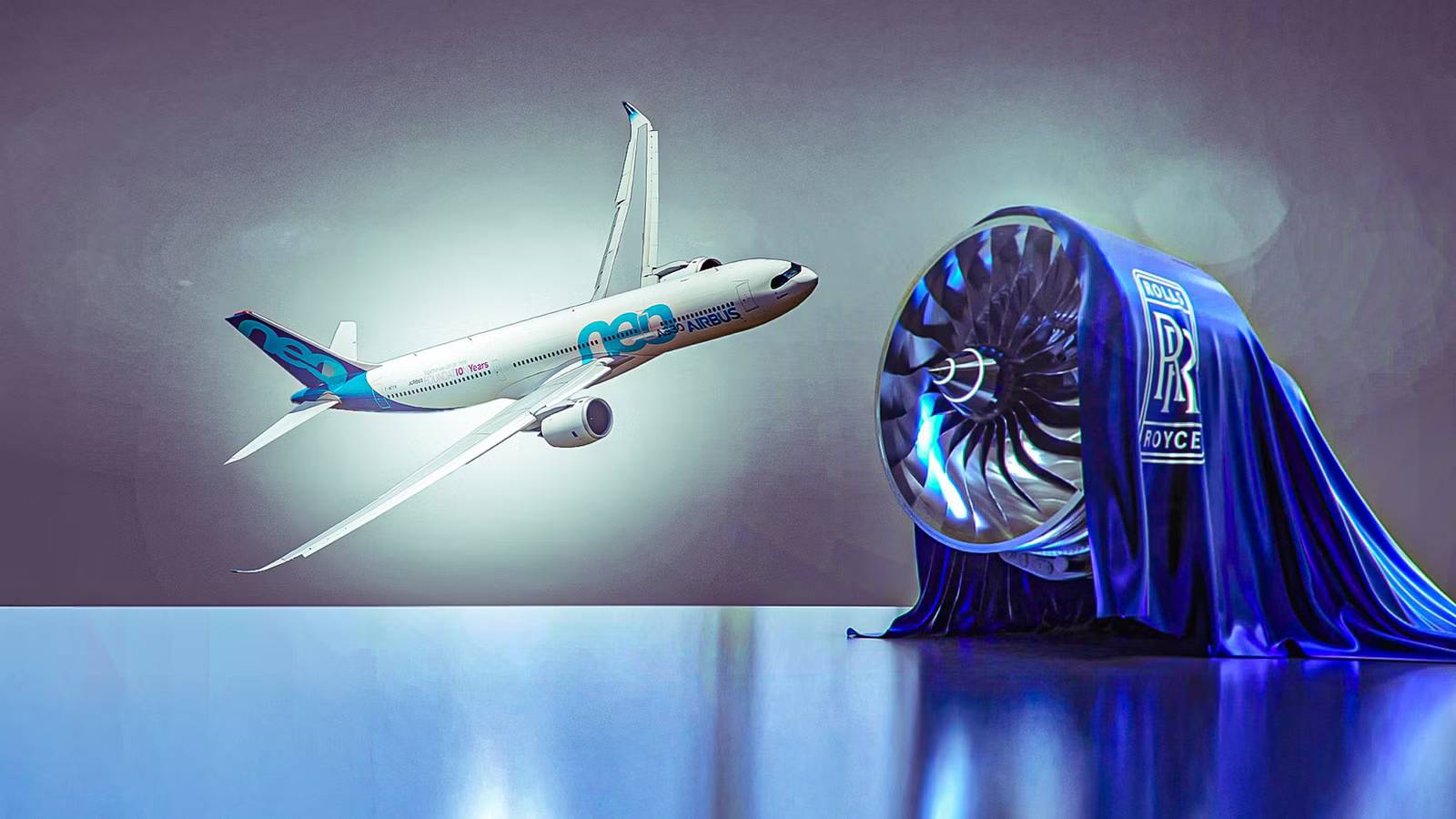
Rolls-Royce Says It Has Doubled Engine Time On Wing Since Launching Its Transformation
Full Article
📰 Original Source
Read full article at Simpleflying →KhanList aggregates and links to publicly available news content. We do not host full articles from third-party sources. Always verify important information with original sources.