
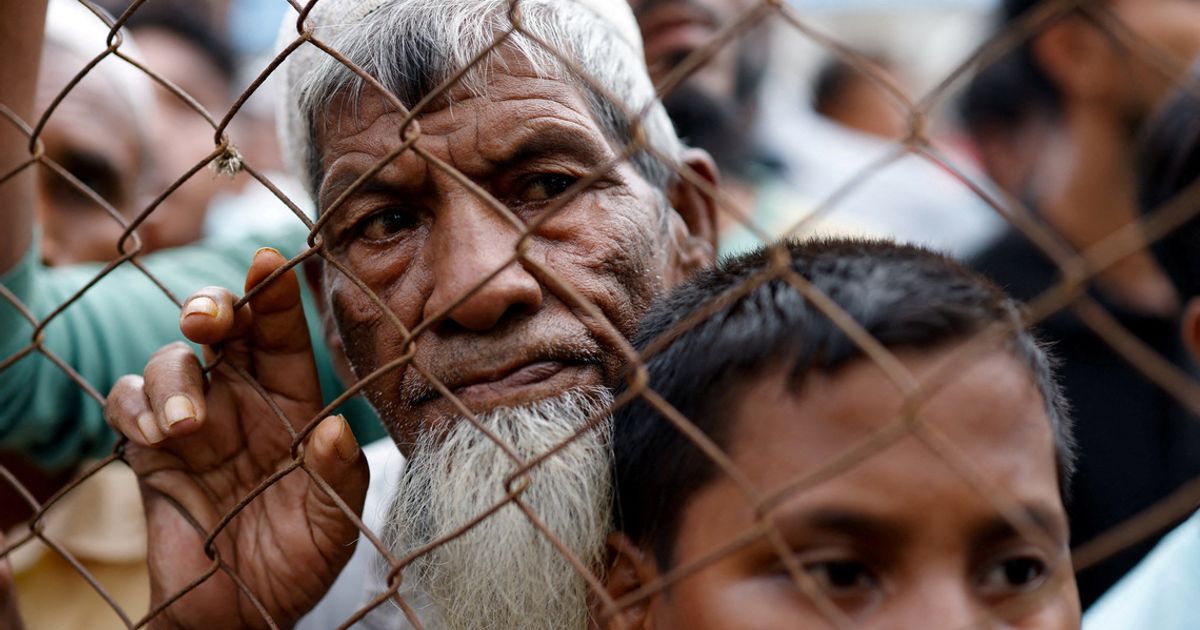
KUALA LUMPUR – Rohingya refugees in Malaysia are appealing to the government to let them stay while awaiting the implementation of a landmark international court ruling that found Myanmar responsible for genocide against their community.The Nov. 19 judgment by the International Court of Justice (ICJ) has revived hopes of returning home after decades of persecution. But with Myanmar engulfed in civil war and no guarantee the ruling military junta will comply, refugees face prolonged exile as Malaysia overhauls its refugee registration system and weighs relocating thousands to a third country.Malaysia hosts the world’s second-largest Rohingya refugee population after Bangladesh, where about 1.2 million are sheltering. In Malaysia, about 133,400 Rohingya were registered with the UN refugee agency as of September 2026; they account for more than half of the roughly 226,000 refugees and asylum-seekers in the country.Rohingya activist Rafik Ismail, 52, said his community wants to return to Myanmar, but only with credible security guarantees. He appealed for more time in Malaysia amid growing anti-refugee sentiment.“We are truly indebted to Malaysia, but we appeal for more time. We know the Myanmar junta would not simply abide by the ruling,” he told The Straits Times.On the night of the ruling, Rafik watched the broadcast with fellow refugees, some of whom wept. Those unable to follow the English-language proceedings later called him for an explanation in their own language.“Malaysia is not our land, Myanmar is. But let us stay until it is safe for us to return. Do not send us back yet,” said Mohamed Abdul, who fled to Malaysia 50 years ago.Rafik called for international peacekeepers from the United Nations or the regional bloc Association of Southeast Asian Nations, including Malaysian troops, to guarantee refugees’ safety.“We do not trust the Myanmar junta,” he said.While the 2017 military crackdown triggered a mass exodus of Rohingya into Bangladesh, their displacement from Myanmar dates back decades. A military operation in Rakhine state in 1978 drove more than 200,000 people across the border, with some also making their way to Malaysia.Doubtful enforcementIn its ruling, the ICJ found that Myanmar committed genocide during its 2017 military crackdown in Rakhine state. Security forces killed around 10,000 civilians, committed widespread sexual violence and razed villages, driving more than 700,000 Rohingya into neighbouring Bangladesh.It was the first time the UN’s highest court found a state responsible for genocide. The judges ordered Myanmar to prevent further atrocities, punish perpetrators, facilitate the safe and voluntary return of displaced Rohingya, and restore lost property or pay compensation. Myanmar has two years to report on its restitution and compensation measures.Rafik, who has lived in Malaysia for 45 years, hopes to reclaim his family’s land but doubts the generals will comply with a ruling that could expose those responsible.Myanmar’s Foreign Ministry expressed deep disappointment over the ICJ ruling on November 20, citing dissenting judges who questioned the evidence and standard of proof. Maintaining that its 2017 operations targeted militants rather than civilians, it said it would study the judgment without committing to complying with the court’s orders.UK-based leading Rohingya rights campaigner Tun Khin said the UN Security Council must pass a resolution compelling Myanmar to comply. But compliance alone would not make Rakhine safe, he noted.Myanmar has been embroiled in civil war since the 2021 military coup. The Arakan Army, an ethnic armed group fighting the junta, now controls much of Rakhine, including areas where Rohingya communities once lived. Tun Khin said both the military and the Arakan Army must grant Rohingya citizenship rights, restore their land and provide security guarantees before anyone can return.“It is impossible for the Rohingya to return home safely,” he told ST, arguing neither warring side faces enough international pressure to change.Nur Sadek, 24, a Rohingya refugee who fled to Malaysia in 2017 and still has family in Myanmar, called the verdict “a moment of recognition, hope and a sense that our suffering has not been forgotten”.Refugees in limboStill, the ruling offers little immediate relief in Malaysia, which is not a signatory to the 1951 UN Refugee Convention. Because Malaysia classifies refugees as undocumented migrants, they lack access to legal employment and education while remaining vulnerable to immigration enforcement.Malaysia has continued deporting Myanmar nationals despite concerns over the safety of their return to a country in the midst of civil war.Prime Minister Anwar Ibrahim told Parliament on Nov 24 that Malaysia had secured assurances from Myanmar over the safe and dignified return of Rohingya refugees, with 10,476 repatriated at Myanmar’s expense so far, including the 1,476 aboard Myanmar naval vessels on Sept 29.Another 6,803 are expected to be repatriated in December. Anwar did not specify how many, if any, were Rohingya.“So far, none of the people (repatriated have been) subjected to any form of pressure according to monitoring by Malaysian intelligence,” he added.The repatriations come amid uncertainty over changes to Malaysia’s refugee system.On Nov. 18, the UN refugee agency stopped registering new asylum-seekers in Malaysia as the government introduced its own registration system. While the UN agency said it would continue its protection and resettlement work, Tun Khin warned the transition could disrupt vital safeguards.Anwar also said on Nov 24 that Turkey was not prepared to consider Malaysia’s request to take in 10,000 Rohingya refugees currently living in the South-east Asian country. Deputy Prime Minister Zahid Hamidi had announced the vocational training proposal on Nov 20 but his office retracted the statement hours later without explanation. Turkey dismissed the claim as unfounded the following day.Anwar added that Malaysia would continue seeking third countries willing to accept refugees.Tun Khin said any relocation arrangement must offer refugees security, dignity and a sustainable future rather than merely transferring them between countries.The ICJ ruling has also renewed scrutiny of ASEAN’s diplomacy toward Myanmar. Former Malaysian lawmaker Charles Santiago, co-chair of ASEAN Parliamentarians for Human Rights, questioned Prime Minister Anwar Ibrahim’s decision to host junta leader Min Aung Hlaing on an Oct. 8 state visit, noting that ensuring compliance with the ICJ’s binding ruling remains an “uphill battle.”Anwar meanwhile defended the invitation, saying it preceded the ICJ judgment and that engaging with Myanmar had helped address Malaysia’s refugee situation after efforts to secure third-country placements yielded little progress.Despite the obstacles, Tun Khin said global Rohingya communities remain determined.“We will return home one step at a time, and with the ICJ ruling, we took another step.”Sign up for our weekly Asian Insider Malaysia Edition newsletter to make sense of the big stories in Malaysia
Rohingya refugees in Malaysia seek more time after landmark genocide ruling against Myanmar
Full Article
Original Source
Read the full article at Straitstimes →KhanList aggregates and links to publicly available news content. We do not host full articles from third-party sources. Always verify important information with original sources.