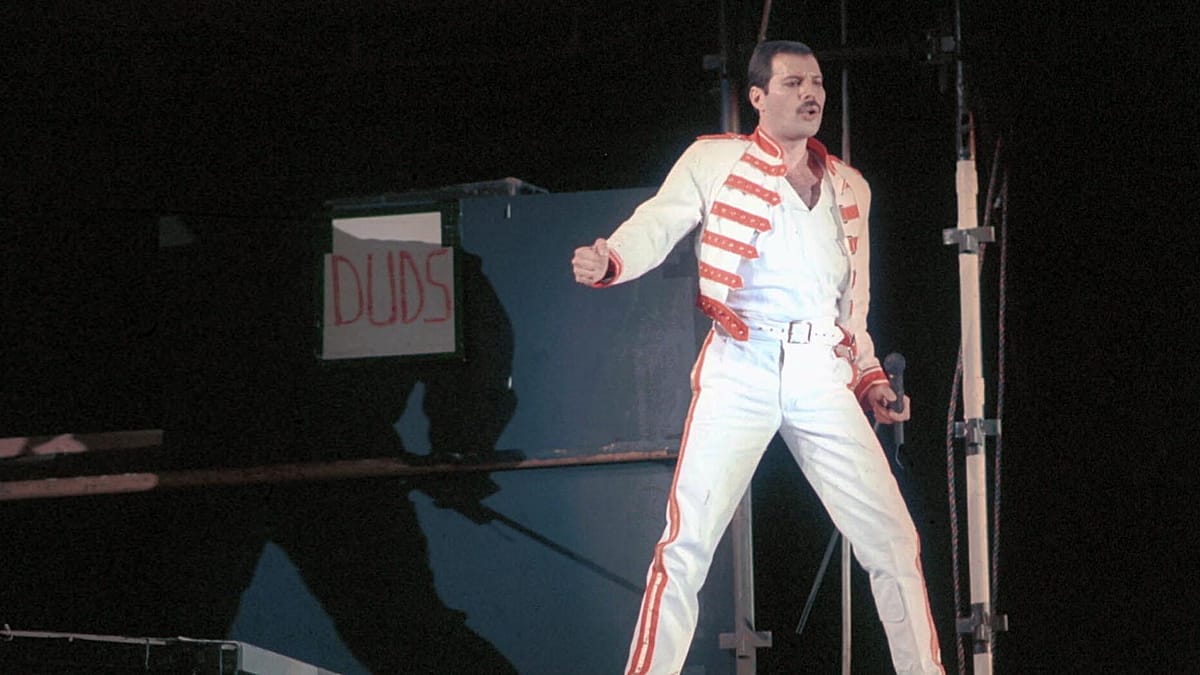
The only stop on Queen's The Magic Tour inside the Eastern bloc was a historic milestone both politically and culturally. In mid‑1980s Hungary, hosting a Western stadium show of this scale demanded almost unimaginable logistical and political compromises. ADVERTISEMENT ADVERTISEMENT Once the green light had arrived from the upper echelons of the ruling party, the gates of the Népstadion literally had to be rebuilt and the ground around them dug up so that the crew’s gigantic multi‑axle trucks could even get onto the pitch. According to estimates and music‑industry insiders gossip, Queen received a fee of around €110,000 – roughly half of what they usually asked for a concert elsewhere. One reason was that Hungary at the time simply could not come up with the required amount in hard currency. The British rockers accepted the lower fee because in return they were allowed to shoot a concert film using virtually the entire then‑existing Hungarian film production capacity, and they secured the international distribution rights to the resulting film, Hungarian Rhapsody, which went on to generate huge profits worldwide. The concert went far beyond a musical experience: it produced a collective social catharsis. The flawless lights and sound of a Western pop culture officially branded as decadent shocked and enthralled the Hungarian audience. Young people who had previously encountered this world only on crackling reel‑to‑reel tapes while listening to Radio Free Europe or on smuggled vinyl suddenly felt as if they were at the very centre of the world. Queen showed a Budapest that was already tentatively opening up yet still living in confinement what professionalism and boundless creativity could do. The fact that the British Embassy in Budapest marked the 40th anniversary with an exclusive event says a lot about the concert’s significance. Past and present met at the ambassador’s residence: while guests posed for photos with a strikingly lifelike was figure of lead singer Freddie Mercury on loan from Madame Tussauds Budapest (source in Hungarian), a tribute band in the background brought the era’s biggest hits back to life. The diplomatic celebration was attended by photographer Denis O'Regan, who documented the tour’s key moments, and by Peter Freestone, Mercury’s former confidant and personal assistant. Every heartbeat of the tour, from its tensions to its triumph in Budapest, was captured at close range by one man: Queen’s official photographer at the time, Denis O’Regan. At the anniversary event in Budapest, Euronews had the chance to speak to the legendary photographer, who offered a rare glimpse behind the Iron Curtain at a slice of rock history. This commemoration was your initiative – so this 40th anniversary clearly means a lot to you as well. Do you feel this show was perhaps more special than the Western legs of the tour? Did it feel different from the other venues? Denis O'Regan: It was very different; everyone knew it was going to be special. We came for six days, which was very unusual – on tour we usually only stay one or two days. Budapest became a legend in Queen’s story. But even as we were coming here, we already knew this was going to be something special. We travelled from Vienna by hydrofoil, on a boat called Gorbachev, and there were huge crowds waiting for us on the riverbank. The band’s manager, Jim Beach, said this was a very special time because Queen was the first rock band allowed to play in that stadium. He admitted they could have sold tickets for several nights, but the People’s Republic of Hungary didn’t want that because they were afraid the music might become a little too popular and subversive. So it remained one night – but that one night became a genuine cultural milestone for Hungary. Would you say the Budapest concert in 1986 had a different atmosphere from the other stops on the tour? Definitely. In London, for example, people go to see a lot of big bands and maybe start to take it for granted. But here there was something obviously very, very special. You could feel it that night. It was special for Queen too, because Freddie learned that Hungarian folk song. They put a huge amount of effort into the show – and into filming it. You could feel it in the streets as well; we were here for six days, so we experienced much more than just the concert. I read in an interview that Queen asked to be kept away from the fans. Was that your experience? Because that’s not what we see in the film. I never sensed that, not once. They were completely approachable – Brian even went off in a hot‑air balloon. I myself walked through the streets of Budapest several times with John Deacon. When we arrived on the hydrofoil, there were crowds waiting for us and nobody was held back. They completely surrounded Freddie’s car as well. I certainly never saw any attempt to keep fans away. I don’t know what happened at the hotel, or whether people even knew where Queen was staying, but from what I saw the mood everywhere was very open and relaxed. From what you say, it sounds like you enjoyed your time here. I felt happy, and I considered it an honour to be here. It’s funny, because even though they were global superstars, they too felt it was an honour to play here – because they were the first, and that was a big deal. Would it be fair to say you eventually became friends with the stars? In another interview you said you had photographed so many rock legends that you almost became 'part of the furniture' for them. I was always around them. Long before I even became a photographer, I knew I wanted to tour with David Bowie, Queen and the Rolling Stones. I had travelled around Europe by train, and that’s when I realised something: I wanted to spend my whole life travelling. I decided to combine those three things – music, photography and travel. Then I suggested they should take me with them on tour. In fact, it was all part of a conscious plan. So in the end you were in the right place at the right time. Yes – but I also made sure I was in the right place at the right time. And that I said the right thing at the right moment. I was the one who came up with the idea of taking a photographer along on tour. And it happened. I worked most extensively with David Bowie – I accompanied him on two world tours. So you had the chance to get to know Freddie Mercury up close. How would you describe him? He was very funny – that’s the first word that comes to mind. And he swore all the time. His language was terrible. He kept using the F‑word, which somehow made him even funnier. And what’s really interesting is that on and off stage he was essentially the same person. The biggest difference was probably that off stage he behaved a little more shyly – with people he didn’t know. But with those he let into his inner circle he could be incredibly blunt and cheeky. And he was the greatest showman who ever lived. If you could choose just one photograph that best captures Freddie Mercury’s personality, which one would it be? I wish I could show you two! I took two backstage shots of him: in one, Freddie is looking straight into the camera, already wearing his stage outfit. But a few minutes earlier I had taken a photo of him in his everyday clothes... (he demonstrates Freddie’s posture) ...completely relaxed. Once he put on his stage costume... (he mimics Freddie’s signature pose) he transformed in an instant. You actually saw the full transformation. Exactly. I saw the same thing with Mick Jagger. I spent eight weeks on tour with the Rolling Stones. I was standing next to him backstage. Then he walked out onto the stage, and I moved round to the audience side... ...and suddenly he seemed ten years younger than the man I’d been talking to backstage just seconds before. I always thought: 'How does he do that?' His face changed. His energy too. The moment he stepped out in front of the crowd, everything inside him sprang to life. Do you think photographing concerts or rock stars has changed a lot since you first started shooting bands? Everything is much easier now. Taking pictures is almost free today. It was nothing like that back then – it was very expensive. You had to buy all your film before you set off and then lug it around the world. It was costly and limited. I always say it was like having a machine gun with a fixed number of bullets – once the film ran out, that was it. So you had to wait for the right moment. Today you can take thousands of images. With a digital camera you can work in almost any light and you can fix almost anything. In our day there was no Photoshop. Now you can take excellent pictures even with a mobile phone – and you see the result instantly. In the past you sent off your film for processing and then waited a week or two to find out whether the pictures had even come out. It was a completely different world. But I love Photoshop and digital photography because you can use them anywhere. So you’re clearly not against digital innovation. Not at all. Young photographers often say to me: 'Things were so much easier for you.' And I always ask them: really? How was I supposed to know where a band was playing? There was no internet. How could I have got in touch with them? There were no mobile phones either. It was at least a hundred times harder. Many people say security is much tighter these days, and that’s true. Everything is more organised and more sophisticated now. But the opportunities are still there – just as they were. It’s simply that far more people are taking pictures, because photography has become cheaper and more accessible. When I started, hardly anyone wanted to do this. But I did. I remember the first time I saw Led Zeppelin. Jimmy Page was playing his guitar with a violin bow. The rosin dust falling from the bow slowly drifted up into the beam of the spotlight while the sound echoed around the venue. And I thought: 'That moment has just gone forever. What a waste!' I wanted those moments to survive. I wanted to preserve them. That’s really where it all began. Later a friend told me I absolutely had to see David Bowie. So I went. It was during the Ziggy Stardust era. He came on stage in a silk kimono, with a girl on either side who, during the show, tore off parts of his costume. There was mime. There was theatre. I remember thinking: 'I never knew a world like this existed.' Nobody else was doing anything like it. In that moment I knew I wanted to photograph him – not just because he was a fantastic performer, but because I wanted to hold on to those moments. Finally, could you tell us a bit about your plans? I suppose you still work an awful lot. Yes, although I don’t actually shoot that much anymore. These days I tend to work on different kinds of projects. For instance, there is a special sound studio in London with sixty speakers hidden in the walls and eight projection screens surrounding the visitor. Together we created an immersive experience called the David Bowie Experience. It brings together my photographs, my personal stories about David Bowie and his music. It turned into something really special. It’s even been selected for the programme of the Venice Film Festival, so I’ll be there in September. I’ve just finished a new David Bowie book as well. And there’s a new Queen book too. I brought a copy with me to Budapest – at the moment only four copies exist. A deluxe edition will follow later. A new Queen exhibition will open in Montreux around Freddie Mercury’s birthday, which happens to coincide almost exactly with the Venice Film Festival. There is also a series of exhibitions planned in museums in Germany. That one will focus on David Bowie, as he would have turned eighty next January. I’d like to make a documentary about the extraordinary people I’ve had the chance to work with over the years. I also want to turn these stories into a book and a podcast. I’ve already written most of the text. Now the goal is to shape the stories and the photographs that go with them into a single coherent whole. That’s the next big task. The Tisza’s 'anthem' at the Népstadion: Spring Wind and the play of symbols The undisputed high point of the 1986 Budapest concert – the moment that later became a generational myth – came when Freddie Mercury performed with only Brian May’s acoustic guitar for accompaniment. Reading the lyrics from his palm, he sang the Hungarian folk song "Tavaszi szél vizet áraszt" phonetically yet with stunning clarity. In the concert film, still regularly screened at the Uránia National Film Theatre and in art cinemas, you can clearly see the audience’s initial shock, which almost instantly gives way to a thunderous sing‑along from 78,000 voices. In a peculiar twist of fate and Hungarian history, this classic folk song has recently acquired a completely new and powerful political and social context. Although the piece is originally about nature awakening, renewal and love, in Hungarian public life "Tavaszi szél" has become the unofficial anthem of the Tisza Party and of crowds calling for political change – a symbol of social discontent and new beginnings. Of course, in 1986 Freddie Mercury could not possibly have foreseen the domestic political battles of 2020s Hungary; his choice was purely an act of paying respect to the host country. At the same time, the fact that the greatest rock singer in the world chose precisely this song and these metaphors, and had them sung by the crowd at a historic moment in Hungary’s long struggle for freedom, now feels almost prophetic, visionary in hindsight. As Hungary's Foreign Minister Anita Orbán, who attended the anniversary celebration in Budapest, stressed in her speech, Freddie’s performance triggered a "cultural earthquake". The political legacy of "Hungarian Rhapsody" The concert film Hungarian Rhapsody: Queen Live in Budapest (source in Hungarian), shot during the band’s Budapest appearance, is far more than a record of a hugely successful show. It is one of the 20th century’s most important Eastern European historical documents. The joint work of the British crew and the Mafilm studio professionally captured the moment when, for one night, music neutralised Cold War divisions and the rigid framework of dictatorship. Queen’s visit offered tangible proof that, culturally and intellectually, Hungarian society wanted to belong to the West, even if the geopolitical reality at the time suggested otherwise. This realisation, and the collective sense of empowerment experienced in the Népstadion, gave Hungarians invaluable momentum in the run‑up to the regime change that followed barely three years later.
Rocking the Iron Curtain: How Queen’s 1986 Budapest concert cracked the Soviet Bloc
Full Article
Original Source
Read the full article at Euronews →KhanList aggregates and links to publicly available news content. We do not host full articles from third-party sources. Always verify important information with original sources.