
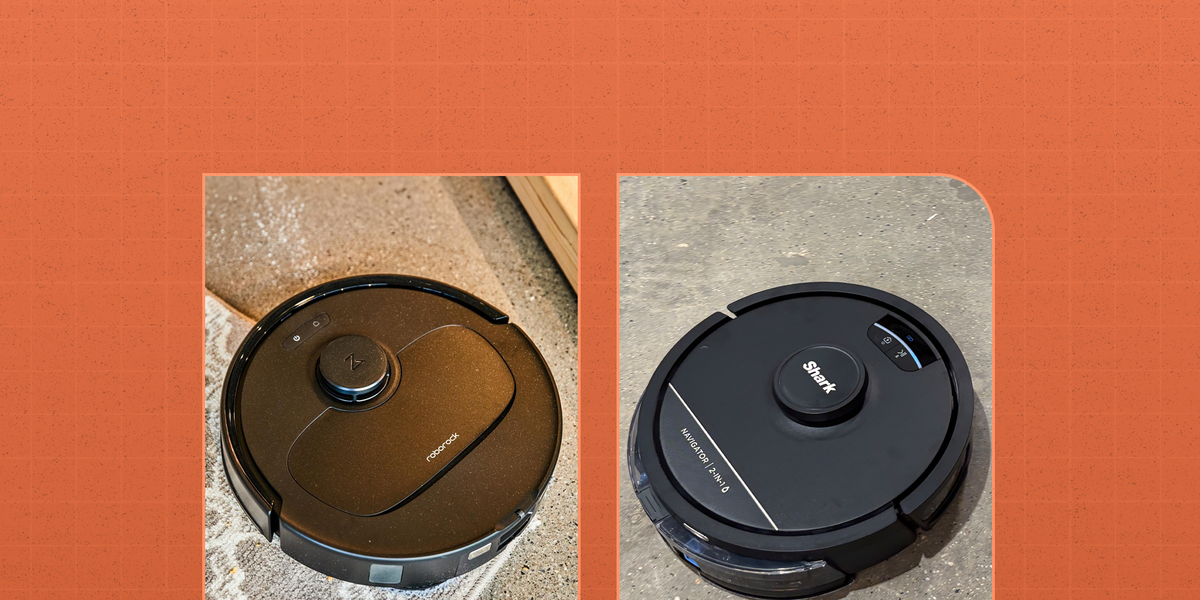
4 min readRobot vacuums are intended to take some of the most tedious household chores off your hands, but not every model delivers the same level of convenience. Some are better at keeping up with everyday dust and debris, while others offer more advanced mopping features and automation to minimize the work you have to do.The Shark Navigator 2-in-1 Robot Vacuum and Mop and the Roborock Qrevo Series QV 35A Robot Vacuum and Mop combine both cleaning needs into a single machine, but they each approach floor care a little differently. After our own hands-on testing with both models, here’s how these two combination robot vacuums compare, and which one I’d recommend you choose for your home.ProsEffective everyday mopping and vacuumingDock automatically empties dustbin and washes the mop padsUseful app with customizable settingsEdge brush picks up dirt and debris around baseboardsConsYou have to replace dustbin bagsObstacle avoidance can be inconsistentCleaning PerformanceBoth of these models handle routine floor care, but this is where the difference in their cleaning systems and real-world performance matter the most. For the Roborock QV 35A, vacuuming performance was the highlight for me. With 8,000 pascals of suction power, it successfully handled everyday dust, crumbs, and hair, and the edge brush did a good job of pulling debris out from near baseboards.Trevor RaabThe Roborock QV 35A has 8,000 Pascals of suction power, allowing it to easily handle dust, hair, and fine debris.The mopping function has been helpful for lighter messes and tracked-in dirt, but it didn’t replace my upright wet/dry vacuum. For dried-on grime, I still preferred a hands-on approach. With the Navigator, one of the features our tester liked the most was actually the spot cleaning. You can set the Navigator to continuously clean the same 5-by-5-foot square of floor over and over again if needed, and this worked well for cleaning up spills and stains that needed some extra attention.In general, the Navigator is capable of vacuuming dirt off carpets, and after filling the tank and adding a mop pad, it immediately transitioned into an impressive wet mop on hard floors. However, the mop pad and water tank have to be detached in order for the Navigator to run on vacuum-only mode; otherwise it just avoids carpets and area rugs. The QV 35A is able to lift its mop pads to 10 millimeters, so it can run a vacuuming cycle with them still attached to the machine.ProsMop pad easily detaches for maintenance or running the vacuum independentlyAutomatic empty when it docksBagless dustbin ConsNo automatic refillNo mopping liftMopping and Docking ConvenienceOne of the biggest reasons to buy a combination robot vacuum and mop is not having to babysit it. The docking station and mopping maintenance features can make a big difference in how much work is left after a cleaning cycle.In this case, this is where the QV 35A has the upper hand. The Navigator docking station automatically empties debris from the onboard tank on the robot, but it doesn’t automatically refill the water tank for mopping, so you have to do it manually.The QV 35A automatically empties and refills, and there are two separate tanks on the docking station for clean and dirty water. The Roborock docking station also washes the mop pads, but you have to wash the Navigator mopping plate by hand. Neither docking station has drying capabilities, either, which can delay the time in between cleans.Trevor RaabThe Roborock docking station self-empties and self-refills the robot vacuum’s tank and dustbin.Tom PriceThe Shark docking station automatically empties the dustbin, but doesn’t automatically refill the water reservoir.I do really like that the Navigator has a bagless dustbin in the base because you never have to worry about replacement bags and can empty it as frequently as needed. The Roborock comes with a bagged dustbin, which requires a little more hands-on care.Navigation and App ControlsThe Roborock uses LiDAR navigation to map your home and identify rooms and floor types. In my apartment, which is less than 900 square feet, the initial mapping process took about 30 minutes. It correctly identified major furniture and different rooms, and the app made it easy to customize cleaning schedules and create no-go zones.The Navigator basically has the same functionality—it also uses LiDAR navigation. You can pair it with the SharkClean app to adjust home mapping, select rooms to avoid or clean, designate no-go zones, and schedule cleanings.Final VerdictBoth robot vacuums reduce the amount of time you spend cleaning your floors, but the right choice depends on the features that matter most to you. The Roborock is the more capable robot vacuum overall, handling everyday debris while also mopping your floors and taking care of much of its own maintenance. The LiDAR mapping, customizable app, and multifunction dock make it a very convenient addition to a regular cleaning routine, and I’d recommend it for most people.The Shark Navigator still has meaningful advantages, particularly its self-emptying docking station and bagless dustbin. Sometimes you don’t need all the additional bells and whistles such as self-refilling and self-washing mop pads, so I’d pick this model if I wanted a simpler yet still capable robot vacuum. Ultimately, the goal is to leave you with fewer chores to finish yourself, and both the Navigator and QV 35A do just that.More Robot Vacuums We RecommendAmber is a Reviews Editor with bylines on Popular Mechanics, Runner’s World, Bicycling, and Best Products sites. Specializing in kitchen gadgets, small appliances, lifestyle, and consumer tech, she brings hands-on testing and a detail-oriented approach to every review. In her free time you can likely find her trading trinkets at an EDM festival, searching for hidden gems at thrift stores, or cuddling with her two cats.
Roborock Qrevo vs. Shark Navigator: Which Robot Vacuum-Mop Does More of the Dirty Work for You?
Full Article
Original Source
Read the full article at Popularmechanics →KhanList aggregates and links to publicly available news content. We do not host full articles from third-party sources. Always verify important information with original sources.