
So where will the Chancellor, John Healey, find the extra trillions to pay the penalty now demanded of the British taxpayer – by a Labour Prime Minister, no less?The answer, according to the Tory leader, Kemi Badenoch, is clear enough: get up and leave the table.In sitting down for ‘dialogue’, however, Andy Burnham now faces an invoice of between $7trillion and $24trillion (or £5trillion and £18trillion) – the estimated cost of the ‘Ten-Point Plan’ for ‘reparatory justice’ drawn up by the 15 nations of the Caribbean.It includes subsidising their health and education services, plus the costs of ‘psychological rehabilitation’, debt cancellation and ‘monetary compensation’ for centuries of ‘harm’.That was their instant collective response to Andy Burnham’s Guardian article ahead of this week’s Commonwealth summit in Antigua. The Prime Minister wrote that he was ‘open’ to making an apology for Britain’s role in the transatlantic slave trade and a ‘structured dialogue’ on the issue. Financial reparations, he added, were ‘not the right answer’.Within hours, his fellow Labour PM, Philip Pierre of St Lucia, had fired off a firm riposte as chair of CARICOM, the regional bloc. Mr Pierre stated that a mere apology, while welcome, was just the start.Mr Burnham must come to the table ready to discuss ‘every element of the Ten-Point Plan’. The Caribbean, he said clearly, ‘does not accept that reparations are “not the right answer” ’.And so a tricky week has just got trickier for the King, who opens the summit tomorrow. Mr Burnham and Mr Pierre are both his prime ministers. For, like St Lucia, most of the 15 members of CARICOM now lining up to biff Britain have the monarch as their head of state. I would argue that Kemi Badenoch is very well placed to reboot the UK’s relations with today’s Commonwealth, writes Robert HardmanWhat’s more, the King is also head of the Commonwealth. This now faces the sort of schism not seen since the days when Margaret Thatcher fought the other member states over sanctions against apartheid-era South Africa.Even Mrs Thatcher did not go as far as Kemi Badenoch went this weekend when she became the first Tory leader to contemplate walking away from the 56-nation post-imperial ‘club’.She accused Mr Burnham of ‘navel-gazing’ over British history ‘as if we haven’t done enough of that’; she asked why Commonwealth leaders were not demanding apologies from ‘the descendants of African kingdoms’ who sold their neighbours into slavery; she asked why, after $100billion dollars (£75billion) of debt relief in the past 25 years, the same countries were getting poorer; and after pointing out that Tony Blair had expressed deep sorrow for the slave trade nearly 20 years ago, she warned: ‘If every Commonwealth summit becomes an exercise in presenting Britain with demands for cash, then we need to start asking if it is worth the effort.’Strong stuff. It also raises the intriguing question of what the Commonwealth would do if Britain did another Brexit – a ‘Coxit’ perhaps – since its HQ is in London.In fact, I would argue that Mrs Badenoch is very well placed to reboot the UK’s relations with today’s Commonwealth. British-born to Nigerian parents, she hails from two of its largest and most important nations and has none of the diffidence which afflicts many white liberal politicians terrified of being called ‘colonial’ – or worse – for arguing with erstwhile imperial territories.I also think that she is more in tune with Commonwealth thinking than either Mr Burnham or those canny CARICOM politicians eyeing up juicy concessions from the new, eager-to-please nice guy in No10.For most of this week’s summit is not about 18th-century grievances but 21st-century deals. Most leaders want to talk trade. The biggest gatherings will be those like today’s Commonwealth Business Forum at the Coolidge cricket stadium or the People’s Forum at the University of Antigua.This is where the Commonwealth works best – as a global network for entrepreneurs or doctors or accountants or charities (and the rest) who share the same language and legal DNA.They would much rather meet Charles III than berate his five-times great-grandfather, George III. It has been interesting, if under-reported, that the crowds during last week’s royal tour of the Caribbean have been overwhelmingly enthusiastic. The protests demanding reparations have been tiny (one, in the Bahamian capital, Nassau, attracted three people).The King is not going to apologise because, in the UK, apologies come from the Government. And he is now even more constrained about what he can say on the issue since Mr Burnham has turned this into a party political issue in Britain, dividing Labour and the Tories.As a force for unity, he will also be aware of the dire social fallout if the hard-pressed UK descendants of mill workers and farmhands are told to pay many billions in tax to the descendants of enslaved plantation workers whose misery enriched just a handful of toffs.Two further points to note on the knock-on effects of an apology. First, CARICOM and its allies have just pushed through a UN resolution that the slave trade across the Atlantic (nowhere else) was the ‘gravest crime against humanity’. Lawyers are limbering up.Second, this weekend’s CARICOM statement calls on the UK not only to pay compensation for the slave trade but for the ‘colonialism’ that came afterwards – ‘workers who were brought from India and China’.Having apologised to the Caribbean, Andy Burnham will instantly face calls to apologise to some of the most populous nations on Earth.What size will the reparations bill be then?
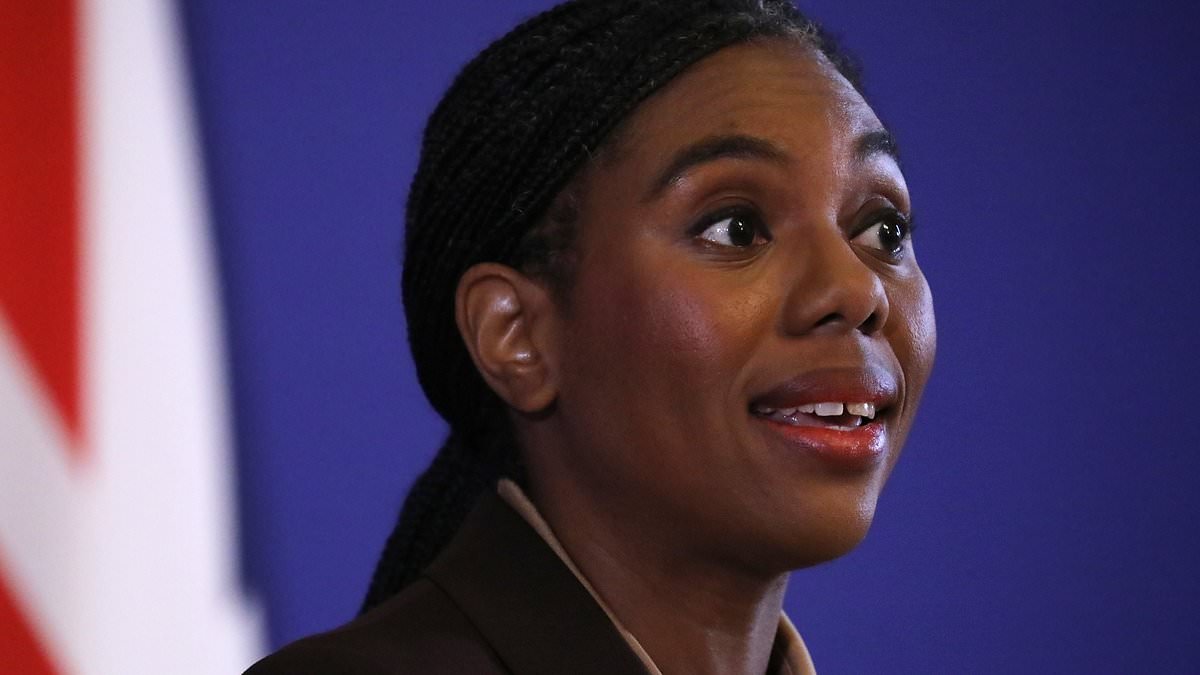
ROBERT HARDMAN: Kemi is more in tune with Commonwealth thinking than our eager-to-please PM
Full Article
Original Source
Read the full article at Dailymail →KhanList aggregates and links to publicly available news content. We do not host full articles from third-party sources. Always verify important information with original sources.