
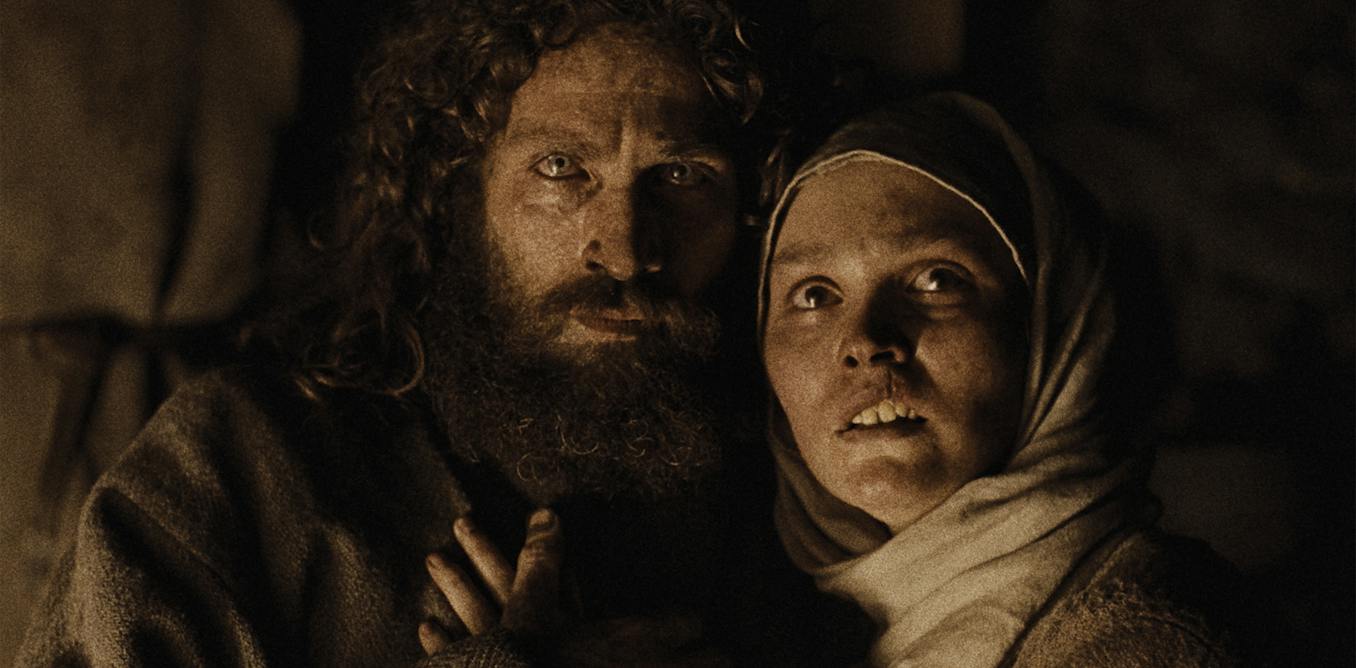
Robert Eggers’s historical folk horror Werwulf will be in cinemas this winter. It’s set in 1305, when wolves still roamed parts of England. As they vanished from English shores due to sustained hunting, however, the werewolf myth moved abroad. The creature changed from a pitiable victim into a diabolical killer, before being rediscovered and reinvented by the Victorians. In Eggers’s film, a hunter arrives in an English village to enlist local peasants in a wolf hunt declared by the king. The premise has a real historical basis, as the character appears to be inspired by Peter Corbet, a Shropshire baron of the Welsh Marches. In 1281, Corbet was commissioned by Edward I to hunt and destroy all wolves within a cluster of counties bordering Wales, with the aid of the king’s bailiffs. Although the campaign is sometimes explained as an effort to protect England’s lucrative wool industry, Edward’s orders specified the crown’s hunting domains first and foremost. Surviving documentation from medieval Britain often places wolves within forests, chases and parks, where populations of deer were also concentrated. The wolf population in Britain endured Corbet’s hunts, although the last ones are difficult to pin down. Young individuals could have dispersed into already “cleared” areas, and a pack was almost certainly present on the North York Moors at the end of the 14th century. It is thought they may also have lingered in the Scottish Highlands into the 18th century. Animal remains currently being investigated may yet help archaeologists refine that timeline. The trailer for Werwulf. Early on in Werwulf, one of the farmers enlisted in the wolf hunt turns out to be a werewolf. Medieval people did believe in this possibility. In his encyclopedic work Otia Imperialia (Recreation for an Emperor), published in 1211, the statesman and writer Gervase of Tilbury described men transforming into wolves in England in accordance with the phases of the moon. Gervase presented this as a real occurrence, but there were also accounts of fictional werewolves. Texts circulating in England such as poet Marie de France’s Bisclavret (circa 1160-1175) and the French folk romance, Guillaume de Palerne (William of Palerne), from around 1350, show werewolves being incorporated into courtly storytelling. These texts told tales of human nobles trapped in wolf form, more victims than monsters. Yet they drew their imaginative power from landscapes in which real wolves could be seen and heard. From pitiable victim to devil’s agent Wolves continued to be written about in negative terms long after their disappearance, while werewolves became increasingly associated with foreign lands. But werewolves were also changing character, from victims of misfortune to agents of Satan. Woodcut of a werewolf attack by Lucas Cranach der Ältere (1512). Ducal Museum Gotha In 1590, a pamphlet was printed in London which described the life, trial and brutal execution of Peter Stumpp, a German man accused of being a werewolf. Stumpp, a farmer from Bedburg near Cologne, had allegedly made a pact with the devil and acquired a magical belt that enabled him to assume the form of a wolf. The pamphlet was translated and expanded from the German account by the writer George Bores. Stump was not presented as a sympathetic human trapped in wolf form, but as a murderous sorcerer who killed people and livestock and committed sexual violence, incest and cannibalism. Foreign werewolves were not entirely new. The 12th-century writer Gerald of Wales had placed his compassionate werewolves in Ireland, but Stumpp’s diabolical werewolf was a different creature entirely. The English pamphlet significantly expanded and sensationalised the account it was based on, resulting in a 21-page narrative with an eight-panel woodcut image showing Stumpp’s capture, trial and execution. It also went to considerable lengths to establish the credibility of its story, invoking witnesses and correspondence from Germany. Stumpp’s case was one of at least 300 prosecutions of werewolfery which formed an occasional component of the much larger number of witchcraft trials in early modern Europe. Panels from The Damnable Life and Death of Stubbe Peeter (printed 1590). Lambeth Palace Library In Britain, wolves were not sufficiently embedded in everyday life to become part of witchcraft prosecutions. In Scotland, however, with its intense witch-hunting culture and a surviving wolf population, a 17th-century court record shows the term being used as an insult, although there were no prosecutions of werewolves. In this respect the presence of wolves alone cannot explain where such accusations arose. Rediscovering the werewolf With the end of witch hunting, the werewolf largely disappeared from Britain as a serious supernatural possibility. Then in the 19th century, writers and antiquarians began recovering and reinventing werewolf lore as part of a wider fascination with the Middle Ages. Priest and hagiographer Sabine Baring-Gould’s Book of Were-Wolves (1865) is the best example of this process. He consolidated a huge body of werewolf lore for English-speaking readers, helping to establish the comparative tradition for later popular representations. Illustration from Sabine Baring-Gould’s Book of Were-Wolves (1865). Public Domain Review Hollywood later drew on this inheritance, but made the werewolf a sympathetic cursed victim again in The Wolf Man (1941), a figure closer to Bisclavret than to Stumpp. In his upcoming film, Eggers has claimed he has hit the reset button on the werewolf, presenting the story of a cursed man seeking salvation through love, a premise that also echoes the werewolves of medieval courtly literature. Meanwhile, wolves are recolonising parts of continental Europe. There is also an ongoing discussion about their reintroduction to Britain. What will happen if wolves return as free-living animals after centuries of imagining them through stories? Today we do not fear literal shape changers stalking our forests and moorlands. Yet popular culture gives animals enduring meanings. Just look at the influence of Little Red Riding Hood and the persistent “big bad wolf”. Werwulf could be the next story to shape how we imagine wolves. If they do return, those meanings may influence how we live with them. This article features references to books that have been included for editorial reasons, and may contain links to bookshop.org. If you click on one of the links and go on to buy something, The Conversation UK may earn a commission.
Robert Eggers’s Werwulf: the real history of wolves and werewolves in medieval England
Full Article
Original Source
Read the full article at Theconversation →KhanList aggregates and links to publicly available news content. We do not host full articles from third-party sources. Always verify important information with original sources.