
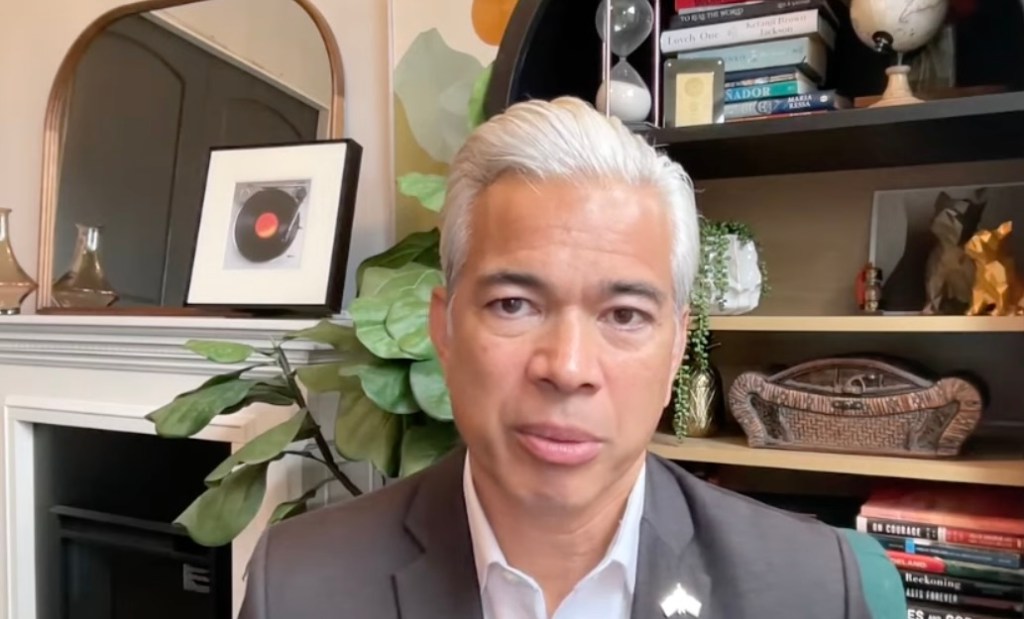
California Attorney General Rob Bonta took a victory lap following a proposed settlement of up to $17 billion for claims brought by 51 attorneys general against Meta, suggesting that the parent of Instagram and Facebook realized that a trial was not going well for their side. As Bonta went through details of the settlement, including remedies designed to limit mental health harms and social media addiction among children and teens, he told reporters, “It’s also telling that Meta settled midway through Instagram President Adam Mosseri‘s testimony and before CEO Mark Zuckerberg could take the stand.” The company was defending itself in a trial that started on Aug. 18 in California. Watch on Deadline On the stand on Tuesday, Mosseri at one point was questioned by prosecutors about a feature, called Take a Break, a pop-up message suggesting to young users that they the give the app a rest after a fixed period of use. An internal document showed that only 1.8% of teens actually used the feature. A blog post by Mosseri around when it was introduced said “more than 90%” of users of the feature kept it on. But, the state AGs noted, the executive did not indicate that a very small number of people actually used it in the first place. “The trial was not going well for Meta. Having Instagram President Adam Mosseri giving testimony as we settled, it was not random … I think they were dying to have him get off the stand. It was not going well for him,” Bonta said. The settlement agreement still has to be approved by a federal judge. It includes a set of new restrictions that Meta will place on social media for users under 18, including a default daily time limit of two hours that can only be lifted by a parent. Other defaults are designed to limit use overnight and during school hours, and a ban on displaying numbers of likes or reactions for users under 18. Bonta also talked of the next step in their litigation: TikTok. “As big as Meta is, it doesn’t stand alone,” Bonta said. “We’re continuing our fight across social media, including our litigation against TikTok, and we’ll continue to demand better from all parts of this industry through our ongoing work with the legislature.” Bonta and other state attorneys general filed the TikTok lawsuit in 2024. Bonta also vowed to defend SB 976, the Protecting Our Kids from Social Media Addiction Act, a new California law that is being challenged by tech giants on First Amendment grounds. Bonta said that, with the Meta settlement, his “hope and my belief is that we will see commitments across the industry.” In addition to TikTok, he called out Snap and YouTube. Bonta later said that although YouTube is not the “same in its model as Meta and TikTok,” there are “similar features and products that YouTube uses that are along the same lines that … are designed to create excessive compulsive use that lead to mental health harms, and most importantly that hurt our children, and can and should be changed.” He added, “I think this …constellation of solutions in terms in injunctive relief that we’ve delivered here that apply to Meta, I really think that YouTube and Snap and TikTok should be thinking very closely about them and their commitment to adopt the same.” Several of the changes Meta agreed too are partly contingent on other social media players signing on. For instance, a default daily time limit of two hours for users under 18 that can only be lifted by a parent, under the settlement, would drop to one hour If other social media platforms agree to similar terms. And a default nighttime block between midnight and 6 a.m. for users under 18 that can only be lifted by a parent would expand to cover 10 p.m. to 7 a.m. if other social media platforms follow. This case and others lodged against social media giants have been compared to transformative litigation against big tobacco companies in the 1990s. Asked if he agress, Bonta said: “I think there are some similarities. There are also some limits to those similarities … Regardless, this is a major moment to clean up an industry that has been hurting our kids.” “So, in the way that the impact of the solutions delivered in [big] tobacco were good for health, good for kids, good for Californians and Americans, this is similar … It’s similar in that fact that it’s a number of AGs banding together, asserting ourselves, exerting our authority, demanding better, requiring accountability, and enforcing the law and delivering results. It’s similar in that way that Congress hasn’t been delivering and has left a vacuum and a gap, so that the state AGs stepped in.” He added, “It deals with public health. Different issues, but public health issues broadly … But I think the most important thing to focus on here, whether it’s similar tobacco or not, is this is transformative. This is momentous. This is a major step forward in the ongoing quest and journey to make sure that our children are safe everywhere, including online.” The settlement involved attorneys general from 47 states, the District of Columbia and U.S. territories.
Rob Bonta Says It’s “Telling” Meta Settled With State AGs In The Midst Of Instagram Head Adam Mosseri’s Testimony & Before Mark Zuckerberg Took The Stand
Full Article
Original Source
Read the full article at Deadline →KhanList aggregates and links to publicly available news content. We do not host full articles from third-party sources. Always verify important information with original sources.