
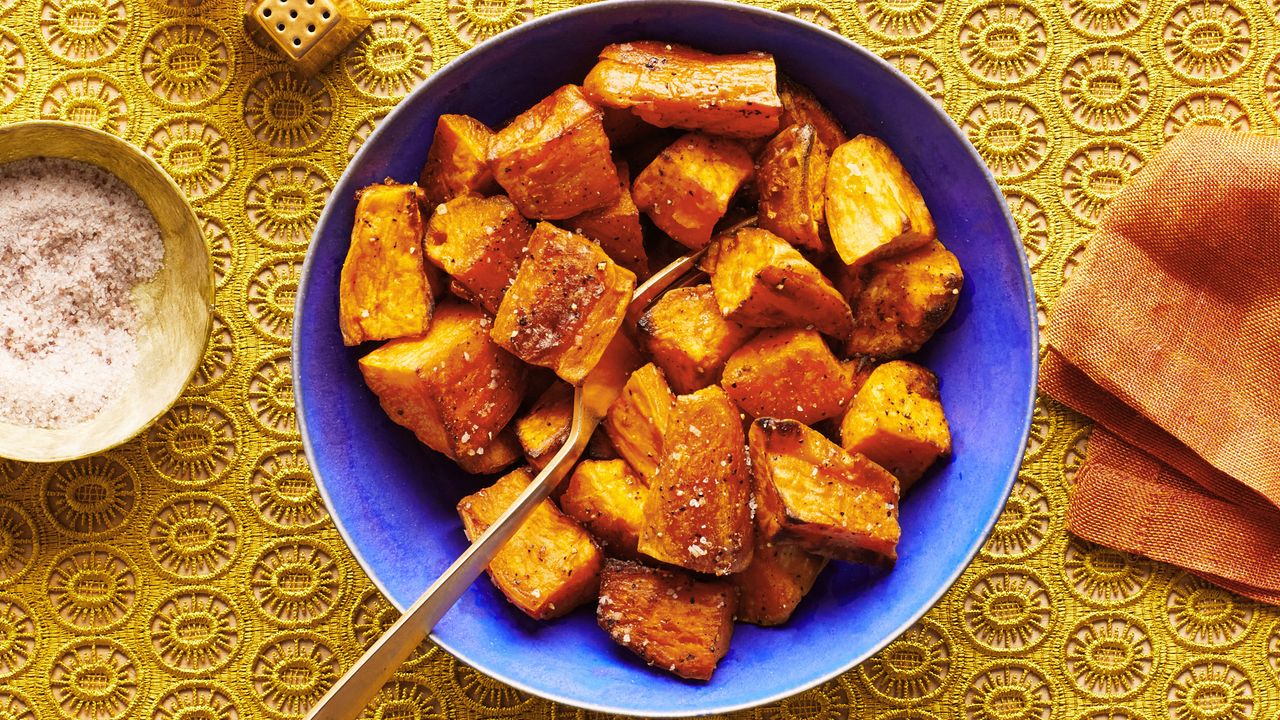
For roasted sweet potatoes with deeply browned edges and creamy centers, it’s actually okay to embrace a little crowding. These 1½" chunks will look cozy on the sheet pan at first—that’s intentional. Nestling them together traps enough steam to help the interiors soften before the potatoes shrink slightly, giving them room to brown.A 450° oven does the rest. Toss the sweet potatoes occasionally so they color on multiple sides, and skip the parchment: Direct contact with the hot sheet pan encourages better browning. Leave the skins on if you like, or peel them for a more uniformly creamy texture.Salt and pepper are all you need, but consider this roasted sweet potato recipe a blank slate. See the variations below for spiced, cinnamon-sugar, herby Parmesan, or glazed sweet potatoes. Serve them as a side dish, pile them into grain bowls and salads, or tuck them into tacos with refried black beans.Want to roast sweet potatoes whole, in wedges, or in halves? See our guide to roasting sweet potatoes.Roasted sweet potato FAQDo you need to peel sweet potatoes before roasting?No. Sweet potato skins are edible and can crisp nicely in the oven. Leave them on for more texture or peel them, as this recipe directs, for creamier pieces throughout.How do you know when roasted sweet potatoes are done?Look for deeply browned edges and tender, creamy centers. A knife or fork should easily pierce the thickest pieces. If the potatoes are tender but still pale, give them a little more time to brown.Why aren’t my roasted sweet potatoes crispy?Roasted sweet potatoes won’t get uniformly crisp like fried potatoes—the goal here is browned edges and creamy centers. Let them roast directly against the sheet pan and toss them occasionally so multiple sides get a chance to brown.
Roasted Sweet Potatoes
Full Article
Original Source
Read the full article at Bonappetit →KhanList aggregates and links to publicly available news content. We do not host full articles from third-party sources. Always verify important information with original sources.