
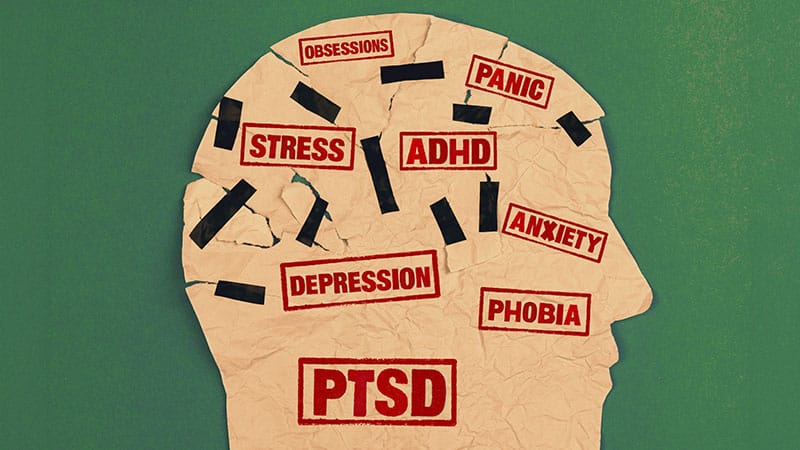
Across cultures, names carry significance. In many traditions, names reflect the circumstances of a child’s birth or embody a parent’s hopes, aspirations, and prayers for the newborn. Over time, a name becomes deeply embedded in identity, shaping both how we understand ourselves and how others understand us.Psychiatric diagnoses can function in much the same way. A diagnosis is more than a classification tool. It can shape how a person understands their experiences, abilities, and limitations. It can influence how families, clinicians, schools, employers, and institutions respond to them. It may determine what treatment they receive, what services become available, whether they qualify for disability benefits or other forms of assistance, and sometimes how their behavior is interpreted. Naming, then, is not an inconsequential act.Temitope Ogundare, MD, MPHThis raises a fundamental question for psychiatry: what exactly are we naming when we call something a mental disorder?The Diagnostic and Statistical Manual of Mental Disorders, fifth edition, defines a mental disorder as a clinically significant disturbance in cognition, emotional regulation, or behavior that reflects dysfunction in psychological, biological, or developmental processes underlying mental functioning. Mental disorders are usually associated with significant distress or disability. Importantly, socially deviant behavior or conflict between an individual and society is not, by itself, a mental disorder.That final distinction matters more than we sometimes acknowledge. We live in an era of unprecedented access to psychological language. Terms that once belonged primarily to clinical settings now circulate freely in everyday conversation and on social media. A difficult boss is a narcissist. Sadness becomes depression. Distractibility becomes attention-deficit/hyperactivity disorder (ADHD). Social awkwardness becomes autism. A painful relationship becomes trauma.Some of this democratization of psychiatric language is valuable. Greater mental health literacy has allowed people to recognize experiences that previous generations suffered without understanding or treatment. People whose symptoms were historically overlooked may finally find language for what they have experienced. But there is another possibility: that in expanding our vocabulary for mental illness, we may gradually expand the boundaries of mental illness itself.When Does Distress Become Disorder? Sadness is real, but sadness is not necessarily major depressive disorder. Fear is real, but fear is not necessarily an anxiety disorder. Difficulty concentrating is real, but it is not necessarily ADHD. Social awkwardness is real, but it is not necessarily autism. Clinical terminology carries weight precisely because it is supposed to distinguish ordinary variation in human experience from disorder.And that brings us to one of psychiatry’s oldest and most difficult questions: What is normal?Normal cannot simply mean average. Statistical normality tells us what is common in a population, but what is uncommon is not necessarily pathological. Exceptional intelligence is statistically abnormal. So are many unusual talents, temperaments, preferences, and personality characteristics. Difference is not disease.Normality cannot be determined entirely by an individual’s baseline. A long-standing pattern can still represent dysfunction. Normality also cannot be defined solely by culture, because cultures can normalize harmful practices and stigmatize harmless differences.History should make psychiatry particularly cautious here. Homosexuality was once classified as a mental disorder. In the nineteenth century, Samuel Cartwright proposed “drapetomania” as a supposed explanation for why enslaved Black people attempted to escape slavery. These examples are easy to condemn in retrospect. But they raise a harder question for the present: How do we know when psychiatry identifies dysfunction in an individual, and when it merely gives medical language to the values, anxieties, politics, or expectations of a particular society? What appears abnormal is always observed somewhere, by someone, at a particular moment in history.Perhaps psychiatric normality therefore must be understood along several dimensions at once: statistical normality, individual baseline, developmental stage, cultural context, functional capacity, and the processes underlying the behavior or experience. What is expected of this person at this developmental stage? Is this experience intelligible within the person’s cultural context? Is it a departure from their previous functioning? Does it impair their capacity to sustain relationships, care for themselves, work, learn, exercise judgment, or pursue meaningful goals? And is there evidence that some psychological, developmental, or biological process underlying mental functioning has become dysfunctional?Normal Does Not Mean Painless These questions matter because distress is not the same as disorder. Human beings suffer. We grieve. We become frightened. We experience loneliness, heartbreak, jealousy, uncertainty, anger, disappointment, existential anxiety, and periods in which the demands of living exceed our current ability to meet them. Some of these experiences may precipitate mental disorders. Others are painful precisely because ordinary human life can be painful. The death of a parent can produce profound sadness. A divorce can disrupt sleep, appetite, concentration, and motivation. A person living under threat may become hypervigilant. Someone betrayed by a partner may distrust people for a time. A person facing unemployment, poverty, racism, displacement, or family conflict may become deeply distressed.That distress may require attention. It may require therapy, social support, practical assistance, time, or simply another human being willing to sit with it. It does not necessarily require a diagnosis. There is an important distinction here. Saying that an experience is within the range of human response does not mean that it is trivial. Normal does not mean painless.When Bad Behavior Becomes a Psychiatric Explanation If we treat every painful experience as a disorder, we risk medicalizing the human condition itself. The same distinction applies to behavior. When someone commits a horrific act, particularly an act of extreme violence, there is often an almost reflexive search for mental illness. The behavior seems so incomprehensible that psychiatric disorder becomes an explanation.But is a terrible act evidence of mental illness simply because it is terrible? Certainly, mental illness can influence behavior. A person acting under a persecutory delusion may commit violence because their perception of reality has been profoundly distorted. But another person may commit the same outward act with intact reality testing, understanding what they are doing and choosing to do it for ideological, retaliatory, instrumental, or other reasons. The final behavior may look similar. The processes producing it are profoundly different. Conceptual space must remain for bad behavior, poor judgment, cruelty, selfishness, irresponsibility, inadequate coping, failure to acquire skills, and deliberate wrongdoing without automatically converting them into symptoms of disease. Otherwise, psychiatry risks confusing deviance with dysfunction.This distinction matters in the opposite direction as well. Psychiatry has spent decades, appropriately, challenging the idea that people with mental illness should be understood through moral judgment. Depression is not laziness. Addiction is not simply weakness of character. Psychosis is not wickedness. But if we are not careful, we can make the inverse mistake: treating every failure of judgment, responsibility, self-regulation, or morality as evidence of mental illness. Neither error serves patients.Diagnosis Requires Time and Context Trauma complicates this further. Exposure to trauma can alter how people perceive danger, regulate emotion, form attachments, and respond under stress. It can increase vulnerability to several psychiatric disorders. Understanding a person’s trauma history may therefore be essential to understanding their behavior. But trauma exposure is not itself a diagnosis, and it does not mean that every subsequent problematic behavior is a manifestation of mental illness. Context can explain behavior without transforming every behavior into psychopathology.I encounter a related problem in emergency psychiatry settings. A person may arrive angry, hostile, disruptive, intoxicated, homeless, recently incarcerated, or with an extensive criminal record. It can be tempting to infer a stable psychiatric diagnosis from the behavior in front of us: antisocial personality disorder, borderline personality disorder, bipolar disorder, or some form of chronic emotional dysregulation. Sometimes these diagnoses are correct. Sometimes they are not.A criminal record is not a personality formulation. Belligerence during a crisis is not necessarily an enduring personality trait. Repeated contact with the criminal justice system may reflect mental illness, substance use, poverty, unstable housing, social environment, limited opportunities, individual choices, or some combination of these. Once someone enters the criminal justice system, the consequences of that contact can restrict employment, housing, social belonging, and future opportunities, creating conditions that make further contact more likely.To diagnose well, we have to understand the person across time and context, not merely at the moment their behavior becomes intolerable to everyone around them. The problem becomes even more complicated when social expectations determine whether a particular characteristic is experienced as impairing.Consider ADHD. A child who struggles to remain seated, sustain attention, inhibit impulses, and regulate activity may experience profound impairment in an environment requiring prolonged sitting, quietness, and sustained concentration. In another environment, where children spend more time moving freely and expectations for behavioral inhibition differ, some of those same characteristics may be less conspicuous or less impairing. This does not mean ADHD is unreal or merely culturally constructed. The underlying capacities for attention, inhibition, and executive functioning are real, and their dysfunction can produce substantial impairment across environments. But it forces us to confront an uncomfortable question: How much of the disorder resides within the individual, and how much emerges from the interaction between the individual and the demands of the environment?One reason this boundary is particularly difficult to define in psychiatry is that, for most psychiatric disorders, we do not have sufficiently specific biomarkers that can independently establish whether the disorder is present. Consider someone who comes to a psychiatrist convinced that they have autism after recognizing themselves in descriptions or videos on social media. The clinician cannot order a blood test, brain scan, or other biological test that settles the question. Instead, diagnosis depends on developmental history, observed behavior, symptoms, functional impairment, collateral information when available, and clinical judgment.Even if psychiatry had a sufficiently sensitive and specific biomarker, it would not answer every question. It would not tell us how impaired a person is, what support they need, whether treatment is indicated, or how the condition interacts with their environment. But it would provide an independent anchor for determining whether the underlying condition is present.Neuroscience increasingly identifies genetic vulnerabilities, neural circuits, physiological mechanisms, and biological correlates associated with psychiatric illness. Still, these findings generally do not map neatly onto our current diagnostic categories at the level of an individual patient. The absence of a diagnostic biomarker does not mean that anything can become a disorder. If anything, it places an even greater responsibility on psychiatry to carefully distinguish variation from dysfunction.When Diagnosis Becomes Identity The boundary still matters. And I worry that it matters even more at a time when a diagnosis can become more than a clinical description. For some people, it becomes a way to understand themselves, find community, explain past struggles, or locate others who have had similar experiences. That can be enormously helpful. But diagnoses can also become identities before we have established that the disorder is actually present. Once that happens, questioning the diagnosis may feel less like reconsidering a clinical formulation and more like challenging who a person believes they are.This places even greater responsibility on clinicians. Our role is not to deny suffering because it does not fit neatly into a diagnosis. Nor is it to ration compassion only to people whose distress crosses a diagnostic threshold. People should not have to be psychiatrically ill before their suffering matters. We can tell someone that their grief is profound without necessarily calling it major depression. We can acknowledge that trauma has shaped them without assuming that every difficulty is posttraumatic stress disorder. We can recognize that someone needs help learning to regulate emotions without necessarily concluding that they have a personality disorder.Sometimes the appropriate response is treatment. Sometimes it is diagnosis. Sometimes it is social intervention. Sometimes it is accountability. Sometimes it is simply recognizing that being human can be extraordinarily difficult. These boundaries will never be perfectly clean. Human beings are biological, psychological, developmental, social, cultural, and moral creatures at the same time. The same behavior can arise from radically different mechanisms. The same disorder can manifest differently in different people. The environment can expose vulnerabilities that remain invisible elsewhere. Culture can shape both the experience and interpretation of symptoms.That complexity is not an argument against diagnosis. It is an argument for humility in diagnosis. Once we give something a name, that name does not merely describe what we have seen. It can shape what the person carrying it, and everyone around them, comes to see.Temitope Ogundare, MD, MPH, is an attending psychiatrist at New York-Presbyterian/Columbia University Irving Medical Center and assistant professor of psychiatry at Columbia University Vagelos College of Physicians and Surgeons. He is a former American Psychiatric Association Foundation Public Psychiatry Fellow and Laughlin Fellow of the American College of Psychiatrists.
Risk of Turning Every Problem Into a Mental Health Problem
Full Article
Original Source
Read the full article at Medscape →KhanList aggregates and links to publicly available news content. We do not host full articles from third-party sources. Always verify important information with original sources.